2026: A Landmark Year for Scientific Breakthroughs and Major Experiments
Get ready for 2026, a pivotal year poised to witness groundbreaking scientific experiments across space, medicine, AI, and climate research, shaping our future.
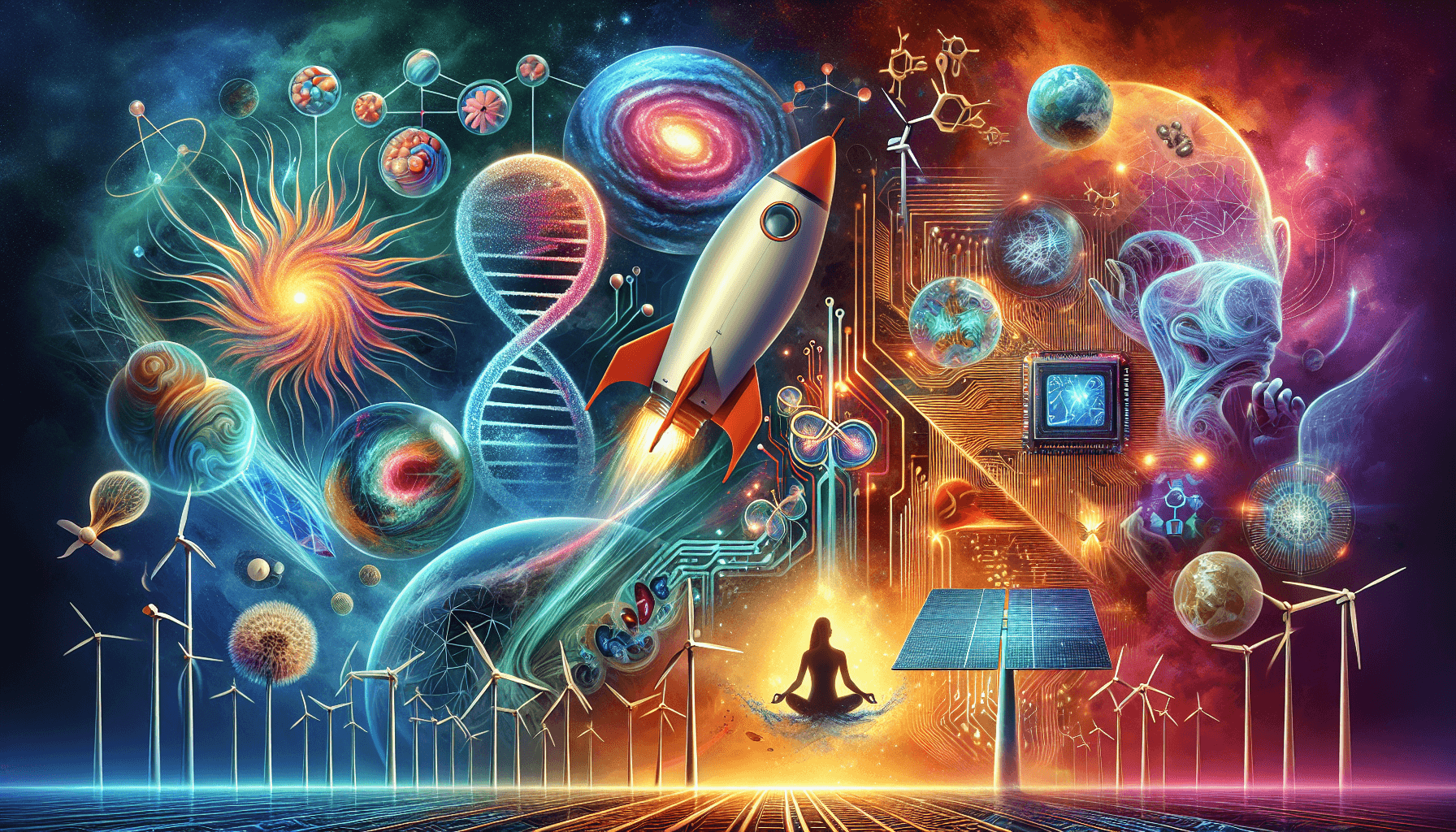
The Dawn of Discovery: Anticipating 2026 in Science
As the scientific community looks ahead, 2026 is rapidly emerging as a year of unprecedented experimental activity and potential breakthroughs across a multitude of disciplines. From the depths of space to the intricacies of human biology, and from the frontiers of artificial intelligence to sustainable energy solutions, researchers worldwide are gearing up for a period of intense discovery. This forecast isn't just about incremental progress; it's about major experiments designed to push the boundaries of our understanding and redefine what's possible.
Frontiers of Exploration: Space and the Cosmos
Missions Beyond Earth's Orbit
Space exploration is set to capture global attention in 2026. We anticipate critical phases for several ambitious missions, including potential further developments in lunar exploration with both robotic and crewed missions aiming for sustained presence. Mars missions, too, are expected to reach significant milestones, perhaps deploying next-generation rovers or initiating sample return efforts that could revolutionize our understanding of the Red Planet's geological and astrobiological history. These endeavors require meticulous planning and bold experimental approaches, pushing the limits of engineering and human endurance.
Unveiling Cosmic Secrets
Beyond planetary exploration, advanced observatories like the James Webb Space Telescope (JWST) will continue to deliver breathtaking data, with 2026 likely bringing new insights into exoplanet atmospheres, early galaxy formation, and the universe's expansion. Ground-based telescopes, equipped with cutting-edge adaptive optics, will also contribute, enabling experiments that probe the nature of dark matter and dark energy, and potentially detecting gravitational waves from previously unseen cosmic events. Each observation is an experiment, testing our theoretical models against the vastness of reality.
Revolutionizing Health: Biotechnology and Medicine
Gene Editing and Personalized Therapies
In the realm of biotechnology, 2026 is expected to be a critical year for advancements in gene editing technologies, particularly CRISPR-based therapies. We could see major clinical trial results for treatments targeting genetic diseases, moving closer to widespread application. The focus will also intensify on personalized medicine, with experiments exploring how genetic profiles can guide tailored treatments for cancer, autoimmune disorders, and rare diseases, promising a future where medicine is truly bespoke.
AI's Role in Drug Discovery and Diagnostics
Artificial intelligence is increasingly becoming an indispensable tool in medical research. In 2026, major experiments are predicted to leverage AI for accelerated drug discovery, identifying novel compounds and predicting their efficacy with unprecedented speed. Furthermore, AI-powered diagnostic tools will undergo rigorous testing, aiming to improve early disease detection and refine treatment protocols, transforming healthcare from reactive to proactive.
Powering the Future: Energy and Climate Solutions
The Quest for Clean Energy
The global energy crisis continues to drive innovation, and 2026 could be a landmark year for experimental fusion reactors, with several projects potentially achieving net energy gain for sustained periods. This would represent a monumental step towards limitless, clean energy. Concurrently, experiments in advanced renewable energy technologies, such as highly efficient solar cells, next-generation battery storage, and novel geothermal systems, will be crucial in diversifying our energy portfolio and reducing carbon emissions.
Tackling Environmental Challenges
Climate change demands bold action, and 2026 will see significant experimental undertakings in environmental science. This includes large-scale carbon capture and sequestration projects, exploring viable methods to remove CO2 directly from the atmosphere. Additionally, experiments in geoengineering, while controversial, may see initial small-scale trials to understand their potential impacts and effectiveness in mitigating global warming, though ethical considerations remain paramount.
The Digital Evolution: AI and Quantum Computing
Next-Gen Artificial Intelligence
Artificial intelligence will continue its rapid evolution, with 2026 likely to host major experiments in creating more robust, ethical, and generalizable AI models. Advances in machine learning algorithms, coupled with vastly increased computational power, could lead to AI systems capable of performing complex tasks with human-like reasoning, impacting industries from logistics to creative arts. The focus will also be on making AI more interpretable and trustworthy.
Quantum Leaps
Quantum computing, though still in its nascent stages, is expected to make significant experimental strides. Researchers anticipate demonstrating more stable and powerful quantum bits (qubits), leading to larger-scale quantum processors. These experiments are foundational, paving the way for solving problems currently intractable for even the most powerful supercomputers, with implications for cryptography, materials science, and drug development.
A Glimpse into Tomorrow
The year 2026 stands poised as a testament to humanity's insatiable curiosity and relentless drive for innovation. The confluence of major experiments across diverse scientific fields promises not just new knowledge, but also tangible solutions to some of the world's most pressing challenges. From understanding our universe to healing our bodies and safeguarding our planet, the breakthroughs of 2026 are set to shape the trajectory of human progress for decades to come, underscoring the vital role of scientific inquiry and global collaboration.