AI Breakthrough: Revolutionizing Language Development Predictions for Children with Hearing Loss
Northwestern University researchers have developed an AI model that accurately predicts language development in young children with hearing loss, enabling earlier, more personalized interventions.
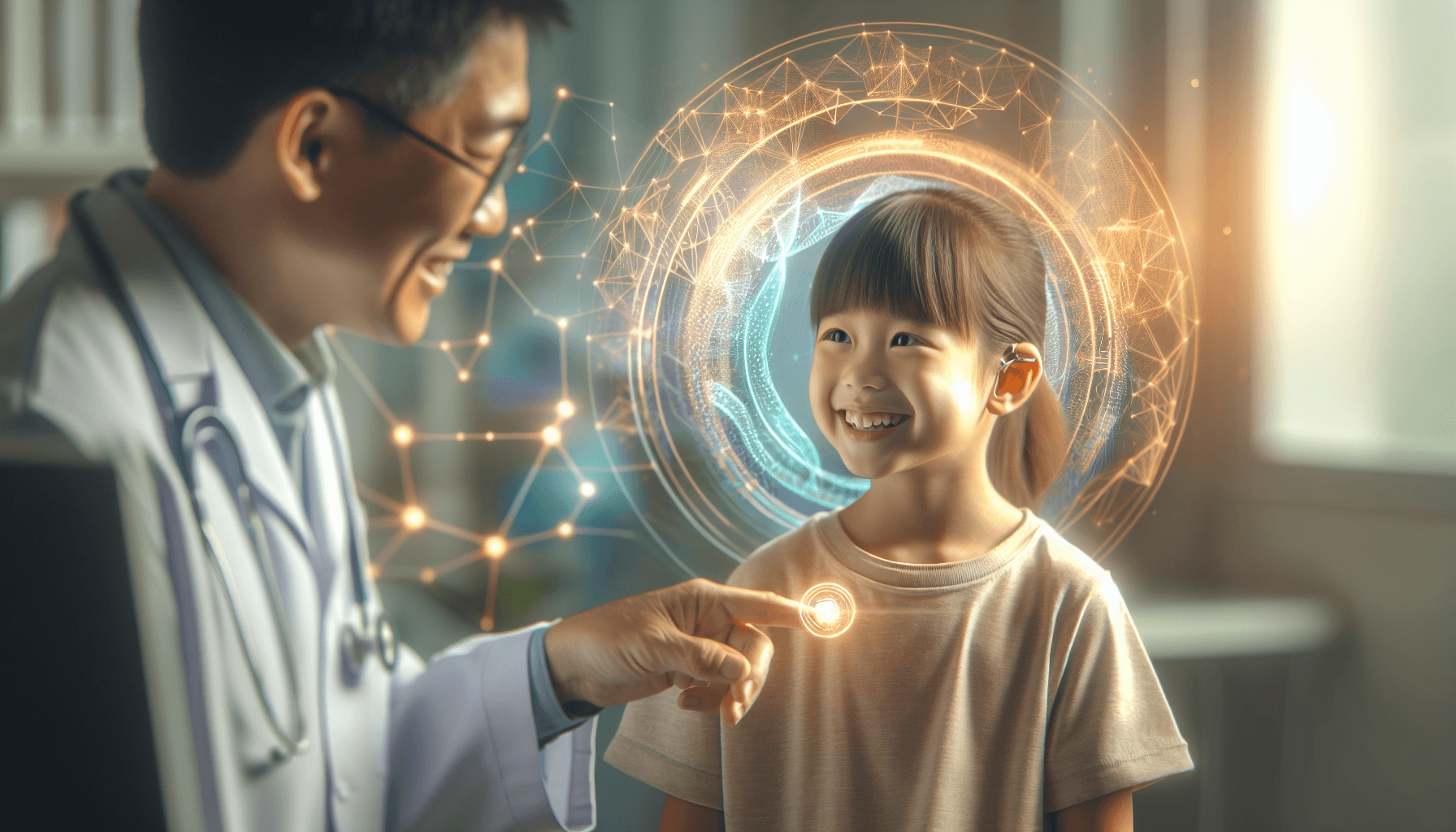
Revolutionizing Language Development: AI's New Role in Hearing Loss
For families navigating the complexities of childhood hearing loss, the journey of language development can be filled with uncertainty. Every parent hopes their child will communicate effectively, but predicting language milestones for children with hearing impairments has historically been a significant challenge. Now, a groundbreaking development from researchers at Northwestern University's Feinberg School of Medicine is set to transform this landscape. They have unveiled an innovative artificial intelligence (AI) model designed to accurately forecast language development in young children with hearing loss, promising a new era of personalized support and early intervention.
The Critical Need for Early Insight
Understanding a child's potential language trajectory is paramount. While early identification of hearing loss is crucial, even with prompt diagnosis and intervention, the path to language proficiency can vary widely among children. Factors like the degree of hearing loss, the timing of intervention, and individual biological differences all play a role. Clinicians and parents often face a "wait and see" approach, which can delay crucial adjustments to therapy. This new AI model addresses this critical gap, moving beyond generalized predictions to offer highly individualized insights.
How the AI Model Works its Magic
At the heart of this innovation is a sophisticated machine learning algorithm. The Northwestern team trained their AI on an extensive dataset, including detailed information from hundreds of children with hearing loss. This data encompassed a range of factors, such as demographic details, the child's specific hearing levels, and critically, the age at which they began receiving interventions like hearing aids or cochlear implants. By analyzing these complex interdependencies, the AI can generate predictions about a child's language skills at specific future points, often with remarkable accuracy.
Empowering Personalized Intervention
The implications of this predictive tool are profound. Instead of relying on broad averages, clinicians can leverage the AI's insights to tailor intervention strategies more precisely. If the model predicts a child might struggle with certain language benchmarks, therapists can proactively adjust their approaches, perhaps intensifying therapy or exploring different communication methods sooner. This personalized roadmap can help parents make more informed decisions about their child's care, fostering a sense of empowerment and reducing anxiety. The ultimate goal is to optimize each child's potential for robust language development.
A Glimpse into the Future of Care
This pioneering AI model represents a significant leap forward in the field of audiology and pediatric care. While still a research tool, its success paves the way for future integration into clinical practice worldwide. Imagine a scenario where, shortly after diagnosis, a personalized language trajectory can be mapped out, guiding every step of a child's developmental journey. This could not only improve individual outcomes but also refine our understanding of effective interventions on a broader scale. The Northwestern researchers are continuing to validate and refine the model, aiming for widespread applicability and impact.
The Power of Prediction: Unlocking Communication Potential
In essence, this AI breakthrough offers more than just predictions; it offers hope. By providing early, accurate foresight into language development for children with hearing loss, it empowers parents and clinicians to act decisively, personalize care, and ultimately, unlock each child's full communication potential. This innovative approach by Northwestern University underscores the transformative power of artificial intelligence in advancing medical science and improving lives globally, ensuring no child is left behind in their journey to communicate.