
AI Unearths Over 100 Hidden Planets in NASA Data, Revealing Extreme Worlds
Artificial intelligence has made an astounding breakthrough, sifting through NASA's vast astronomical archives to uncover more than 100 previously undetected exoplanets, including rare and extreme worlds. This discovery highlights AI's transformative role in space exploration.
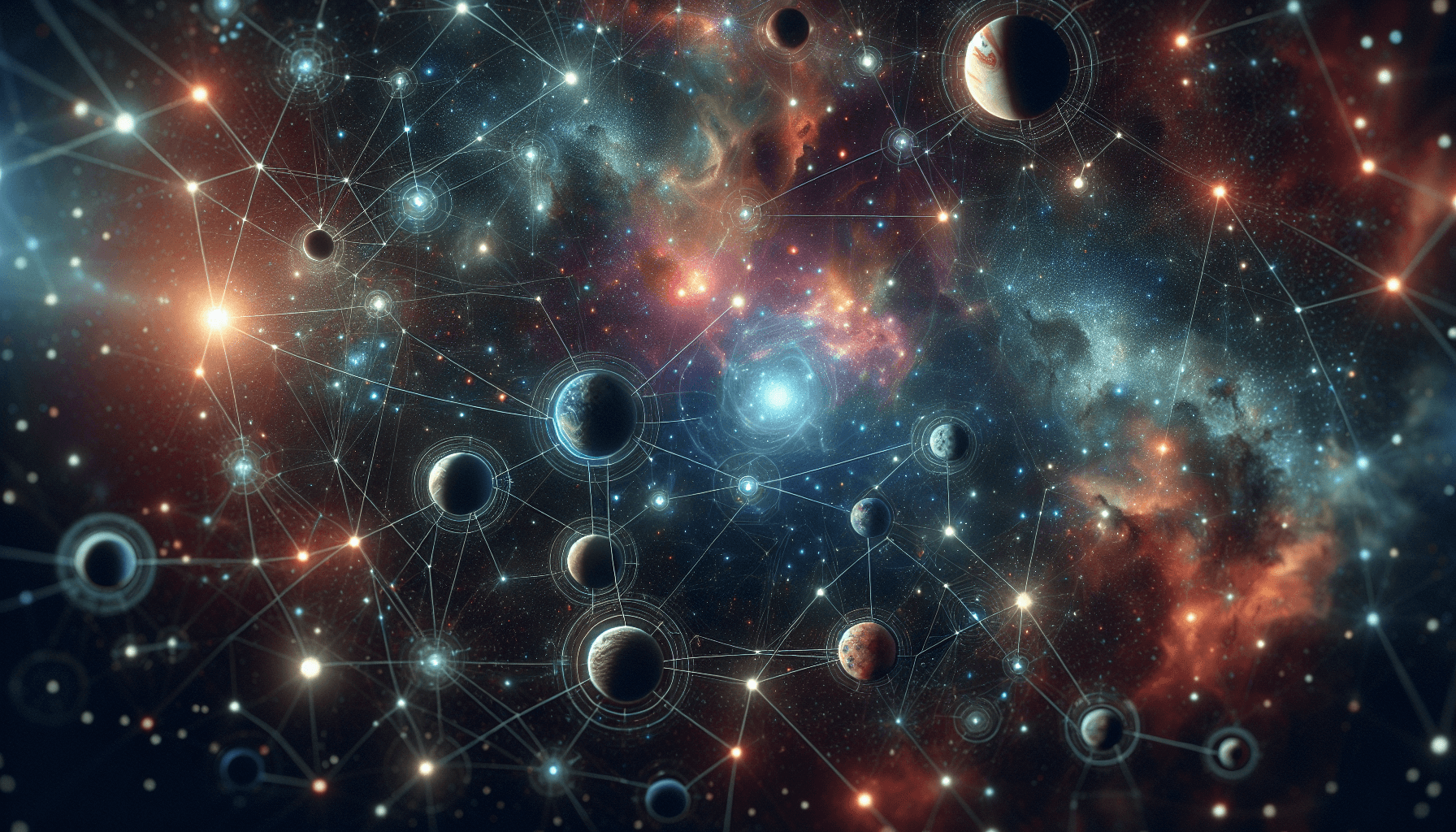
AI's Astounding Leap: Uncovering Cosmic Secrets
The quest to find planets beyond our solar system, known as exoplanets, has long been a cornerstone of astronomical research. Yet, even with powerful telescopes and dedicated human analysis, the sheer volume and complexity of cosmic data mean many celestial bodies remain elusive. Now, a groundbreaking application of artificial intelligence (AI) has dramatically shifted the paradigm, sifting through vast archives of NASA data to reveal over 100 previously undetected exoplanets, including some truly rare and extreme examples.
This remarkable discovery underscores the transformative potential of advanced machine learning in accelerating our understanding of the universe. For years, scientists have painstakingly analyzed light curves and radial velocity measurements, searching for the tell-tale dips or wobbles that signify an orbiting planet. While effective, this human-intensive process can be slow and prone to overlooking subtle signals masked by stellar noise or instrumental quirks.
The AI Revolution in Exoplanet Detection
How Algorithms See What We Miss
The recent breakthrough leverages sophisticated AI algorithms, often employing deep learning networks, trained on existing exoplanet catalogs and vast amounts of stellar data from missions like NASA's Kepler and TESS (Transiting Exoplanet Survey Satellite). These algorithms learn to identify the subtle patterns indicative of planetary transits or gravitational tugs, even when these signals are incredibly faint or buried within complex datasets.
Unlike human observers who might be limited by processing speed or subjective biases, AI can methodically examine billions of data points, identifying statistical anomalies and recurring patterns that hint at the presence of an unseen world. This computational prowess allows for a comprehensive re-evaluation of archived data, breathing new life into observations that were previously deemed inconclusive or too challenging to interpret.
Unveiling a Trove of Hidden Worlds
Beyond the Obvious: The 100+ Discoveries
The revelation of over 100 new exoplanets from existing NASA datasets is a testament to AI's superior pattern recognition capabilities. These aren't new observations, but rather planets that had been effectively "hidden in plain sight" – their signals present in the data all along, waiting for a more discerning eye. The planets vary widely in size, mass, and orbital characteristics, expanding our known planetary census significantly.
Among these newly identified celestial bodies are a fascinating array of types:
- Super-Earths: Rocky planets larger than Earth but smaller than Neptune, potentially offering diverse environments.
- Mini-Neptunes: Gaseous planets smaller than Neptune, a common type in our galaxy but still yielding surprises.
- Extreme Orbits: Planets with highly eccentric paths or those orbiting very close to their stars, enduring scorching temperatures.
- Distant Worlds: Planets located further from their host stars, making their detection more challenging due to longer orbital periods and fainter signals.
Each new discovery provides crucial data points for refining our models of planet formation and evolution, helping scientists understand how planetary systems come to be and diversify across the cosmos.
Implications for Astrobiology and Future Exploration
The Search for Life, Redefined
The ability of AI to rapidly and accurately identify exoplanets has profound implications for the field of astrobiology. By expanding the catalog of known worlds, particularly those with rare or extreme characteristics, scientists gain a broader perspective on the conditions under which planets can form and potentially host life. While many of these newly found worlds may not be immediately habitable, their existence pushes the boundaries of our understanding of planetary diversity.
Moreover, this AI-driven approach sets a precedent for future space missions. As telescopes like the James Webb Space Telescope (JWST) and upcoming observatories generate even more intricate and voluminous data, AI will be indispensable for processing, analyzing, and extracting meaningful discoveries. It transforms vast datasets from a bottleneck into a boundless resource for exploration.
The Dawn of Autonomous Discovery
The discovery of over 100 hidden planets by AI marks a significant milestone in astronomical research. It heralds an era where artificial intelligence isn't just a tool for analysis, but an active partner in discovery, capable of unveiling cosmic secrets that eluded human perception. As these intelligent systems continue to evolve, the universe will undoubtedly reveal even more of its wonders, bringing us closer to answering fundamental questions about our place within it.
How this article was made
- Sources
- ScienceDaily
- Generated on:
- May 4, 2026
This content is produced by Acerbo.AI's AI editorial pipeline: source gathering, rewriting and imagery are automated. Editorial oversight stays human.
Related Articles
Unveiling the Invisible: Your $100 Gateway to Cosmic Mysteries
Scientists have developed an incredibly affordable particle detector, costing just $100, that allows anyone to observe cosmic rays raining down from space, opening new avenues for citizen science and education.

Unveiling the Amazon's Emerald Enigma: Scientists Discover a Mysterious New Frog Species
A recent expedition deep within the Amazon rainforest has led to the thrilling discovery of a previously unknown frog species, highlighting the incredible biodiversity still hidden.
Quantum Mystery Deepens: CERN Uncovers Unprecedented Gluon Behavior
CERN scientists have observed gluons, the fundamental particles binding atomic nuclei, exhibiting unexpected behavior deep within matter, challenging long-held theories of the strong nuclear force.