AI's Lightning Speed: Generative Models Outpace Human Teams in Medical Data Analysis
Generative AI is revolutionizing medical research, demonstrating unprecedented speed in analyzing complex datasets, significantly accelerating drug discovery and clinical advancements.
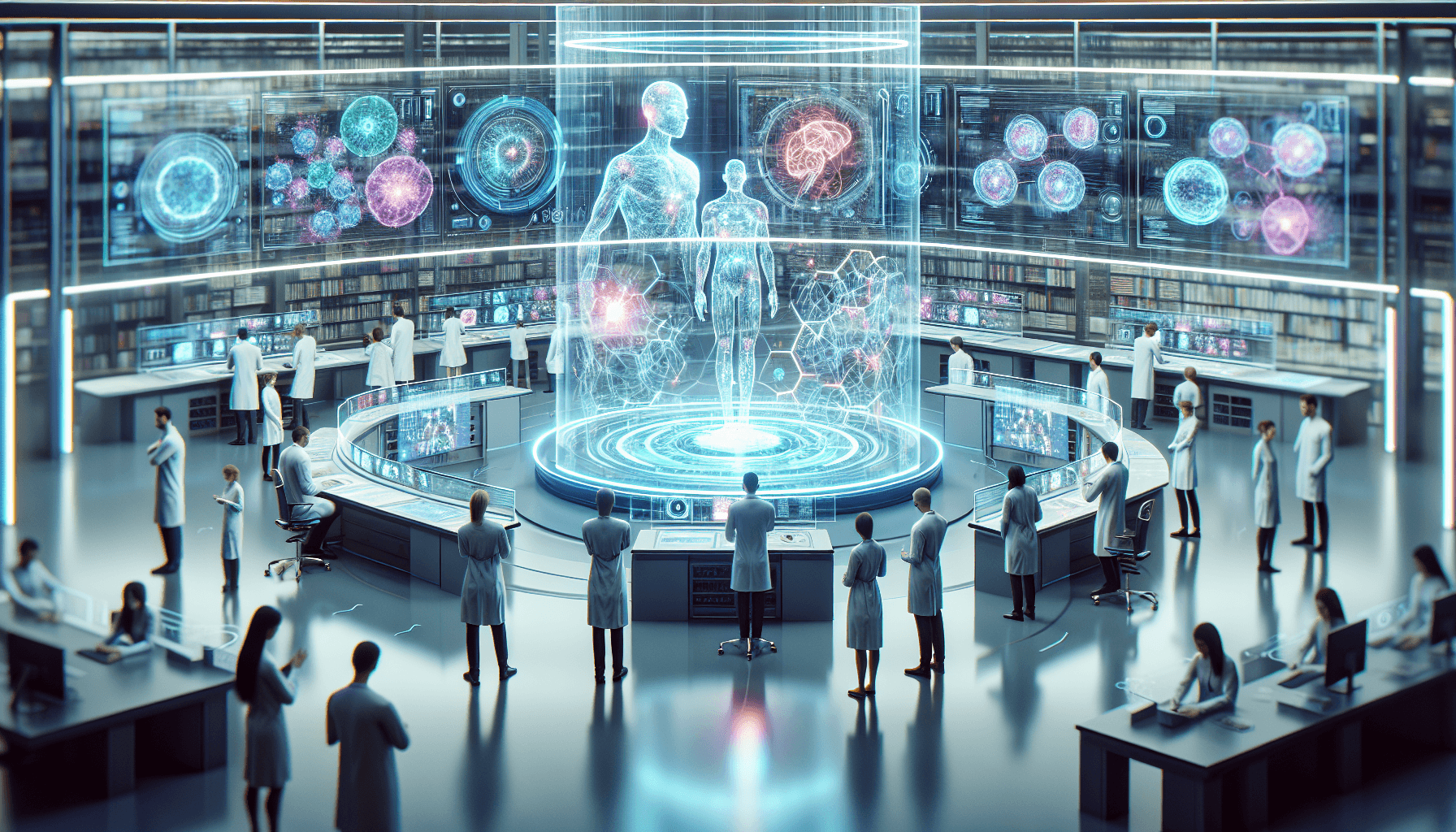
The Dawn of Accelerated Medical Discovery
A new era in medical research is unfolding, spearheaded by the remarkable capabilities of generative artificial intelligence. Recent developments highlight AI's capacity to process and analyze vast, intricate medical datasets at speeds far exceeding those of traditional human research teams. This breakthrough promises to fundamentally reshape how we approach disease understanding, drug development, and personalized treatment strategies on a global scale.
Unlocking Insights at Unprecedented Pace
Generative AI models, distinct from conventional analytical tools, possess the ability not just to identify patterns but also to generate hypotheses and synthesize novel insights from raw data. This advanced functionality allows them to sift through gigabytes of genomic sequences, patient records, imaging scans, and scientific literature in mere moments – a task that would consume human experts for months, if not years.
The efficiency gain is not merely incremental; it represents a paradigm shift. By rapidly correlating disparate pieces of information, these AI systems can uncover subtle biomarkers, predict drug interactions, and even design potential therapeutic molecules with unparalleled speed. This dramatically shortens the initial phases of research, which are often the most time-consuming bottlenecks.
Revolutionizing Drug Discovery and Development
The implications for drug discovery are particularly profound. The traditional pipeline for bringing a new drug to market is notoriously long and expensive, often taking over a decade and billions of dollars. Generative AI can significantly compress this timeline by:
- Identifying Novel Drug Targets: Quickly pinpointing proteins or pathways involved in disease progression.
- Designing Candidate Molecules: Generating thousands of potential drug compounds and predicting their efficacy and toxicity in silico.
- Optimizing Clinical Trial Design: Analyzing patient data to identify ideal participant cohorts and predict trial outcomes.
This acceleration means that promising new treatments could reach patients much faster, addressing urgent global health challenges with unprecedented agility.
Enhancing Diagnostics and Personalized Medicine
Beyond drug development, generative AI is poised to transform diagnostic processes and the delivery of personalized medicine. Its ability to analyze individual patient data – including genetic makeup, lifestyle factors, and medical history – allows for the creation of highly tailored treatment plans. This moves us closer to a future where medical interventions are precisely calibrated for each individual, maximizing effectiveness and minimizing side effects.
Furthermore, AI can assist in early disease detection by identifying subtle anomalies in medical images or lab results that might be imperceptible to the human eye. This proactive approach can lead to earlier interventions and significantly improved patient outcomes across various conditions, from oncology to neurological disorders.
The Collaborative Future of Human and AI Expertise
While generative AI demonstrates superior speed in data processing, it is crucial to understand its role as an advanced assistant rather than a replacement for human ingenuity. Researchers and clinicians remain indispensable for formulating research questions, interpreting AI-generated insights, validating findings through empirical studies, and navigating complex ethical considerations. The true power lies in the synergistic collaboration between human expertise and AI's analytical prowess.
This partnership promises to unlock scientific breakthroughs at a pace previously unimaginable, ushering in an era where complex medical puzzles are solved with greater efficiency and precision. The future of healthcare looks brighter, with AI empowering us to push the boundaries of medical knowledge and deliver life-changing innovations faster than ever before.