AI's Quantum Leap: Unveiling the Top 15 Scientific Discoveries of 2026
Explore the groundbreaking scientific discoveries attributed to Artificial Intelligence in 2026. From medicine to materials, AI is accelerating innovation and reshaping our understanding of the world.
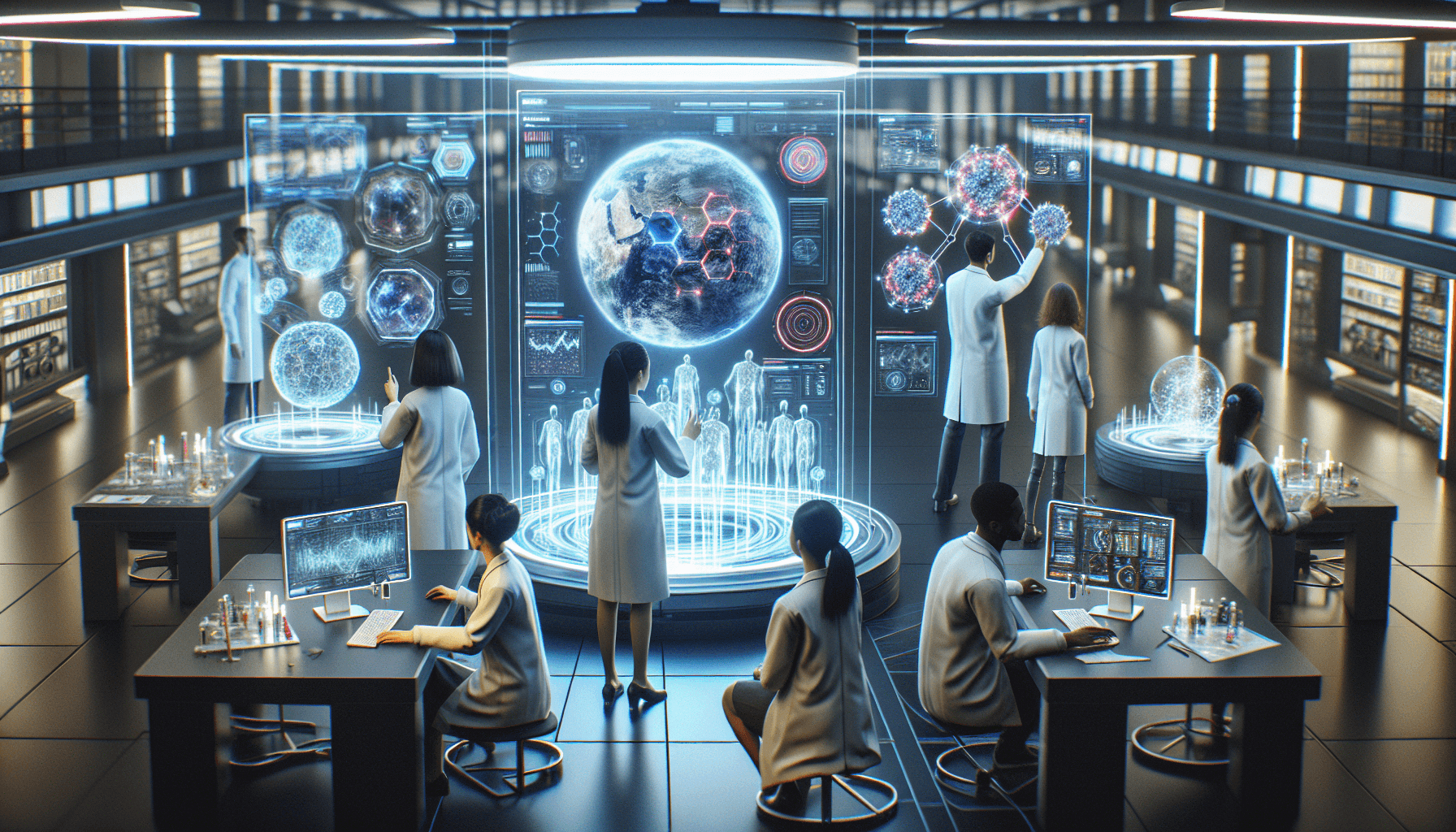
The AI Revolution: A New Era of Discovery Unfolds
The year 2026 marks a pivotal moment in scientific history, as Artificial Intelligence transcends its role as a mere tool to become a true co-discoverer. No longer confined to processing vast datasets, advanced AI systems are now actively generating hypotheses, designing experiments, and identifying breakthroughs that would be impossible for human scientists alone. A recent compilation, highlighting the top 15 new discoveries made by AI in 2026, underscores this profound shift, showcasing AI's unparalleled ability to accelerate innovation across diverse fields.
Beyond Human Limits: How AI Fuels Breakthroughs
The secret behind AI's burgeoning success in scientific discovery lies in its capacity for pattern recognition on an unprecedented scale. Traditional research often relies on human intuition and exhaustive experimentation. AI, however, can sift through terabytes of data – from chemical compound libraries to genomic sequences and astrophysical observations – identifying subtle correlations and predicting outcomes with remarkable accuracy. This allows researchers to bypass lengthy trial-and-error processes, dramatically shortening the path from concept to discovery.
By leveraging sophisticated neural networks and deep learning algorithms, AI models can simulate complex systems, predict molecular interactions, and even design novel materials with specific properties. This isn't just about faster analysis; it's about exploring scientific landscapes that were previously inaccessible, leading to truly novel insights.
Key Sectors Transformed: AI's 2026 Impact
The top 15 discoveries of 2026 span a breathtaking array of disciplines, demonstrating AI's versatile power. While specific details of each discovery are still emerging from the scientific community, the overarching themes reveal a future where AI is indispensable for progress.
Revolutionizing Medicine and Health
- Accelerated Drug Discovery: AI has played a crucial role in identifying several promising new drug candidates for previously intractable diseases, significantly cutting down development times. By predicting molecular efficacy and potential side effects, AI rapidly screens millions of compounds.
- Personalized Treatment Protocols: Breakthroughs in AI-driven diagnostics are leading to highly individualized treatment plans, optimizing patient outcomes by analyzing genetic data, lifestyle factors, and real-time physiological responses.
- Novel Biomarker Identification: AI has uncovered subtle biomarkers for early disease detection, enabling proactive intervention for conditions like neurodegenerative disorders and certain cancers.
Advancements in Material Science and Energy
In material science, AI-powered simulations have led to the creation of materials with extraordinary properties. This includes new superconductors, highly efficient catalysts for renewable energy production, and lightweight, ultra-strong alloys with applications in aerospace and sustainable construction. These AI-designed materials promise to unlock new frontiers in engineering and environmental solutions.
Unlocking Environmental Solutions and Climate Insights
AI's analytical prowess is also proving vital in addressing global challenges. Discoveries in 2026 include more accurate climate models predicting regional impacts with unprecedented precision, and AI-optimized solutions for carbon capture and sustainable resource management. These advancements are critical for mitigating the effects of climate change and fostering a greener future.
Peering into the Cosmos: Astrophysical Insights
Even the mysteries of the universe are yielding to AI. By processing vast amounts of astronomical data from telescopes, AI systems have identified new exoplanets, analyzed complex galactic formations, and even detected anomalies that could hint at new astrophysical phenomena. These AI-driven observations are expanding our understanding of cosmic origins and evolution.
The Future is Collaborative: Humans and AI Together
The remarkable discoveries of 2026 are not merely a testament to AI's capabilities but also to the power of human-AI collaboration. While AI provides the analytical muscle and hypothesis generation, human scientists bring the critical thinking, ethical oversight, and contextual understanding necessary to interpret these findings and translate them into tangible benefits for humanity.
As we look beyond 2026, the trajectory is clear: AI will continue to be an indispensable partner in the quest for knowledge. These 15 discoveries are just a glimpse into a future where the boundaries of what's possible are continually being redefined by the synergy of human intellect and artificial intelligence, paving the way for a healthier, more sustainable, and more enlightened world.