AI's Transformative Leap: Unveiling the Top Scientific Discoveries by 2026
Explore the anticipated breakthroughs and profound scientific discoveries AI is poised to deliver by 2026, revolutionizing fields from medicine to space exploration and environmental science.
AI's Transformative Leap: Unveiling the Top Scientific Discoveries by 2026
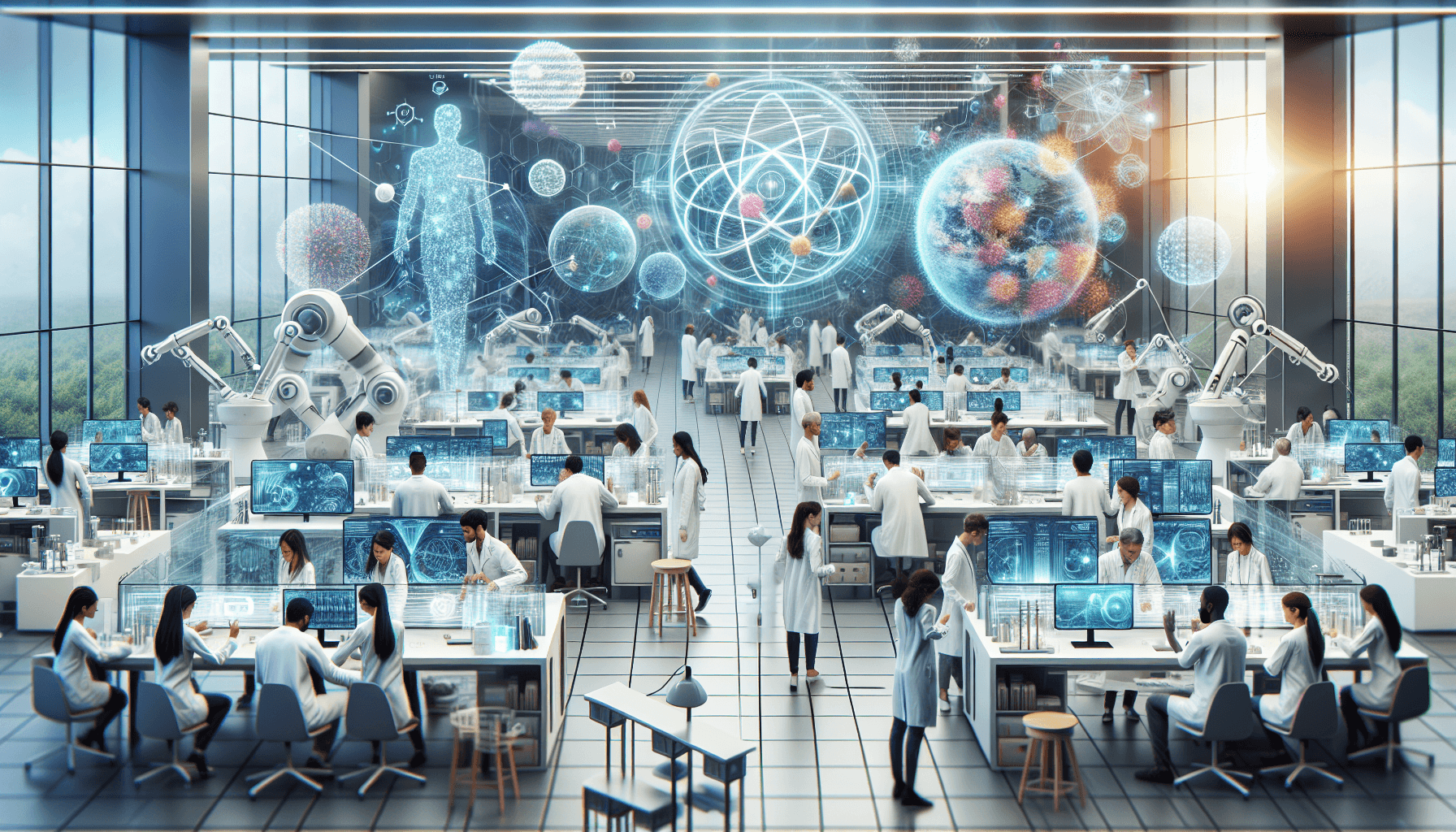
As we navigate an era of unprecedented technological advancement, Artificial Intelligence stands at the forefront, not merely as a tool but as a true partner in scientific exploration. By 2026, the landscape of discovery is expected to be profoundly reshaped by AI's analytical prowess, predictive capabilities, and ability to process vast datasets at speeds unimaginable to humans. This article delves into the anticipated top scientific breakthroughs and insights AI is poised to deliver across various critical domains.
The Dawn of AI-Driven Research
The integration of AI into research methodologies has already begun to accelerate the pace of innovation. From identifying subtle patterns in complex data to designing novel experiments, AI systems are augmenting human intellect, allowing scientists to push the boundaries of knowledge further and faster. The year 2026 marks a pivotal moment, where these collaborative efforts are projected to culminate in a wave of groundbreaking discoveries.
Revolutionizing Medical Science and Health
One of the most impactful areas where AI is making strides is in healthcare and medicine. By 2026, AI is expected to significantly advance our understanding and treatment of diseases, leading to more personalized and effective interventions.
- Novel Drug Compounds: AI algorithms will likely have identified several new molecular structures with therapeutic potential, accelerating drug discovery for previously untreatable conditions.
- Personalized Treatment Protocols: Through deep analysis of individual genomic data, lifestyle, and medical history, AI will enable highly customized treatment plans, optimizing patient outcomes.
- Early Disease Detection: AI-powered diagnostics will become even more sophisticated, detecting biomarkers for diseases like cancer and neurodegenerative disorders years before symptoms manifest.
Unlocking Material Frontiers and Sustainable Solutions
The quest for new materials with enhanced properties is crucial for technological progress and environmental sustainability. AI's ability to simulate and predict material behavior is a game-changer.
- High-Performance Materials: Expect AI to design and predict novel materials with superior strength, conductivity, or thermal resistance for applications in aerospace, electronics, and energy.
- Advanced Catalysts: AI will likely pinpoint highly efficient catalysts for industrial processes, leading to greener manufacturing and more sustainable chemical reactions.
- Renewable Energy Breakthroughs: Discoveries in new battery chemistries or more efficient solar cell designs, driven by AI's material science simulations, will be key to accelerating the energy transition.
Peering into the Cosmos and Beyond
Astronomy and astrophysics are fields rich with data, making them ideal for AI's analytical capabilities. By 2026, AI will undoubtedly have expanded our cosmic horizons.
- Exoplanet Characterization: AI will have refined our understanding of exoplanet atmospheres, potentially identifying candidates with biosignatures indicative of life.
- Cosmic Phenomena Insights: New insights into dark matter, dark energy, and the early universe will emerge from AI's analysis of complex astronomical datasets from telescopes and observatories.
- Gravitational Wave Anomalies: AI systems could detect subtle patterns in gravitational wave data, hinting at exotic cosmic events or unknown fundamental physics.
Protecting Our Planet: Environmental Discoveries
Addressing climate change and environmental degradation requires sophisticated data analysis and predictive modeling, areas where AI excels.
- Biodiversity Mapping: AI will have created more comprehensive and dynamic maps of global biodiversity, revealing previously unknown species or critical ecological interdependencies.
- Pollution Source Identification: Pinpointing diffuse sources of pollution with greater accuracy, from microplastics to industrial emissions, will be enhanced by AI's environmental monitoring.
- Climate Model Refinements: AI-driven improvements in climate modeling will offer more precise predictions of regional climate impacts, aiding adaptation strategies.
Advancing Fundamental Understanding
Beyond applied science, AI is also pushing the boundaries of fundamental research, helping us understand the very building blocks of the universe.
- Protein Folding Solutions: Further advancements in AI's ability to predict protein structures will revolutionize biology and drug design.
- Quantum Chemistry Insights: AI will unlock new understanding in quantum mechanics, potentially leading to breakthroughs in quantum computing or novel materials.
The Future is Intelligent
By 2026, AI will not just be assisting scientists; it will be an indispensable partner in the discovery process, enabling breakthroughs that were once considered impossible. These anticipated discoveries underscore a future where human ingenuity, amplified by artificial intelligence, continues to unlock the universe's most profound secrets, promising a healthier planet, advanced technologies, and a deeper understanding of our existence.