AI's Unprecedented Leap: Unveiling 15 Groundbreaking Discoveries by 2026
Explore how Artificial Intelligence is revolutionizing scientific research, from medicine to space, uncovering unprecedented discoveries and shaping our future by 2026.
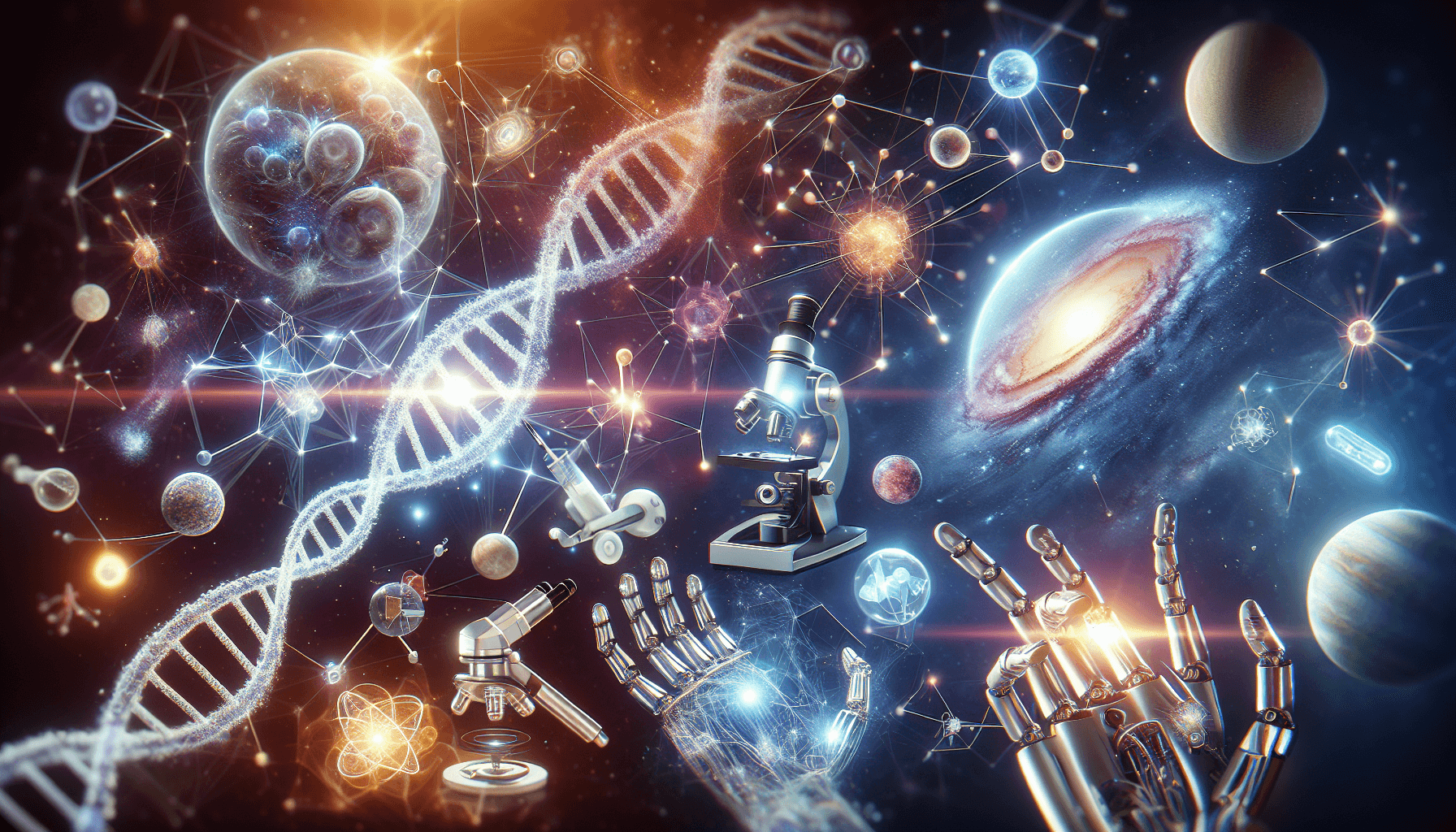
AI's Unprecedented Leap: Unveiling Groundbreaking Discoveries by 2026
Artificial Intelligence is no longer a futuristic concept; it's a driving force behind today's most astonishing scientific breakthroughs. As we look towards 2026, AI's capacity to process vast datasets, identify complex patterns, and accelerate research is unlocking discoveries at an unprecedented pace. This transformation is fundamentally reshaping our understanding of the world and beyond, proving AI to be an indispensable partner in scientific exploration.
Revolutionizing Health and Medicine: AI's Impact on Well-being
In the realm of healthcare, AI is proving to be an invaluable ally for researchers, dramatically speeding up the development of new treatments and diagnostics. Its ability to analyze genomic data, predict protein folding, and simulate drug interactions is ushering in a new era of medical innovation.
- Accelerated Drug Discovery: AI algorithms are identifying novel drug candidates and optimizing existing compounds at unprecedented speeds, leading to breakthroughs in treatments for complex diseases like cancer and neurodegenerative disorders.
- Precision Diagnostics: Machine learning models are achieving remarkable accuracy in early disease detection, from identifying subtle anomalies in medical imaging to predicting disease progression with greater certainty.
- Personalized Treatment Protocols: AI is enabling the creation of highly individualized therapeutic approaches, tailoring interventions based on unique patient genetic and physiological data for optimal outcomes and reduced side effects.
Innovations in Materials Science and Environmental Solutions
Beyond human health, AI is a catalyst for innovation in materials science, helping engineers design substances with novel properties. Concurrently, its power is being harnessed to tackle some of our planet's most pressing environmental challenges, fostering a more sustainable future.
- Novel Material Discovery: AI is rapidly discovering and simulating new materials with enhanced properties (e.g., superconductors, advanced catalysts), accelerating innovation in energy storage, electronics, and manufacturing.
- Optimized Renewable Energy Systems: Predictive AI models are significantly improving the efficiency and reliability of solar, wind, and geothermal energy grids, leading to more stable and sustainable power sources.
- Advanced Climate Modeling: Sophisticated AI helps scientists better understand complex climate systems, providing more accurate long-term forecasts and identifying effective strategies for environmental mitigation and adaptation.
- Biodiversity Conservation Breakthroughs: AI-powered monitoring systems are tracking endangered species, detecting illegal activities like poaching, and managing ecosystems more effectively, leading to critical insights for conservation efforts worldwide.
Unveiling Cosmic Secrets and Fundamental Science
From the microscopic to the cosmic, AI is expanding our understanding of the universe. Its analytical prowess is invaluable in fields ranging from astrophysics to fundamental physics, uncovering patterns that human observation alone might miss and pushing the boundaries of knowledge.
- Exoplanet Characterization: AI sifts through vast astronomical data to identify and characterize new exoplanets, analyzing their atmospheres for potential biosignatures and increasing our chances of finding life beyond Earth.
- Cosmic Anomaly Detection: Machine learning algorithms are flagging unusual celestial events and structures in observational data, leading to new insights into galactic formation, dark matter, and the universe's evolution.
- Accelerated Particle Physics Discoveries: AI is streamlining the analysis of massive datasets from particle accelerators, helping physicists interpret complex collision events and potentially uncover new fundamental particles or forces.
- Mathematical Conjecture Exploration: AI is assisting mathematicians in exploring and generating evidence for complex conjectures, pushing the boundaries of abstract thought and potentially leading to new mathematical theorems.
Advancing Robotics, Smart Systems, and Digital Security
The synergy between AI and robotics is giving rise to intelligent systems that perform tasks with unprecedented precision and autonomy, transforming industries and daily life. Furthermore, AI is at the forefront of protecting our increasingly digital world.
- Autonomous Scientific Research Platforms: AI-driven robots are conducting experiments, collecting data, and even formulating hypotheses in labs, significantly accelerating discovery cycles in chemistry, biology, and materials science.
- Optimized Industrial Processes: AI is refining production processes across various industries, leading to breakthroughs in efficiency, reduced waste, and improved quality control for complex manufacturing and logistics.
- Personalized Educational Content: AI is adapting educational materials and teaching methods to individual learning styles and paces, leading to more effective knowledge acquisition and skill development across diverse subjects.
- Proactive Cyber Threat Neutralization: AI systems are identifying and neutralizing novel cyber threats and vulnerabilities in real-time, safeguarding critical infrastructure, sensitive data, and digital economies from sophisticated attacks.
The Future is Now: AI's Enduring Legacy of Discovery
These fifteen examples represent just a glimpse of the profound impact AI is having on scientific discovery by 2026. Its ability to augment human intellect, automate complex tasks, and uncover hidden correlations is not merely accelerating progress; it's fundamentally redefining what's possible. As AI continues to evolve, we can anticipate an even more astonishing wave of breakthroughs, promising a future shaped by intelligent innovation and deeper understanding across all facets of human endeavor.