AI's Unseen Hand: Top Breakthroughs Reshaping Our World by 2026
Explore how Artificial Intelligence is rapidly accelerating scientific discovery, from revolutionary medical treatments to groundbreaking materials, fundamentally transforming our understanding of the universe and shaping the future by 2026.
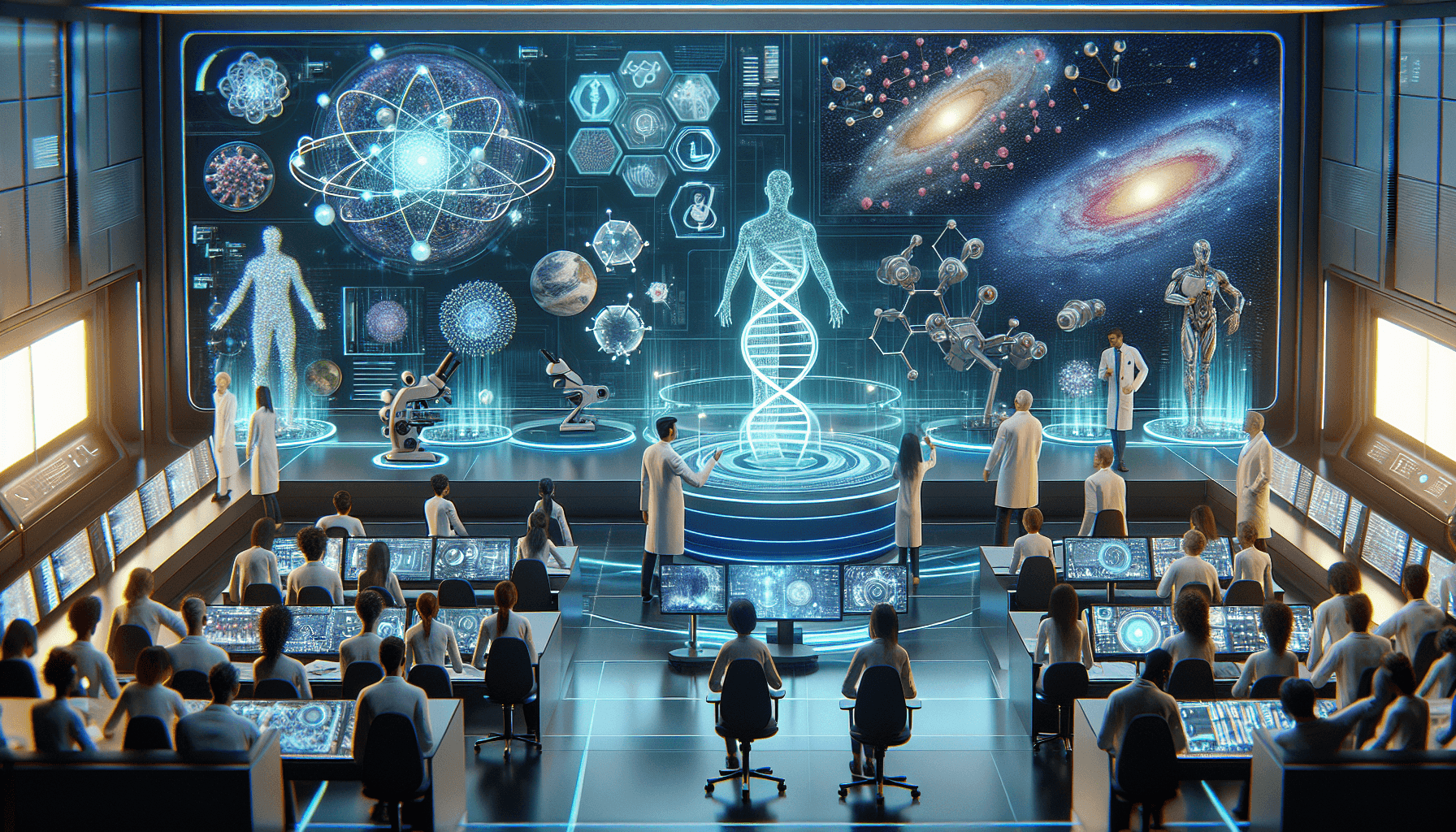
The Era of AI-Accelerated Discovery Has Arrived
Artificial Intelligence (AI) is no longer confined to science fiction or simple automation. We are witnessing a profound shift where AI systems are not just assisting human researchers but are actively driving scientific discovery at an unprecedented pace. By 2026, the impact of AI's analytical prowess is set to redefine what's possible, unveiling breakthroughs across every major scientific discipline.
From sifting through colossal datasets to identifying subtle patterns that elude human perception, AI's ability to generate and test hypotheses is accelerating the research cycle. This isn't just about efficiency; it's about unlocking entirely new avenues of inquiry and discovering connections previously thought impossible. The synergy between human ingenuity and AI's computational power is ushering in a golden age of innovation.
Revolutionizing Medical Breakthroughs
One of the most impactful areas where AI is making rapid strides is in medicine and healthcare. AI algorithms are dramatically speeding up the drug discovery process, identifying promising compounds and predicting their efficacy with remarkable accuracy. This means faster development of new treatments for stubborn diseases.
Beyond drug discovery, AI is transforming diagnostics and personalized medicine. Early detection of complex conditions like cancer and Alzheimer's is becoming more precise, allowing for timely interventions. Furthermore, AI analyzes individual genetic profiles and health data to recommend highly tailored treatment plans, moving us closer to truly personalized healthcare.
- Accelerated Drug Development: AI identifies novel compounds and predicts their efficacy, drastically cutting research times.
- Precision Diagnostics: Enhances the early and accurate detection of complex diseases.
- Personalized Treatment Plans: Tailors therapies based on individual genetic and health data for optimal outcomes.
Unlocking New Materials and Energy Solutions
The quest for advanced materials with specific properties, essential for everything from electronics to aerospace, is being revolutionized by AI. Machine learning models can predict material characteristics and even design novel compositions from scratch, leading to breakthroughs in fields like superconductivity, catalysis, and lightweight alloys.
In the realm of energy, AI is proving invaluable for designing more efficient solar cells, optimizing battery technologies for electric vehicles and grid storage, and even advancing research into sustainable fusion power. These AI-driven discoveries are critical for addressing global challenges related to climate change and energy security.
- Novel Material Design: AI creates materials with unprecedented strength, conductivity, or catalytic properties.
- Advanced Battery Technologies: Develops more efficient and longer-lasting energy storage solutions.
- Sustainable Energy Optimization: Enhances renewable energy systems and accelerates fusion research.
Peering into the Cosmos and Beyond
AI's capacity to process vast astronomical datasets is opening new windows to the universe. From identifying exoplanets and analyzing their atmospheres for signs of life, to mapping dark matter distribution and understanding galaxy formation, AI is helping us answer some of humanity's oldest questions about our place in the cosmos.
Closer to home, environmental science benefits immensely from AI's predictive capabilities. AI models are improving climate change forecasting, tracking biodiversity, predicting natural disasters, and optimizing conservation efforts. These insights are vital for protecting our planet and adapting to environmental shifts.
- Exoplanet Identification: Discovering new worlds and analyzing their potential for habitability.
- Cosmic Mapping: Unraveling the mysteries of dark matter and the universe's large-scale structure.
- Climate Modeling: Providing more accurate predictions for environmental changes and mitigation strategies.
Ethical Frontiers and Future Prospects
While the potential for AI-driven discovery is immense, it also brings ethical considerations. Ensuring fairness, transparency, and accountability in AI systems is paramount to prevent bias and misuse. Responsible AI development is crucial as these systems become more integrated into the fabric of scientific inquiry.
Looking towards 2026 and beyond, the collaboration between human researchers and advanced AI promises a future brimming with unimaginable discoveries. AI is not just a tool; it's a partner in exploration, pushing the boundaries of knowledge and fundamentally reshaping our understanding of the world and the universe within a remarkably short timeframe.