Celestial Collision: A Recent Impact Leaves a Brilliant New Scar on the Moon
Astronomers have detected a fresh, luminous impact site on the lunar surface, marking a significant celestial event. This new crater offers unique insights into the Moon's dynamic geological activity.
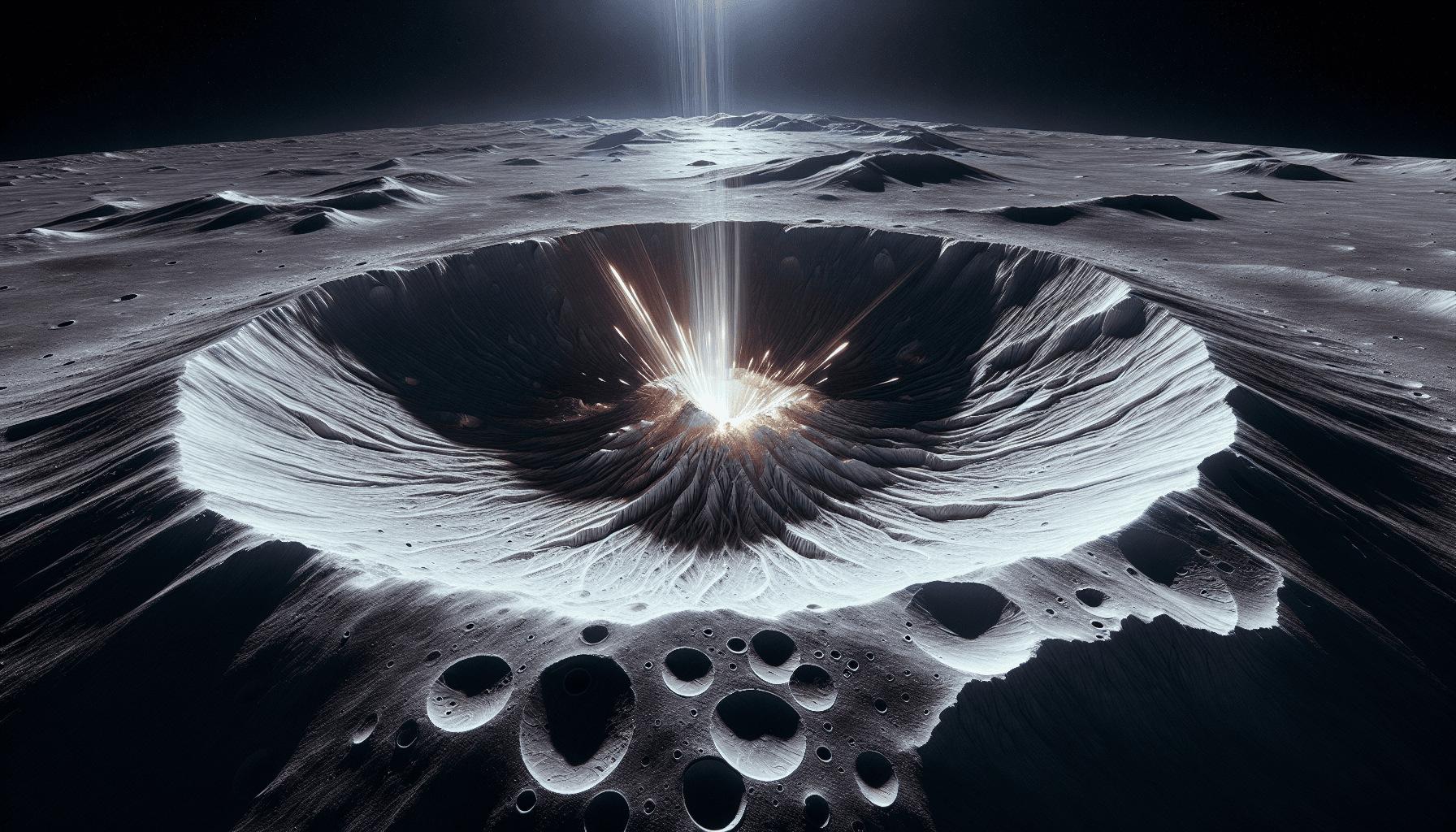
A Cosmic Punch: The Moon's Latest Transformation
Our celestial neighbor, the Moon, has recently undergone a dramatic transformation, bearing witness to a powerful impact that has etched a brilliant new scar onto its ancient surface. This captivating event, observed by astronomers, serves as a vivid reminder of the dynamic forces constantly at play within our solar system.
The sudden appearance of this luminous new feature has sparked considerable interest, offering scientists a fresh canvas to study lunar geology and the ongoing bombardment from space.
Witnessing a Lunar Scarring Event
While the precise nature of the impacting object is still under investigation, it is widely believed to be a meteoroid – a fragment of rock or metal from space – that collided with the lunar surface at immense speed. Such impacts are not uncommon, but the visibility and distinct brightness of this particular scar make it noteworthy.
Observations, likely made through powerful ground-based telescopes or even lunar orbiters, pinpointed the new feature. The term "bright scar" suggests either freshly exposed material that reflects sunlight more efficiently, or perhaps lingering effects from the impact's energy release.
Unlocking Lunar Secrets: Why New Craters Matter
For planetary scientists, every new crater is a valuable data point. This recent impact provides a unique opportunity to:
- Study Impact Mechanics: Analyze the size and morphology of the crater to understand the energy involved and the properties of the impacting body.
- Examine Fresh Material: Investigate the newly exposed lunar regolith, potentially revealing insights into the Moon's subsurface composition without the effects of long-term space weathering.
- Refine Impact Rate Models: Contribute to a more accurate understanding of how frequently objects strike the Moon and, by extension, other celestial bodies in the inner solar system.
- Validate Observational Techniques: Test and improve methods for detecting and characterizing transient lunar phenomena.
The brightness of the scar could also indicate the presence of specific minerals or structural changes in the lunar soil, adding another layer of scientific intrigue.
The Moon: An Enduring Archive of Cosmic History
Unlike Earth, which boasts an active atmosphere and geological processes that erode and obscure impact craters over time, the Moon's airless, geologically quiet surface preserves its history remarkably well. It acts as a cosmic archive, its pockmarked face telling tales of billions of years of bombardment.
Each new impact, therefore, adds another page to this ancient chronicle, allowing us to piece together the violent past of our solar system and understand the ongoing processes that shape planetary bodies. The fresh scar is a tangible connection to this vast cosmic story.
Looking Ahead: Continued Lunar Vigilance
The detection of this new lunar scar underscores the importance of continuous monitoring of our celestial neighborhood. As technology advances, our ability to observe and analyze such events will only improve, leading to deeper insights into the Moon's dynamic environment and the broader hazards of space.
This "bright new scar" is more than just a mark; it's a beacon for scientific inquiry, reminding us that even in its seemingly unchanging stillness, the Moon continues to evolve and surprise us, holding countless secrets waiting to be unveiled.