Chinese Lunar Lander Unveils Radiation 'Cavity' Between Earth and Moon: A Game Changer for Space Exploration
A groundbreaking discovery by a Chinese lunar lander reveals a significant 'cavity' of reduced radiation levels in the space between Earth and the Moon, potentially revolutionizing future human missions and long-duration lunar stays.
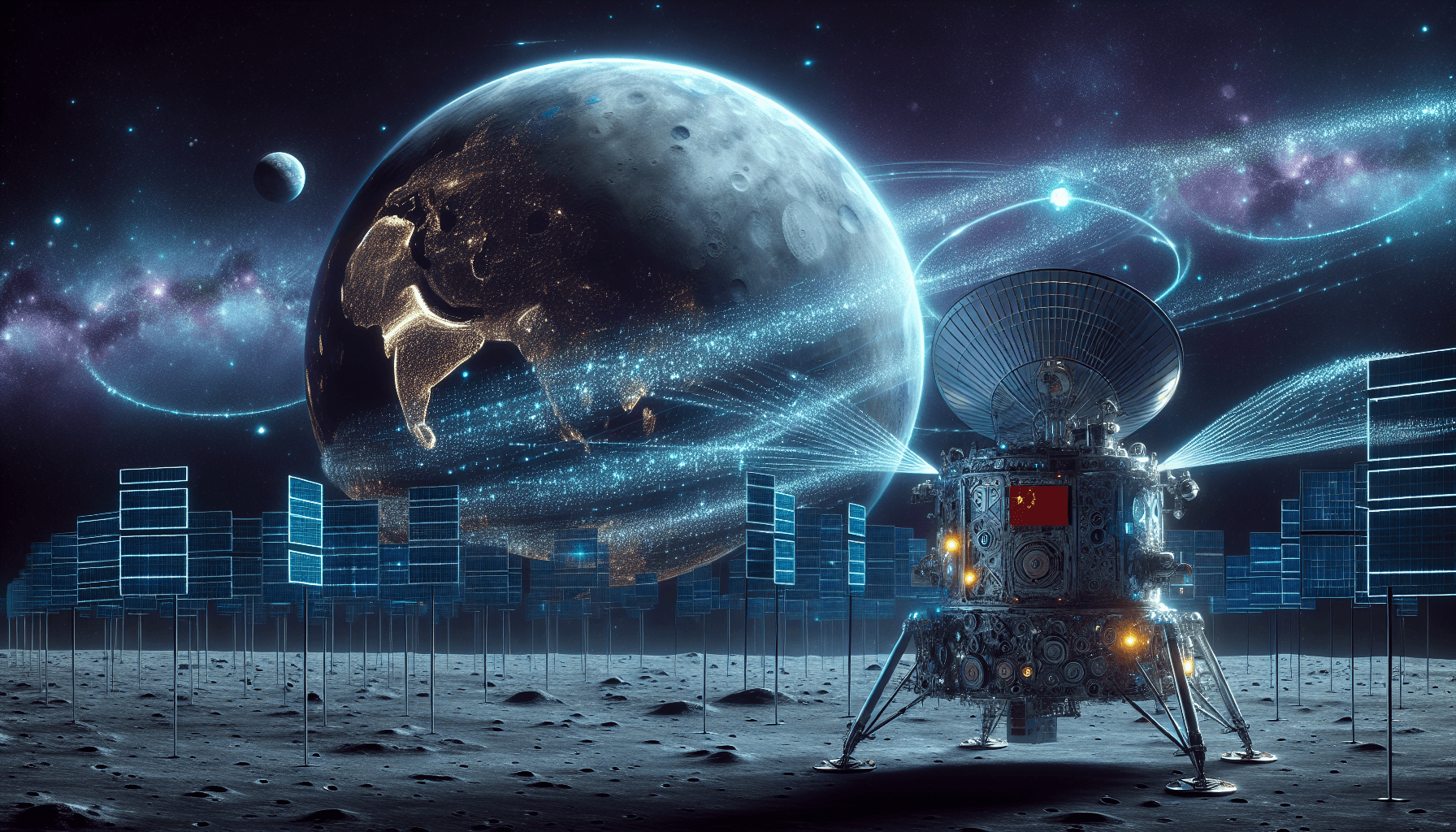
The vast expanse between Earth and its celestial neighbor, the Moon, has long been perceived as a hazardous gauntlet of relentless space radiation. However, a recent groundbreaking revelation from a Chinese lunar lander is poised to rewrite our understanding of this critical region. Scientists have announced the discovery of what appears to be a significant "cavity" of reduced radiation, an unexpected finding that could dramatically alter the future trajectory of lunar exploration and human deep-space missions.
Unveiling a Radiation Anomaly
This remarkable discovery, attributed to data collected by a sophisticated Chinese lunar lander, points to a zone between Earth and the Moon where radiation levels are significantly lower than previously modeled. For decades, space agencies have grappled with the formidable challenge of protecting astronauts from the twin threats of galactic cosmic rays (GCRs) and solar energetic particles (SEPs) during missions beyond Earth's protective magnetosphere. The existence of a relatively 'safer' corridor could be a monumental breakthrough, profoundly impacting future human deep-space missions.
The Perils of Space Radiation
Space beyond low Earth orbit is awash with high-energy particles capable of causing severe health issues for astronauts, including increased cancer risk, acute radiation sickness, and damage to the central nervous system. Current mission planning heavily relies on extensive shielding and limited exposure times. A naturally occurring region of lower radiation offers an unprecedented advantage for long-duration stays.
Understanding the 'Cavity' Effect
While the precise mechanisms creating this radiation "cavity" are still under intense scientific scrutiny, preliminary hypotheses suggest an interplay of various factors. Earth's magnetosphere, a powerful magnetic field that deflects much of the solar wind, likely plays a role, possibly creating a subtle shielding effect or a previously unmapped extension of its protective bubble even at lunar distances. Further data analysis and modeling will be crucial to fully comprehend the physics behind this intriguing phenomenon.
Revolutionizing Lunar Missions and Beyond
The implications of a relatively low-radiation path to the Moon are profound, particularly as humanity sets its sights on establishing sustained lunar presence. This discovery could:
- Enable Longer Missions: Astronauts could potentially spend extended periods on the lunar surface or in transit without requiring prohibitively heavy radiation shielding.
- Reduce Mission Costs: Less need for specialized, bulky shielding materials could streamline spacecraft design and reduce launch mass.
- Enhance Astronaut Safety: Significantly mitigate the health risks associated with deep-space radiation exposure, improving crew well-being and operational efficiency.
- Facilitate Lunar Bases: The prospect of permanent lunar habitats becomes more viable if transit routes and certain lunar orbital zones offer natural protection.
This potential reduction in radiation exposure is a game-changer for mission architects. Less need for specialized, bulky shielding materials could streamline spacecraft design, reduce launch mass, and significantly mitigate health risks for crews. It paves the way for longer missions and makes the prospect of permanent lunar habitats more viable, transforming long-term human presence beyond Earth.
A New Era for Human Spaceflight
Beyond the Moon, this finding provides invaluable data for planning future crewed journeys to Mars and beyond. Understanding how such radiation 'cavities' form and persist could lead to strategies for identifying similar safe corridors in other parts of the solar system, making interstellar travel a slightly less daunting prospect for humanity.
Pioneering Data from Chinese Missions
The critical data for this discovery was gathered by a Chinese lunar lander, underscoring the nation's growing contributions to global space science. These missions are not only about exploring the lunar surface but also about conducting cutting-edge research that provides fundamental insights beneficial to the entire international space community.
The Path Forward
The immediate next steps involve rigorous validation of these findings and further detailed mapping of the radiation environment between Earth and the Moon. This potential 'safe haven' represents more than just a scientific curiosity; it's a beacon of hope for a future where humanity can explore the cosmos with greater safety and ambition, continuously pushing the boundaries of what's possible.