Colossal Virus Discovery: Rewriting the Origins of Complex Life
A groundbreaking discovery of an immense virus is challenging fundamental theories on the evolution of complex life, suggesting viruses may hold a more central role in Earth's primordial past than previously thought.
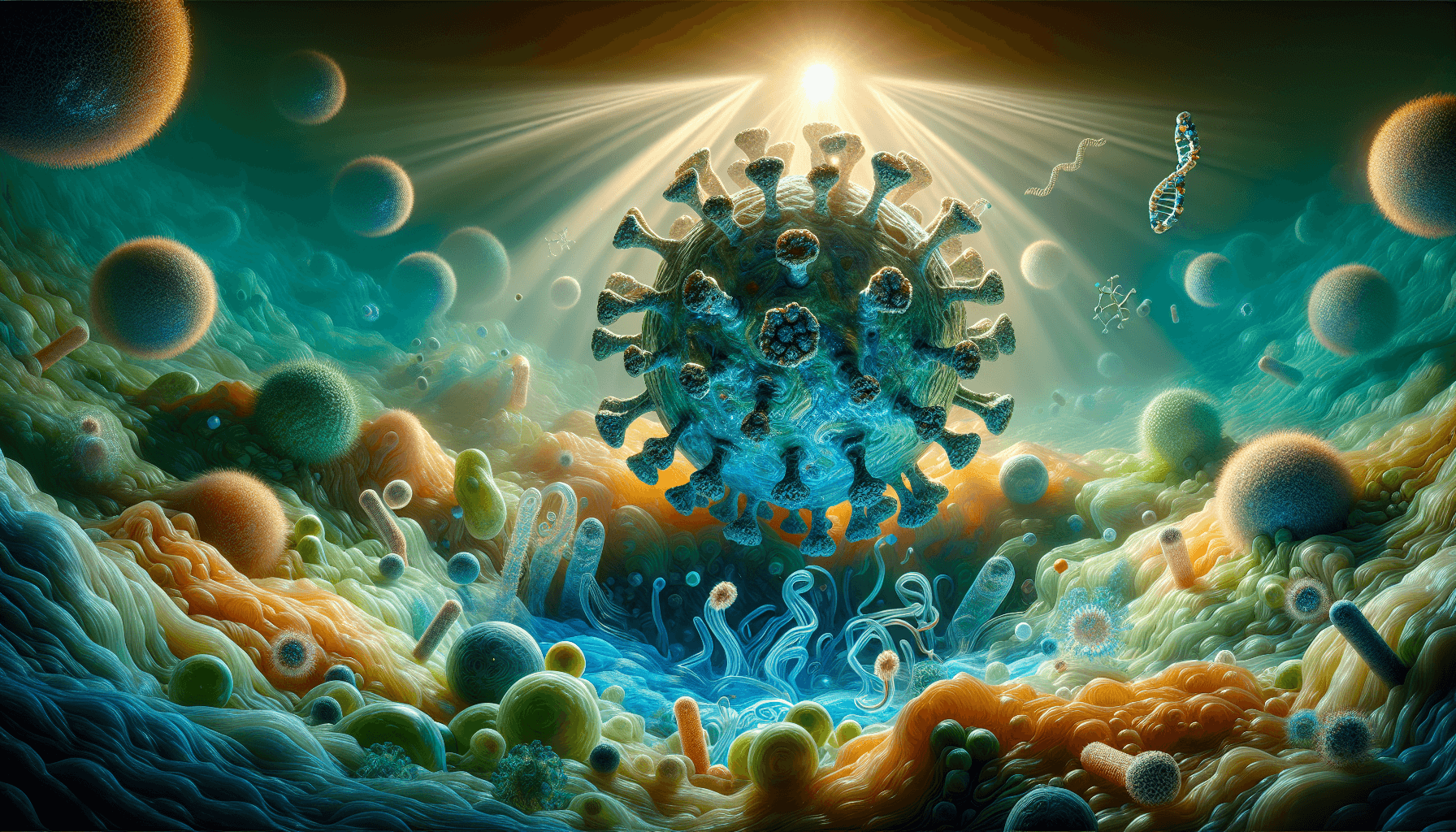
Unveiling a Game-Changer: A New Era in Virology
For decades, the scientific community has grappled with the fundamental question: how did complex life emerge from the primordial soup? The established narrative often places viruses as mere parasites, latecomers in the evolutionary saga. However, a recent, monumental discovery of a previously unknown giant virus is poised to dramatically reshape this understanding, potentially rewriting the very textbooks on the origin and evolution of life on Earth.
This isn't just another virus; it's a colossal entity that blurs the lines between what we traditionally define as viral and cellular life. Its sheer size and genomic complexity are forcing researchers to reconsider the foundational branches of the tree of life, hinting at a far more intricate and surprising evolutionary journey than previously imagined.
What Makes a Virus "Giant"?
When scientists speak of "giant viruses," they're not exaggerating. These aren't your typical influenza or common cold viruses. Giant viruses, first truly recognized with the discovery of Mimivirus in 2003, are characterized by several extraordinary features:
- Enormous Size: They can be as large as some bacteria, visible under a light microscope, unlike most viruses.
- Massive Genomes: Their genetic material can be hundreds of thousands, even millions, of base pairs long, far exceeding that of many cellular organisms.
- Complex Genetic Repertoire: They possess genes for functions typically associated with cells, such as protein synthesis components, DNA repair enzymes, and even metabolic pathways, which traditional viruses lack.
The newly discovered virus reportedly shares these astonishing characteristics, pushing the boundaries of what we thought possible for viral entities and deepening the mystery of their place in biology.
Challenging the 'Three Domains' Paradigm
The long-standing model of life divides all organisms into three fundamental domains: Bacteria, Archaea, and Eukarya (which includes animals, plants, fungi, and protists). Viruses have largely been considered outside this framework, often viewed as non-living biological agents because they cannot replicate independently.
However, the existence and growing number of giant viruses, especially this latest discovery, suggest a more fluid and interconnected evolutionary past. Their complex genetic machinery raises profound questions:
- Did giant viruses evolve from simpler cellular forms through a process of reductive evolution?
- Or, perhaps more controversially, did they emerge from a distinct, ancient lineage that predates or co-evolved alongside the common ancestors of Bacteria, Archaea, and Eukarya?
This latter hypothesis implies that viruses might not just be hangers-on but could have played a foundational role in the very emergence of cellular life.
Implications for Understanding Life's Ancient Past
The implications of this discovery are profound. If giant viruses represent an ancient, independent branch of life, it could mean that the Last Universal Common Ancestor (LUCA) was far more complex than currently envisioned, or that life arose multiple times, with viruses representing a parallel evolutionary success story.
Furthermore, these findings could shed light on the enigmatic origins of eukaryotic cells – cells with a nucleus and other membrane-bound organelles. Some theories propose that eukaryotic complexity arose through ancient viral infections or mergers, and giant viruses, with their cellular-like features, could be living relics or modern analogues of such ancient biological architects.
The Road Ahead: A New Frontier in Research
This groundbreaking discovery marks a pivotal moment in virology and evolutionary biology. Scientists are now faced with the exciting challenge of thoroughly characterizing this new giant virus, unraveling its complete genetic code, and understanding its unique biological mechanisms. The insights gained will undoubtedly fuel new theories and experiments, pushing the boundaries of our knowledge about life's origins.
As researchers delve deeper into the secrets held within this colossal new virus, we stand on the precipice of a scientific revolution that promises to redefine our understanding of life itself, reminding us that the natural world still holds countless mysteries waiting to be uncovered.