Cosmic Breakthrough: Scientists Witness the Birth of a Magnetar, the Universe's Strongest Magnet, for the First Time
A monumental discovery in astrophysics as scientists observe the formation of a magnetar, validating general relativity's predictions and opening new frontiers in understanding cosmic extremes.
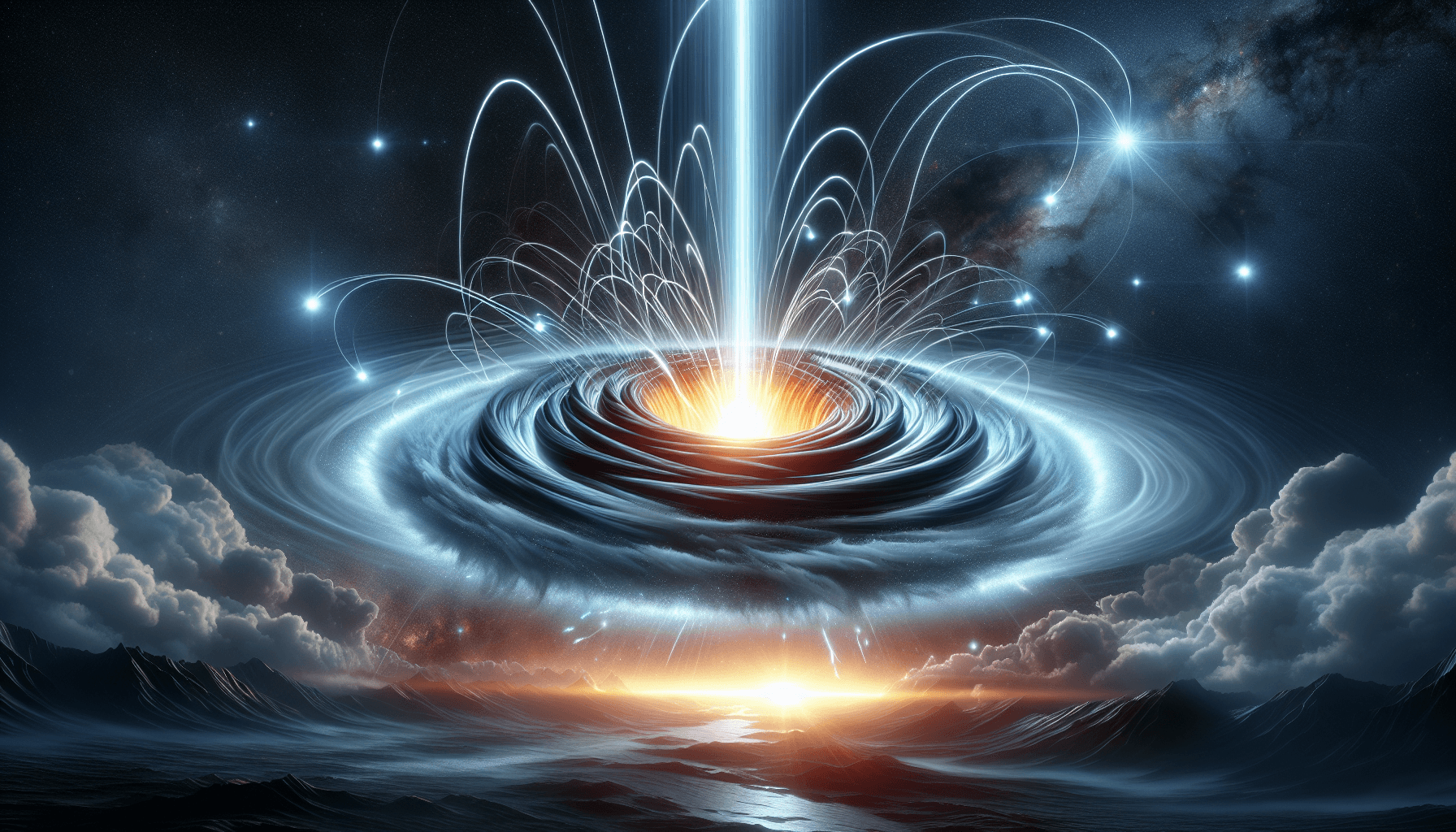
A Cosmic First: Witnessing the Birth of a Magnetar
In a groundbreaking moment for astrophysics, scientists have announced the unprecedented observation of a magnetar's birth. This celestial event marks the first time humanity has directly witnessed the formation of one of the universe's most extraordinarily powerful magnets, offering invaluable insights into extreme stellar physics and the fundamental forces governing our cosmos.
This monumental discovery, made possible by an ingenious application of general relativity principles, provides a direct window into the violent processes that forge these enigmatic objects. It promises to reshape our understanding of stellar evolution and the most energetic phenomena in the universe.
Unveiling the Universe's Most Powerful Magnets
What Exactly is a Magnetar?
Magnetars are a rare and exotic type of neutron star, the super-dense remnants of massive stars that have collapsed under their own gravity. What distinguishes a magnetar is its incredibly intense magnetic field – trillions of times stronger than Earth's and a thousand times more potent than that of a typical neutron star. These fields are so powerful they can distort atoms, rip electrons from their orbits, and even affect the very fabric of spacetime.
Their extreme magnetic fields generate spectacular bursts of X-rays and gamma rays, making them some of the most luminous objects in the high-energy sky. Studying their formation is crucial for understanding the origins of such colossal magnetic forces.
- Extreme Density: A magnetar packs more mass than our Sun into a sphere only about 20 kilometers (12 miles) across.
- Unfathomable Magnetism: Their magnetic fields can reach up to 1015 Gauss, capable of erasing credit card data from hundreds of thousands of miles away.
- High-Energy Flares: They sporadically release immense amounts of energy in powerful bursts, posing a hazard to nearby celestial bodies.
The "Magic Trick" of General Relativity
The observation of this magnetar's genesis was not through traditional optical telescopes alone. It relied on a sophisticated application of Albert Einstein's theory of general relativity, often dubbed a "magic trick" due to its profound yet subtle predictions. This breakthrough was primarily facilitated by the detection of gravitational waves – ripples in spacetime generated by incredibly violent cosmic events.
When massive objects like neutron stars merge or undergo catastrophic collapse, they create these gravitational ripples that propagate across the universe. Observatories like LIGO and Virgo, designed to detect these minuscule distortions, provided the crucial data that allowed scientists to pinpoint the exact moment and location of the magnetar's birth, validating relativistic predictions in the most extreme cosmic laboratories.
The Stellar Cataclysm: How Magnetars are Born
From Supernova to Magnetar
The birth of a magnetar is typically believed to stem from one of two cataclysmic events: either the core-collapse supernova of an exceptionally massive, rapidly rotating star, or the merger of two neutron stars. In the observed event, the tell-tale signs pointed towards a scenario involving immense gravitational forces and rapid stellar collapse, providing critical evidence for prevailing theories.
During such an event, the star's core collapses, compressing matter to extraordinary densities and amplifying existing magnetic fields to mind-boggling strengths. The precise conditions required for this process have long been theorized, but direct observation provides the definitive proof scientists have sought for decades.
Implications for Astrophysics and Beyond
A New Window into Extreme Physics
This unprecedented observation opens a new era for astrophysics. By directly witnessing a magnetar's birth, scientists can refine models of stellar evolution, understand the mechanisms behind gamma-ray bursts, and test the limits of physics under conditions impossible to replicate on Earth. It offers a unique opportunity to study matter in its most extreme states, where quantum mechanics meets general relativity.
Future research will undoubtedly delve deeper into the nature of these cosmic behemoths, exploring their role in galactic evolution and potentially revealing even more secrets about the fundamental forces that shape our universe.
Conclusion: Peering into the Cosmos' Most Violent Events
The first-time observation of a magnetar's birth is a profound testament to human ingenuity and our relentless pursuit of cosmic understanding. By harnessing the power of general relativity and advanced observational techniques, scientists have unlocked a new chapter in the story of stellar evolution and extreme cosmic phenomena. This landmark discovery not only deepens our knowledge of magnetars but also underscores the incredible potential of gravitational wave astronomy to unveil the universe's most hidden and violent secrets.