Cosmic Relic Unearthed: James Webb Telescope Reveals Interstellar Comet 3I/ATLAS is Nearly as Old as the Universe
The James Webb Space Telescope (JWST) has made a groundbreaking discovery, identifying interstellar comet 3I/ATLAS as a potential relic from the early universe, almost as old as spacetime itself.
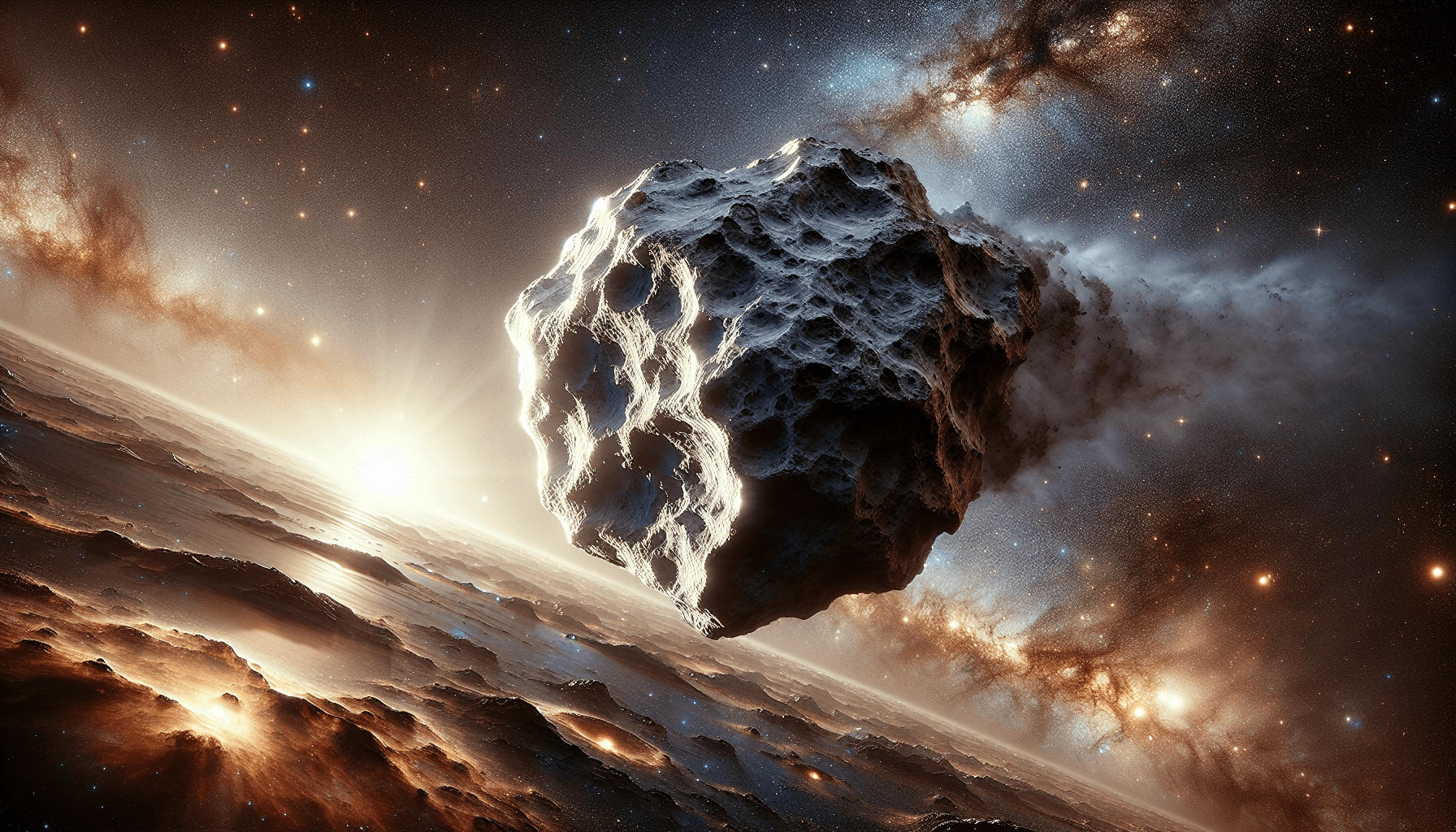
Cosmic Relic Unearthed: James Webb Telescope Reveals Interstellar Comet 3I/ATLAS is Nearly as Old as the Universe
Imagine holding a fragment of the universe that dates back to its very infancy, a tangible piece of cosmic history almost as old as spacetime itself. This isn't science fiction, but the incredible reality revealed by the James Webb Space Telescope (JWST), which has identified interstellar comet 3I/ATLAS as a potential relic from the dawn of creation. This astounding discovery offers an unprecedented glimpse into the conditions and materials present billions of years ago, challenging our understanding of cosmic evolution and the origins of matter.
Unveiling a Primordial Wanderer
For years, astronomers have tracked peculiar objects traversing our solar system that originate from beyond its bounds. These 'interstellar messengers' provide unique insights, as they carry pristine material from other stellar nurseries. Among these, 3I/ATLAS stands out, first identified as an unusual visitor, its trajectory confirmed its extraterrestrial origin.
The unparalleled capabilities of the James Webb Space Telescope, with its exquisite infrared sensitivity, proved instrumental in scrutinizing this enigmatic object. By analyzing its spectral signature and composition, scientists were able to deduce its incredible age, pushing the boundaries of cosmic discovery.
A Time Capsule from the Universe's Infancy
The revelation that 3I/ATLAS could be nearly as old as the universe itself — approximately 13.8 billion years — is nothing short of revolutionary. This suggests the comet formed in an environment vastly different from our own nascent solar system, potentially even before the widespread formation of stars and planetary systems we know today.
Such an ancient object would be a true cosmic fossil, preserving original interstellar dust and ice grains that have undergone minimal processing. Studying its composition could provide direct evidence for:
- The chemical makeup of the early universe.
- The processes of dust and ice aggregation in primordial clouds.
- Clues about the very first steps towards the formation of stars and galaxies.
Interstellar Origins and Cosmic Journeys
Interstellar objects like 3I/ATLAS are thought to be ejected from their home star systems through gravitational interactions, embarking on epic journeys across the vast emptiness of space. Their presence in our solar system provides a rare opportunity to study materials from distant corners of the galaxy without having to travel there.
What makes 3I/ATLAS particularly compelling is not just its interstellar origin, but its extreme age. Most interstellar objects detected so far are believed to have formed within younger, more active star-forming regions. 3I/ATLAS hints at a population of extremely ancient objects that have been wandering the cosmos for eons.
The JWST Advantage: Peering into the Past
The James Webb Space Telescope was specifically designed to observe the most distant and ancient phenomena in the universe. Its ability to capture faint infrared light allows it to penetrate cosmic dust and gas, revealing details that were previously inaccessible. For 3I/ATLAS, this meant discerning subtle compositional clues indicative of its profound age.
This discovery underscores the JWST's transformative power, not only for observing distant galaxies but also for unraveling the mysteries within our own cosmic neighborhood. Each new observation pushes the frontiers of astrophysics, providing deeper insights into the fundamental questions of existence.
The discovery of 3I/ATLAS as a potential cosmic relic from the early universe marks a monumental achievement in astronomy. It presents an unprecedented opportunity to study the building blocks of the cosmos as they were billions of years ago, offering vital clues about the origins of matter, stars, and ultimately, life itself. As the James Webb Space Telescope continues its mission, we can anticipate more such groundbreaking revelations, each one bringing us closer to understanding our place in the grand tapestry of cosmic history.