
Global Markets Brace for Impact: Surging Oil and the Fading 'Trump Put' Stoke Uncertainty on March 30, 2026
As March 30, 2026 approaches, international markets are gripped by anxiety. Relentlessly rising oil prices fuel inflation fears, while the diminishing influence of the "Trump Put" leaves investors seeking new anchors amidst growing economic and political volatility.
Global Markets on Edge: A Dual Challenge Emerges
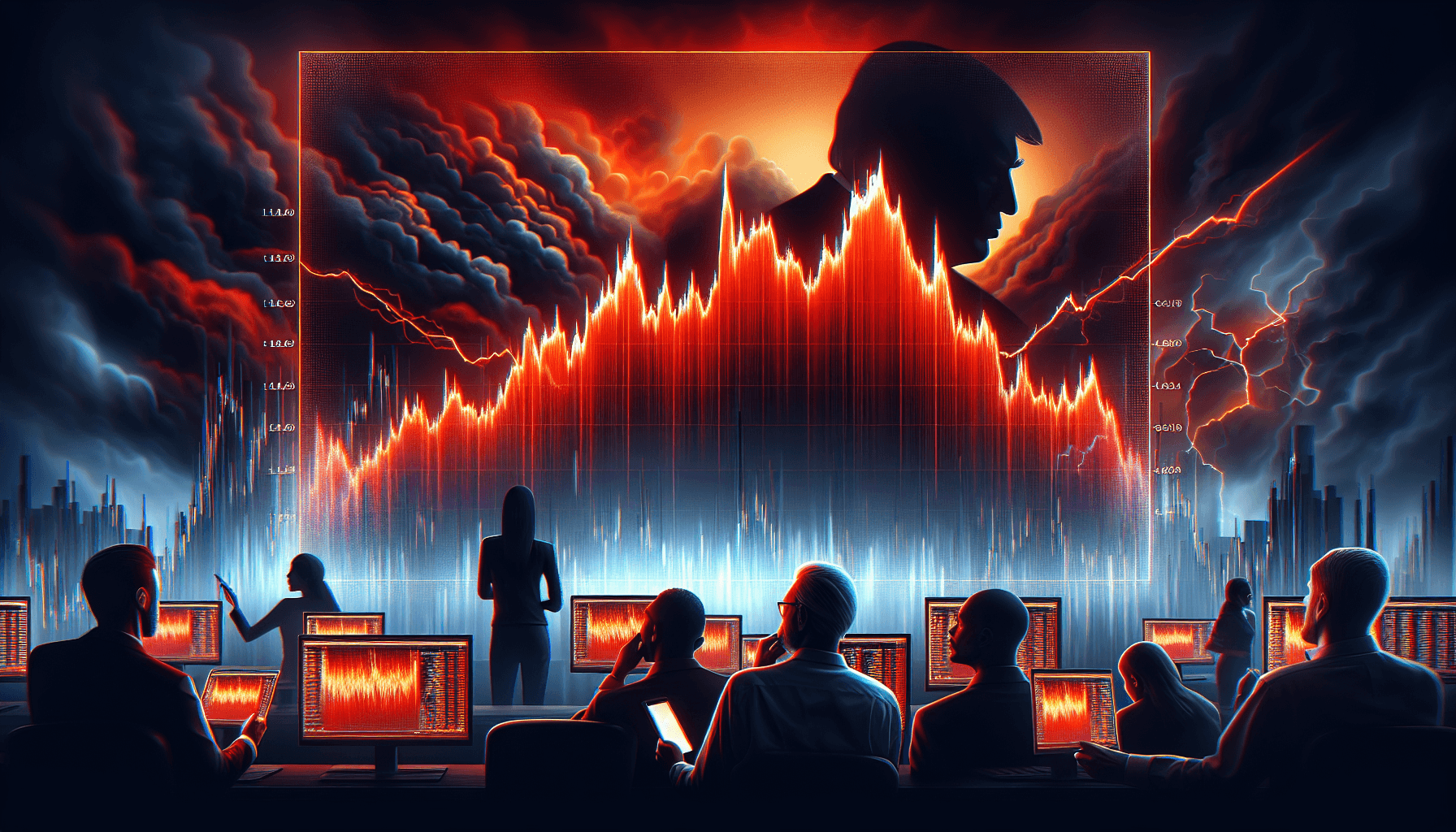
As March 30, 2026 dawns, global financial markets find themselves at a critical juncture, permeated by a palpable sense of unease. Investors worldwide are navigating a complex and increasingly unpredictable landscape, defined by two dominant, interconnected forces: the relentless surge in crude oil prices and the waning influence of the perceived "Trump Put". This dual challenge is reshaping strategies and risk assessments, casting a shadow of uncertainty over the economic outlook.
The Black Gold's Relentless Ascent
The financial world is witnessing an unabated upward trajectory in crude oil prices. This isn't merely a market fluctuation; it's a profound shift driven by a confluence of interconnected global factors. The implications resonate across every sector, from manufacturing to daily consumer spending.
Experts point to several critical elements fueling this energy market volatility:
- Escalating Geopolitical Tensions: Unrest in key oil-producing regions continues to disrupt supply chains and create uncertainty, directly impacting global output.
- Persistent Underinvestment: Years of reduced capital expenditure in exploration and production have led to a structural deficit, struggling to meet burgeoning demand.
- Robust Global Demand Recovery: Despite economic headwinds, major economies continue to consume significant amounts of energy, putting pressure on finite resources.
- OPEC+ Decisions: Strategic production adjustments by major oil cartels also play a crucial role in managing — or restricting — global supply.
This surge fuels widespread inflationary pressures, impacting everything from transport costs to the raw materials for manufacturing. Central banks worldwide face a growing dilemma: tighten monetary policy further, risking an economic slowdown, or tolerate higher inflation, eroding purchasing power.
Inflationary Headwinds and Economic Strain
The ripple effect of expensive oil is profound and far-reaching. Businesses grapple with elevated operating costs, which inevitably squeeze profit margins and could force price increases. Simultaneously, consumers face higher prices at the pump and for a wide array of goods, significantly eroding their purchasing power and discretionary income.
This potential dampening of consumer spending, a vital engine for economic growth in major economies like the US, Europe, and Asia, raises concerns. Fears mount over the sustainability of current growth trajectories in the face of persistent energy shocks, potentially leading to a period of stagflation.
The Fading Promise of the 'Trump Put'
For several years, many investors operated under the implicit assumption of a "Trump Put" – a belief that a pro-business, deregulation-focused administration would always step in to support markets during downturns. This perception offered a significant psychological safety net, encouraging risk-taking and fostering a sense of stability.
However, by March 2026, this perceived safeguard appears to be losing its potency. Reasons include growing policy uncertainty surrounding future political landscapes, a shift in market focus from broad deregulation to more nuanced global economic challenges, and perhaps a realization that past political interventions may not be sufficient for current global complexities.
Navigating Political and Policy Ambiguity
The fading "Trump Put" signifies a broader pivot for investors. Markets are becoming less reliant on the prospect of specific political interventions and more attuned to fundamental economic indicators and geopolitical realities. This transition demands a significant reassessment of risk premiums and investment strategies across all asset classes.
Investors are now factoring in a wider range of political outcomes and their potential impact on trade, taxation, and regulatory environments, rather than assuming a default market-friendly stance. This shift underscores a move towards greater market autonomy, where fundamentals and global events dictate trajectories more directly.
A Dual Challenge for Global Markets
The simultaneous presence of soaring oil prices and the diminishing "Trump Put" creates a potent cocktail of uncertainty. Companies in energy-intensive sectors face acute cost pressures, while those reliant on robust consumer spending could see demand weaken significantly. The absence of a clear political "backstop" means that market corrections might be more pronounced and prolonged than in previous cycles.
This environment underscores the critical importance of diversification, strategic hedging strategies, and a deep, nuanced understanding of macro-economic trends for any investor. Navigating these turbulent waters requires foresight and agility.
Outlook: Vigilance and Adaptation are Key
As global markets navigate these unprecedented challenges, investor vigilance is paramount. The intricate interplay between geopolitical risks, energy market dynamics, and evolving political landscapes will largely define market performance in the coming months. Adaptability will be the key for investors seeking to protect capital and identify nascent opportunities in this increasingly complex and less predictable environment. The resilience of economies and the ingenuity of market participants will undoubtedly be tested.
How this article was made
- Sources
- Markets Insider - Business Insider
- Generated on:
- Apr 30, 2026
This content is produced by Acerbo.AI's AI editorial pipeline: source gathering, rewriting and imagery are automated. Editorial oversight stays human.
Related Articles

US Inflation Jumps to 3.7%, Sending Shockwaves Through Tech Markets
The latest US inflation figures reveal an unexpected rise to 3.7%, sparking renewed concerns among investors and sending ripples of pressure across the technology sector.

Strong Bank Earnings Fail to Sway Markets: Unpacking Wall Street's Indifference
Major banks have reported impressive quarterly earnings, showcasing robust financial health. However, the market's muted reaction suggests deeper concerns about future economic headwinds, interest rate trajectories, and investor sentiment. We delve into the paradox.
Wall Street's AI Revolution: Four Years On, Are Risks Looming Large?
Wall Street's AI-driven bull market nears its four-year mark. While innovation soars, rising concerns over valuations, market concentration, and regulation signal potential headwinds.