JWST Uncovers Mysterious 'Red Dots': Glimpse of Universe's First Stars on Brink of Cosmic Collapse?
The James Webb Space Telescope has unveiled enigmatic 'little red dots' in the distant cosmos, believed by scientists to be the universe's earliest stars or proto-galaxies, poised at a critical evolutionary juncture. This groundbreaking discovery offers an unprecedented look into the dawn of cosmic history.
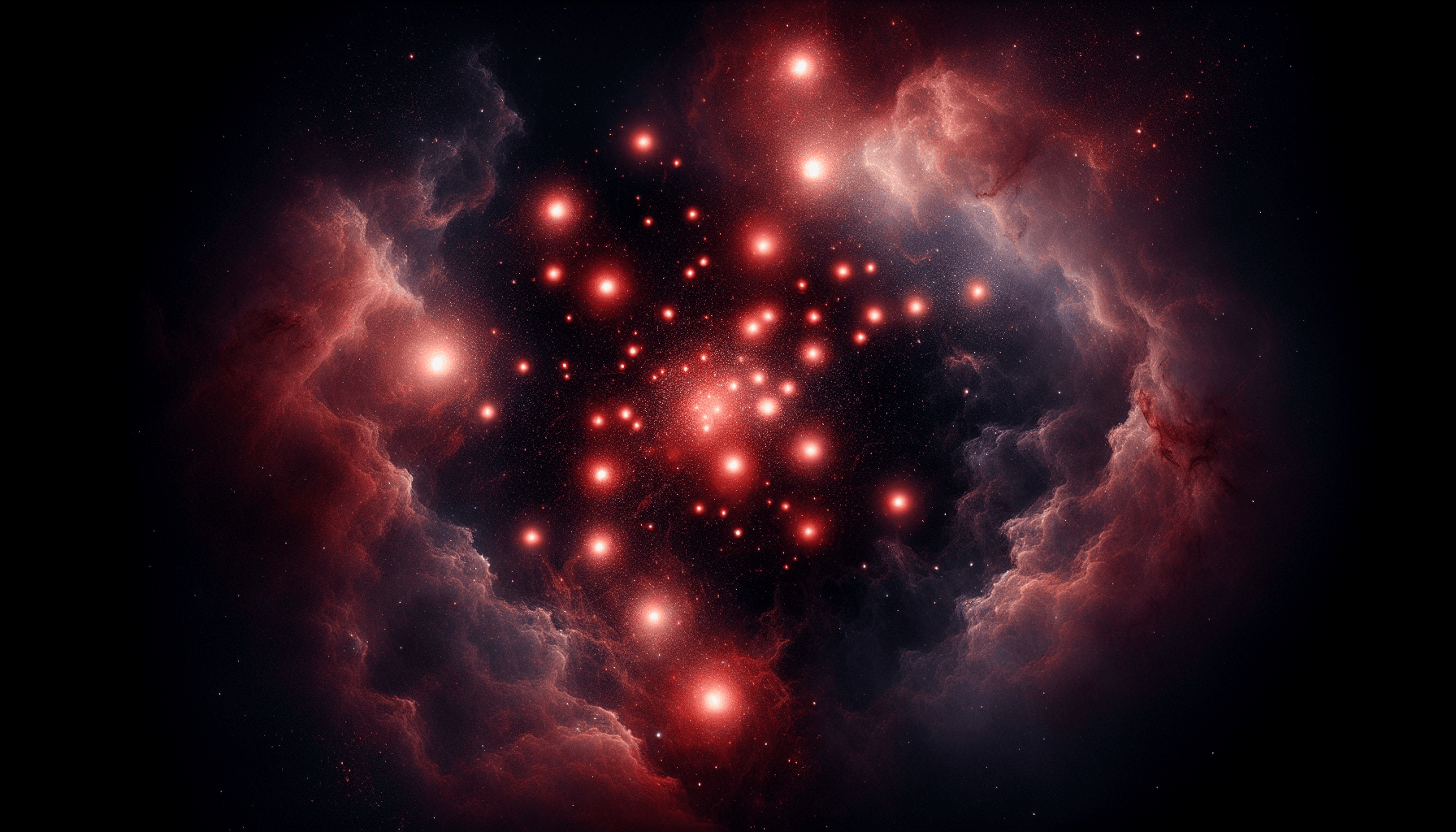
The cosmos continues to yield its deepest secrets, thanks to the unparalleled gaze of the James Webb Space Telescope (JWST). Astronomers are abuzz with a groundbreaking discovery: enigmatic "little red dots" observed in the farthest reaches of space. These mysterious formations are believed to be the universe's very first stars, or nascent proto-galaxies, captured at a pivotal moment—potentially on the verge of dramatic cosmic collapse. This unprecedented glimpse into the dawn of time promises to redefine our understanding of how the universe began to shine.
Unveiling the Universe's First Lights
For decades, scientists have theorized about the existence of the universe's primordial stars, often dubbed Population III stars—massive, short-lived giants formed from the pristine hydrogen and helium of the Big Bang. The 'red dots' spotted by JWST offer the most compelling evidence yet of these elusive celestial pioneers. Their faint, reddish hue is a tell-tale sign of extreme redshift, indicating they are incredibly distant and ancient, seen billions of years ago, shortly after the Big Bang.
The Nature of the "Red Dots"
These aren't just any distant galaxies. The current hypothesis suggests these 'red dots' could represent the very first aggregates of stars, perhaps even the seeds of the first galaxies. Their "verge of collapse" status speaks to the dynamic processes of the early universe. These initial stellar behemoths would have burned rapidly, ending in spectacular supernovae that enriched the nascent cosmos with heavier elements.
JWST: Our Infrared Eye on Cosmic Dawn
The discovery underscores the revolutionary capabilities of the James Webb Space Telescope. Unlike Hubble, JWST observes primarily in infrared light, a crucial advantage for studying the early universe. As light from distant objects travels, the universe's expansion stretches its wavelength, shifting visible light into the infrared spectrum. This cosmological redshift means JWST is uniquely equipped to pierce through cosmic dust and peer back in time to detect the faint glow of the universe's infancy.
Deepening Our Understanding
The data from these 'red dots' is undergoing rigorous analysis. Astronomers are using JWST's spectroscopic capabilities to study their light, hoping to determine precise composition, age, and evolutionary stage. This is crucial for confirming if they are indeed the first stars or incredibly early proto-galaxies, providing direct evidence of the epoch of reionization—when the universe transitioned from a dark, neutral state to the transparent cosmos we see today.
A Glimpse into Cosmic Origins
If confirmed as the universe's first stars, these findings would have profound implications for our understanding of cosmic evolution. The intense ultraviolet radiation from these early stars is thought to have "reionized" the hydrogen gas. Furthermore, their violent deaths would have forged the first heavy elements—carbon, oxygen, iron—essential for the formation of subsequent stars, planets, and ultimately, life itself. The 'red dots' represent the very first steps in this grand cosmic alchemy.
The discovery of these mysterious 'little red dots' by the James Webb Space Telescope marks a monumental step forward in astronomy. It offers a tantalizing glimpse into the universe's infancy, challenging existing models and opening new avenues for research. As scientists continue to unravel the secrets held within these ancient specks of light, we move closer to answering fundamental questions about our cosmic origins and the very first moments when light illuminated the universe.