Lunar Gateway to the Stars? Chinese Probe Unveils Massive Radiation Anomaly Between Earth and Moon
A Chinese lunar lander has made a groundbreaking discovery: a vast 'cavity' of reduced radiation in the cislunar space, potentially revolutionizing future human missions to the Moon and beyond by offering safer transit routes.
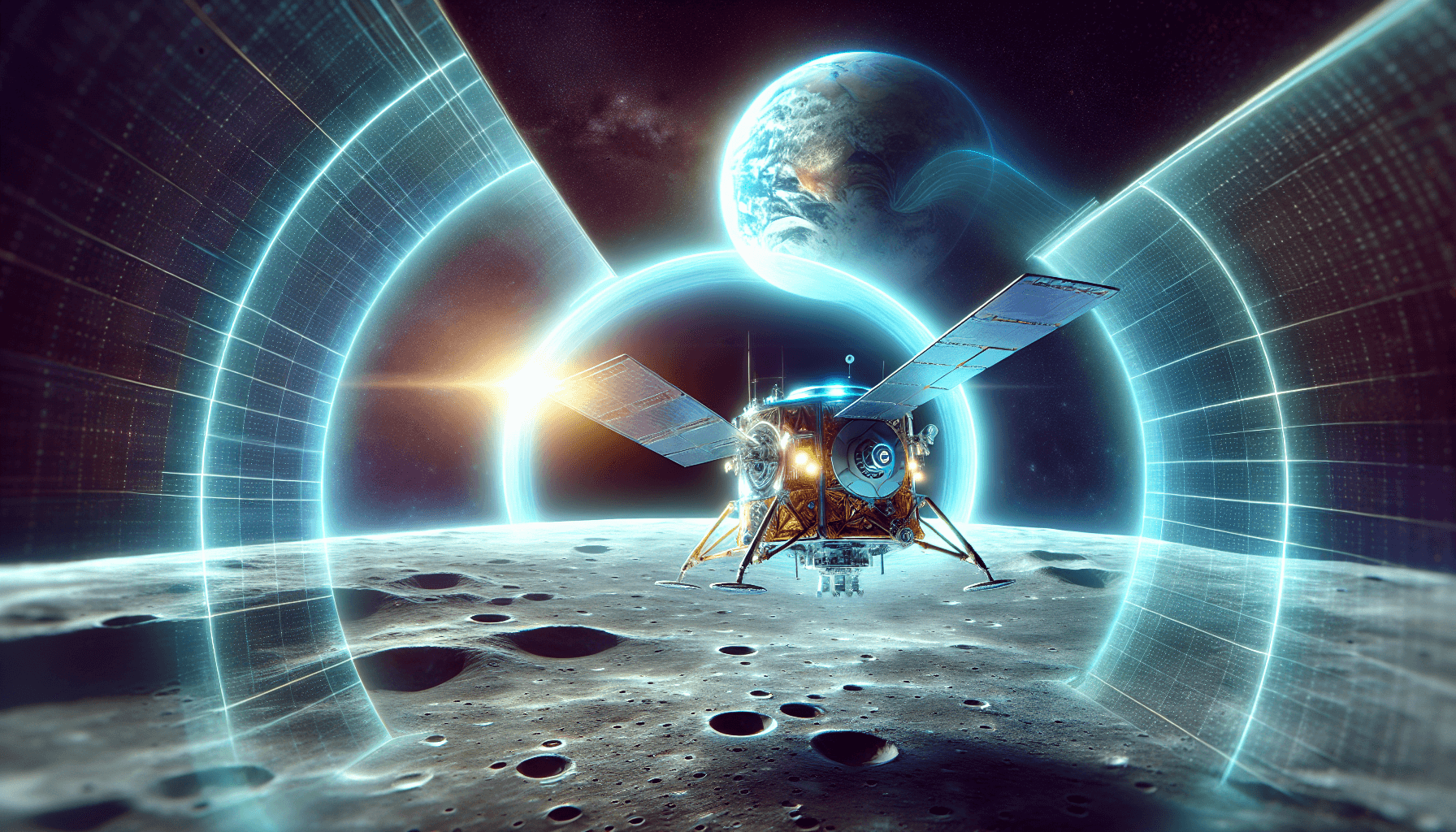
A New Frontier for Lunar Travel: Chinese Lander Uncovers Radiation 'Cavity'
Humanity's ambitious push towards establishing a sustained presence on the Moon and venturing further into deep space has long been challenged by one formidable adversary: cosmic radiation. Now, a recent revelation from a Chinese lunar lander threatens to fundamentally alter our understanding of the space between Earth and its celestial neighbor, potentially unlocking safer and more efficient pathways for future missions. The discovery of a vast, unexpected 'cavity' of significantly reduced radiation levels in cislunar space could be a game-changer for lunar exploration.
Navigating the Cosmic Radiation Sea
For decades, scientists have grappled with the dangers posed by high-energy particles from solar flares and galactic cosmic rays. Earth's magnetic field offers a protective shield, trapping some of these particles in the Van Allen radiation belts, but beyond this protective bubble, astronauts face a constant barrage. This radiation can cause severe health risks, including acute radiation sickness, increased cancer risk, and damage to the central nervous system, making extensive deep-space missions particularly hazardous.
Designing spacecraft and habitats with sufficient shielding to protect crews from this invisible menace adds substantial weight and complexity to missions, driving up costs and limiting payload capacity. Overcoming the radiation challenge has been a primary focus for space agencies worldwide, as it directly impacts mission duration, crew safety, and the feasibility of long-term human outposts.
The Chang'e Revelation: A 'Safe Passage' Anomaly
The groundbreaking discovery was reportedly made by a sophisticated Chinese lunar lander, likely part of the nation's ongoing Chang'e series of robotic missions. While traversing the critical cislunar region—the space encompassing Earth, the Moon, and their respective gravitational influences—the probe’s advanced instruments detected a localized zone where radiation levels were dramatically lower than predicted by existing models. This anomaly, described as a 'cavity' or 'tunnel' of reduced radiation, represents a significant deviation from the expected hazardous environment.
Preliminary data suggests this 'cavity' is not a fleeting phenomenon but a stable feature within the complex interplay of Earth's magnetosphere and the solar wind. Its precise mechanisms are still under investigation, but initial hypotheses point to a unique interaction between the solar wind's plasma, Earth's magnetic tail, and potentially the Moon's own nascent magnetic anomalies. The reduction in radiation within this corridor is so substantial that it could offer a comparatively safe passage for spacecraft and astronauts, minimizing exposure risks during transit to lunar orbit or the lunar surface.
Reshaping Future Lunar and Deep Space Missions
The implications of this discovery are profound. Firstly, a reliable 'safe passage' could drastically reduce the shielding requirements for crewed missions to the Moon, leading to lighter spacecraft, lower launch costs, and greater payload capacity. This efficiency gain could accelerate the timeline for establishing permanent lunar bases and facilitating more frequent lunar expeditions.
Furthermore, this radiation 'cavity' could serve as a crucial stepping stone for even more ambitious endeavors, such as human missions to Mars. By providing a safer transit route through a previously high-risk zone, it could mitigate one of the most significant obstacles to long-duration deep-space travel. Astronauts could spend more time on their missions with reduced cumulative radiation doses, enhancing both their safety and productivity.
Unraveling the Scientific Mystery
Beyond its practical applications, the discovery opens a new chapter in our scientific understanding of space weather and planetary magnetospheres. Scientists will now be intensely focused on characterizing this 'cavity' – its exact dimensions, stability, and the underlying physical processes that create and maintain it. This will involve extensive modeling, further observations from other spacecraft, and potentially dedicated missions to study the phenomenon.
Understanding this anomaly could yield critical insights into how planetary magnetic fields interact with the solar wind, offering clues to the evolution of planetary atmospheres and the potential for habitability beyond Earth. It challenges existing space environment models and paves the way for a more nuanced and accurate prediction of radiation hazards in our solar system.
The Dawn of a New Era in Space Exploration
The revelation of this radiation 'cavity' by a Chinese lunar lander is more than just an interesting scientific footnote; it is a potential paradigm shift. It offers a tangible pathway to making lunar and deep-space exploration safer, more economical, and ultimately, more achievable. As the international community continues its race back to the Moon and beyond, this discovery could foster unprecedented collaboration, propelling humanity into a new era of space exploration where the cosmos is not just within reach, but within safer reach.