Lunar Radiation Riddle: Chinese Lander Unveils Critical 'Cavity' Between Earth and Moon, Reshaping Space Exploration
A Chinese lunar mission has detected a significant 'cavity' of radiation between Earth and the Moon, a discovery poised to redefine safety protocols and mission planning for future deep-space exploration.
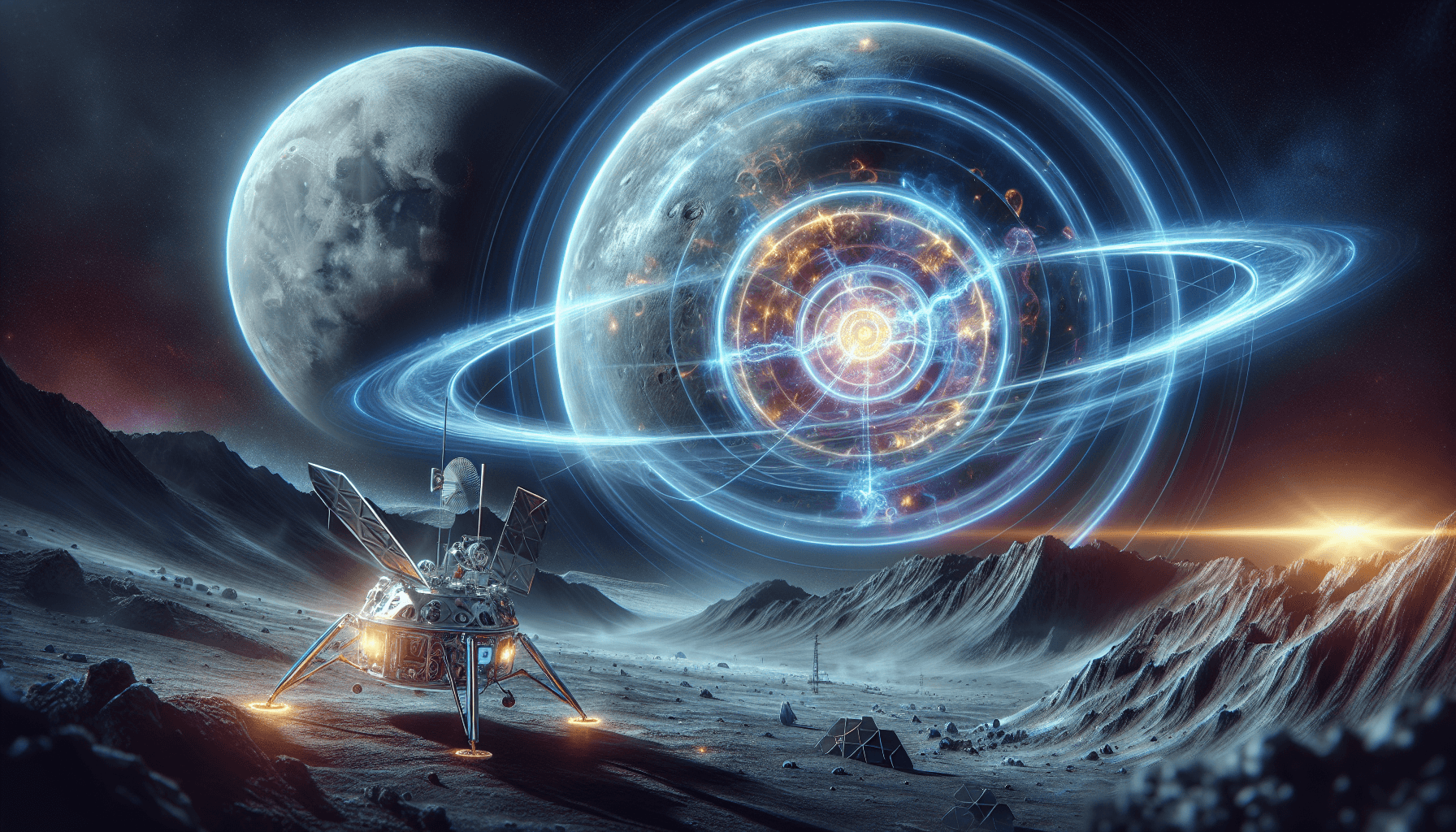
A New Frontier, A New Challenge: Unmasking the Lunar Radiation 'Cavity'
Humanity's ambitious push for a permanent lunar presence and onward deep-space exploration has just received a critical update, courtesy of a pioneering Chinese lunar lander. This groundbreaking mission has detected a colossal "cavity" of radiation nestled in the cosmic expanse between Earth and the Moon. This isn't merely a scientific curiosity; it's a revelation poised to fundamentally alter the blueprints of future lunar missions, demanding a significant re-evaluation of astronaut safety and spacecraft design.
For decades, scientists have diligently mapped the radiation environment around Earth, particularly the hazardous Van Allen belts. However, the region between our planet and its natural satellite has always held nuances. The recent findings from the Chinese lander, whose instruments were specifically designed to monitor space weather, reveal a previously uncharted and potentially significant radiation feature that could pose unforeseen challenges to long-duration human missions and the establishment of lunar bases.
The Enigmatic Discovery: What is this 'Cavity'?
While specific details are still emerging, the term 'cavity' suggests a distinct, perhaps localized, region with a unique radiation signature. It could signify an area where particle flux is unexpectedly high, or where the interaction of solar winds, cosmic rays, and Earth's magnetosphere creates an anomaly not fully accounted for in previous models. This discovery underscores the dynamic and complex nature of the space environment, far beyond the relatively stable conditions within Earth's protective magnetic field.
The data collected by the Chinese lander provides unprecedented resolution of the radiation environment in this crucial transit zone. Understanding the precise characteristics – the particle types, their energies, and the spatial extent of this 'cavity' – will be paramount for mitigating risks. It's a reminder that even seemingly familiar cosmic pathways can harbor surprises that demand thorough scientific investigation.
Implications for Future Lunar Missions
The implications of this newly identified radiation 'cavity' are profound for the burgeoning era of lunar exploration. As nations and private entities gear up for sustained human presence on the Moon, radiation exposure remains one of the most critical threats to astronaut health. Long-duration stays outside Earth's protective magnetosphere expose crews to:
- Solar Particle Events (SPEs): Bursts of high-energy particles from the Sun.
- Galactic Cosmic Rays (GCRs): Extremely energetic particles originating from outside our solar system.
A persistent or intense radiation 'cavity' in the Earth-Moon system would necessitate a complete overhaul of current mission planning. This could include developing advanced shielding technologies, designing more robust spacecraft and habitats, and carefully timing missions to avoid periods of heightened risk. It might also influence the optimal locations for lunar outposts, steering them away from areas most affected by this newly identified hazard.
Redefining Spacecraft Design and Astronaut Safety
The discovery is a catalyst for innovation in aerospace engineering and space medicine. Engineers will need to explore novel materials and structural designs that can offer superior protection against these specific radiation threats. This might involve multi-layered shielding, 'storm shelters' within habitats, or even active magnetic shielding concepts.
For astronauts, understanding the 'cavity' means developing more sophisticated dosimetry systems to monitor individual exposure in real-time and refining health protocols for managing potential radiation-induced risks. This could include tighter limits on mission durations or enhanced pre- and post-flight medical screening. The data will also be crucial for improving predictive models of space weather, allowing missions to anticipate and prepare for dangerous radiation surges.
The Path Forward: Collaboration and Continuous Research
This significant finding by the Chinese lunar mission underscores the importance of ongoing international collaboration in space science. Sharing data and expertise will be essential to fully characterize this radiation 'cavity' and develop effective countermeasures. Future missions, both robotic and human, will need to prioritize detailed radiation mapping to build a comprehensive picture of the lunar environment.
In conclusion, the detection of a giant radiation 'cavity' between Earth and the Moon is a watershed moment for space exploration. While it presents a formidable challenge, it also offers an invaluable opportunity to deepen our understanding of the cosmic environment and innovate solutions that will ultimately make humanity's expansion into the solar system safer and more sustainable. This discovery will undoubtedly be a cornerstone in the ongoing quest to establish a permanent human presence beyond Earth.