
Microbial Marvels: Tiny Cells Defy Martian Extremes, Fueling Life on Mars Hopes
New research shows certain microorganisms can survive simulated Martian conditions, including shock waves and toxic soil, significantly boosting the prospects for extraterrestrial life.
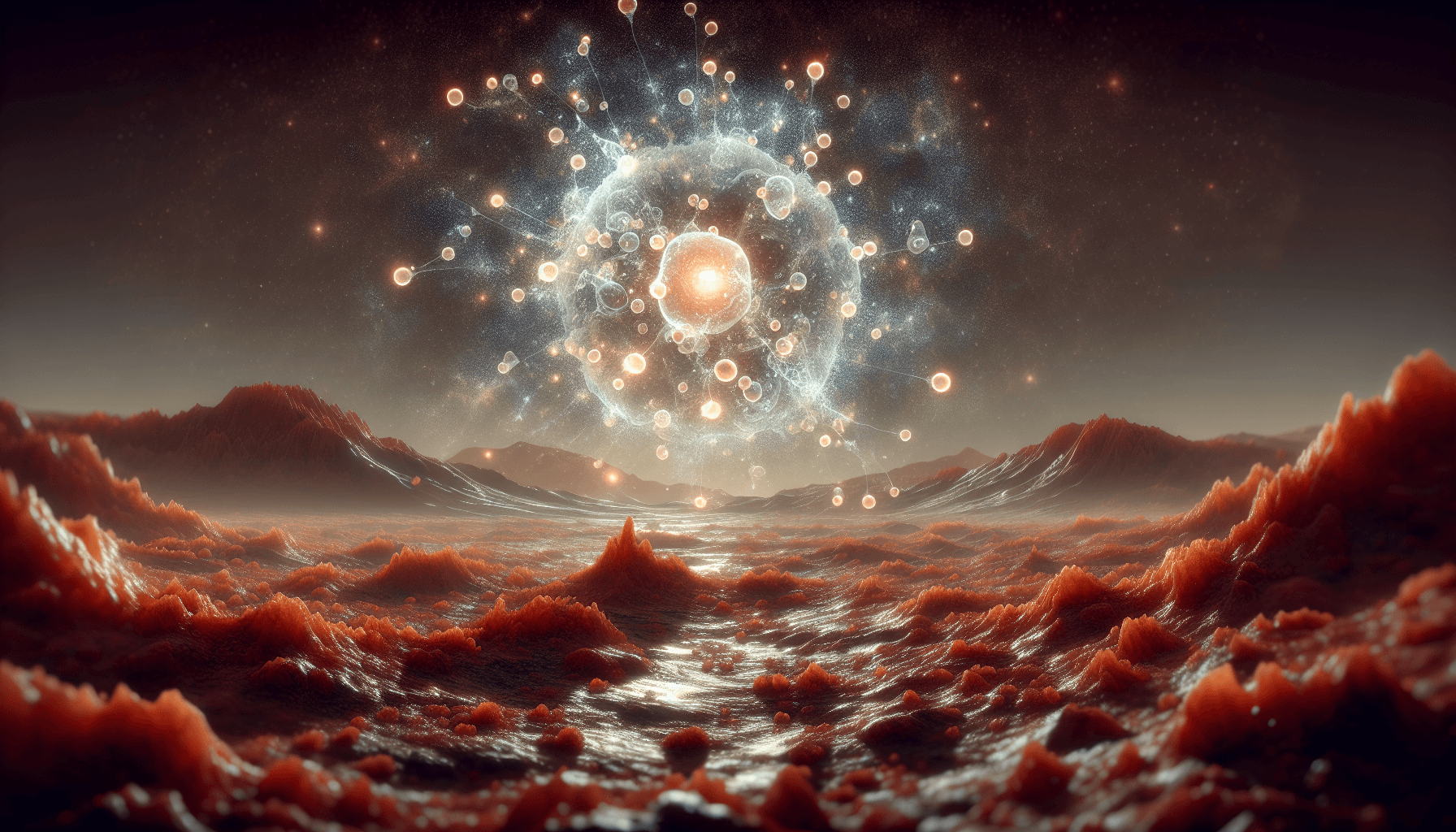
Could Life Thrive on Mars? New Research Offers Glimmer of Hope
For decades, the tantalizing question of life beyond Earth has captivated humanity, with Mars often at the forefront of our cosmic curiosity. While the Red Planet's surface appears barren and inhospitable, recent scientific breakthroughs are painting a more optimistic picture. Groundbreaking research has demonstrated that certain microscopic life forms can endure conditions strikingly similar to those found on Mars, including intense shock waves and highly toxic soil. This incredible resilience significantly broadens our understanding of planetary habitability and fuels renewed hope in the search for extraterrestrial life.
Extremophiles: Earth's Toughest Survivors
The key players in this remarkable discovery are extremophiles – microorganisms capable of thriving in environments considered deadly to most life. From the scorching vents of deep-sea volcanoes to the frigid ice sheets of Antarctica, these tiny survivors have adapted to extreme temperatures, pressures, radiation, and chemical compositions. Scientists have long theorized that if life exists elsewhere in the universe, it might resemble these hardy terrestrial champions. By studying extremophiles, researchers gain crucial insights into the potential biochemical adaptations required for life to persist in harsh alien landscapes like Mars.
Simulating Martian Violence: The Shockwave Challenge
One of the most formidable challenges for life on Mars would be surviving the planet's violent geological history, including frequent meteorite impacts and seismic activity. To mimic these brutal conditions, researchers subjected various extremophiles to powerful shock waves. These experiments simulated the intense pressures and rapid energy release associated with impacts, which can pulverize rock and drastically alter local environments. Astonishingly, a significant number of these tiny cells not only survived but showed remarkable structural integrity and metabolic activity post-shock. This suggests that life, if it were to emerge or arrive on Mars, might not be entirely wiped out by cosmic bombardments, potentially finding refuge in subsurface fractures.
Battling Toxic Regolith: Life in Martian Soil
Beyond physical trauma, Martian soil – known as regolith – presents a severe chemical barrier to life. It's rich in perchlorates, highly oxidizing chemicals that are toxic to most terrestrial organisms, and lacks the organic matter abundant in Earth's soils. In another facet of this innovative study, extremophiles were introduced to soil samples engineered to replicate the chemical makeup of Martian regolith. The results were compelling: certain microbial species demonstrated an unexpected ability to persist, and in some cases, even show signs of adapting to these adverse chemical conditions. This suggests that the toxic nature of Martian soil might not be an absolute deterrent for all forms of life, particularly those with specialized detoxification mechanisms or anaerobic metabolisms.
Implications for the Search for Martian Life
This groundbreaking research has profound implications for astrobiology. It expands the range of conditions under which life could potentially exist on Mars, pushing beyond the traditional 'liquid water' requirement to include environments subject to extreme physical and chemical stress. The findings hint that if life ever took hold on Mars, it might persist in subsurface niches, shielded from radiation and surface toxicity, or within briny pockets where water could briefly exist. Future missions to the Red Planet, such as those searching for biosignatures, can now refine their search strategies, focusing on areas where such resilient microorganisms might thrive.
A New Frontier in Astrobiology
While these experiments were conducted under controlled laboratory conditions, they provide invaluable data for understanding planetary habitability. The survival of these 'tiny cells' under simulated Martian extremes underscores the incredible adaptability of life and challenges our preconceived notions of what constitutes a habitable environment. This work opens new avenues for research, encouraging scientists to explore even more extreme scenarios and to develop advanced detection technologies for future space missions. The prospect of finding evidence of past or present life on Mars has never felt more tangible, bringing us closer to answering one of humanity's most profound questions: Are we alone?
How this article was made
- Sources
- ScienceDaily
- Generated on:
- Apr 12, 2026
This content is produced by Acerbo.AI's AI editorial pipeline: source gathering, rewriting and imagery are automated. Editorial oversight stays human.
Related Articles

Giant Strides: Ancient Footprints Uncover a Colossal Human Ancestor from 1.4 Million Years Ago
A monumental discovery of 1.4-million-year-old footprints is rewriting the narrative of human evolution, revealing that our ancient hominin relatives were significantly larger than previously believed.
Einstein's 'Biggest Blunder' Redeemed: How a Cosmic Constant Reshaped Our Universe
Explore the fascinating journey of Einstein's cosmological constant, initially deemed his 'biggest blunder,' now a cornerstone in understanding dark energy and the accelerating expansion of our universe.
Unlocking a 30-Year Rye Pollen Enigma: A Potential Game-Changer for Cancer Research
Scientists have finally cracked a three-decade-old mystery surrounding rye pollen, revealing a biological mechanism with profound implications for future cancer therapies.