Nvidia Propels AI to Orbit: Unveiling Hardware for Space-Based Data Centers
Nvidia announces revolutionary hardware designed for AI data centers in Earth's orbit, marking a pivotal step towards a new era of space-based computing with enhanced performance and global access.
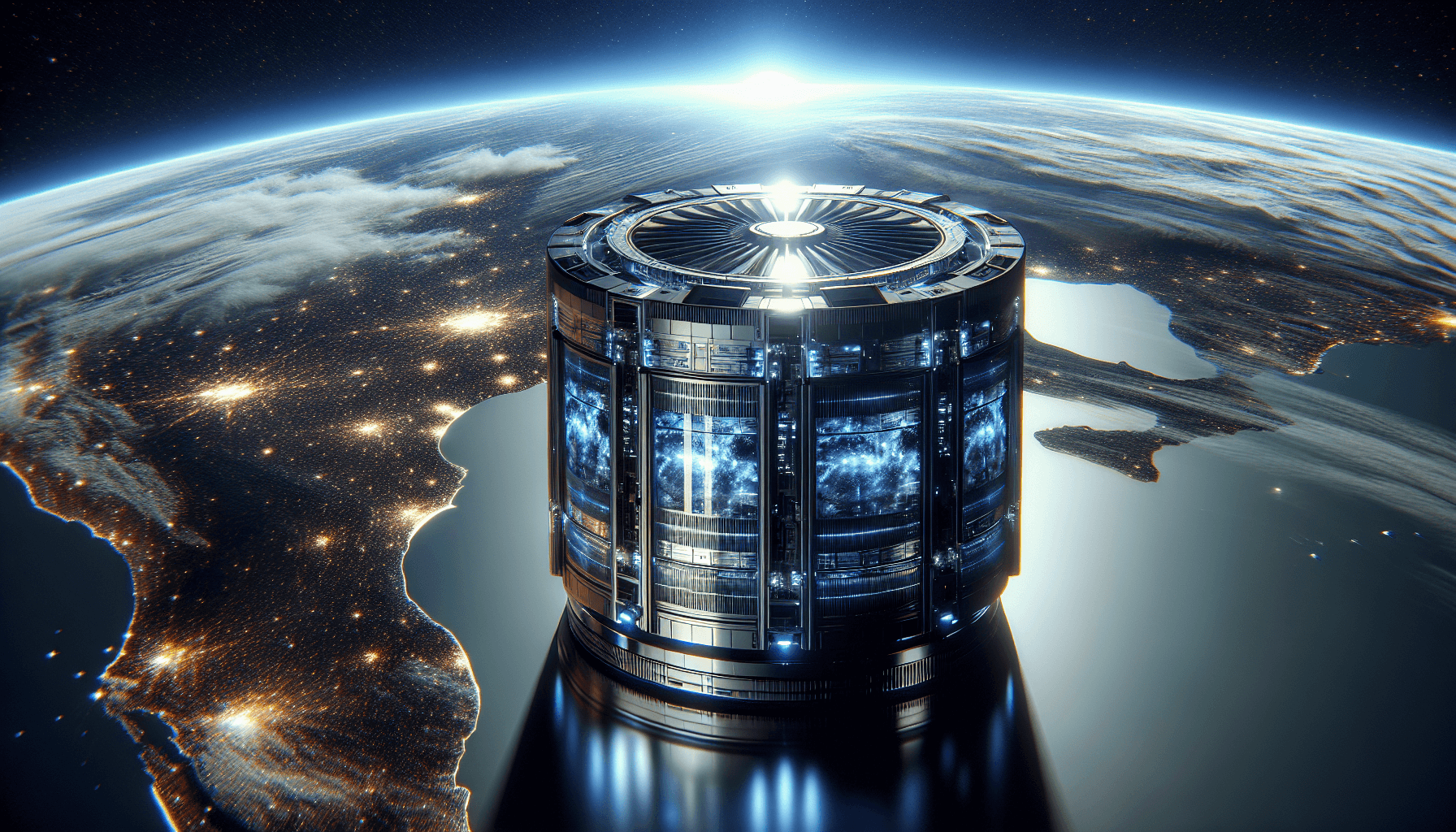
A Giant Leap for AI: Nvidia's Orbital Computing Vision
The future of artificial intelligence is quite literally looking up, as tech giant Nvidia unveils groundbreaking hardware specifically engineered for AI data centers destined for Earth's orbit. This audacious move signals a new frontier in computing, promising to revolutionize how AI processes data, not just on Earth, but from the vantage point of space itself. Nvidia's latest innovation isn't just an upgrade; it's a paradigm shift, pushing the boundaries of what's possible in high-performance computing.
Imagine AI models running with unprecedented efficiency, unaffected by terrestrial limitations. This is the vision Nvidia is bringing to life, designing robust, specialized components capable of withstanding the harsh realities of space while delivering cutting-edge AI processing power. It's a testament to human ingenuity and the relentless pursuit of technological advancement.
Why Take AI to Space? The Strategic Advantages
The decision to launch AI data centers into orbit isn't merely for show; it's driven by several compelling strategic advantages. One of the most significant is the potential for ultralow latency, especially for applications requiring rapid processing of data collected from vast geographical areas. Earth observation, global communication networks, and autonomous systems operating across continents stand to benefit immensely.
Furthermore, space offers a unique environment for data security and resilience. Orbital data centers could provide unparalleled protection against physical threats and natural disasters impacting ground-based infrastructure. The ability to process data closer to its source, whether it's a satellite sensor or a remote scientific instrument, also minimizes transmission bottlenecks and enhances real-time analytical capabilities.
- Reduced Latency: Faster processing for global applications.
- Enhanced Security: Isolation from terrestrial threats.
- Unique Data Access: Processing information directly from space-based sensors.
- Extreme Environment Resilience: Hardware designed for harsh conditions.
Engineering for the Cosmos: Nvidia's Specialized Hardware
Developing hardware for space is no small feat. Nvidia's new components are not merely re-purposed terrestrial servers; they are bespoke solutions built to endure the vacuum of space, extreme temperature fluctuations, and relentless cosmic radiation. This involves advanced materials, redundant systems, and sophisticated power management techniques to ensure continuous operation in an environment where maintenance is virtually impossible.
The focus is on creating highly energy-efficient and compact units that can be launched economically and operate autonomously for extended periods. This requires innovations in cooling systems that don't rely on convection, and power solutions that can leverage solar energy efficiently while managing power storage for orbital darkness. Nvidia's expertise in GPU technology is crucial here, as these processors are at the heart of the AI computations.
Overcoming Cosmic Hurdles
One of the biggest challenges in space computing is radiation. Cosmic rays can corrupt data and damage electronic components. Nvidia's hardware incorporates radiation-hardened designs and error correction mechanisms to maintain data integrity and system reliability. Thermal management is another critical aspect, as heat dissipation in a vacuum requires innovative passive and active cooling solutions.
The autonomous nature of these data centers also demands sophisticated onboard diagnostics and self-repair capabilities. This level of resilience and independence is vital for long-duration missions where human intervention is impractical or impossible. Nvidia is essentially building the brains for a new generation of smart, self-sufficient infrastructure in space.
The Future is Orbital: Implications for Earth and Beyond
The deployment of Nvidia's orbital AI data centers holds profound implications across various sectors. For the aerospace industry, it opens doors to more sophisticated satellite operations, advanced Earth monitoring, and faster scientific discovery. For global telecommunications, it could enable truly ubiquitous, high-speed connectivity and edge computing capabilities from above.
Moreover, this initiative could kickstart a vibrant space economy centered around data processing and AI services. Companies could rent orbital compute power for specialized tasks, fostering innovation in areas like climate modeling, disaster response, and even deep-space exploration. Nvidia is not just selling hardware; it's paving the way for an entirely new ecosystem.
Paving the Way for a New Era of Innovation
Nvidia's venture into orbital AI computing represents a bold step towards a future where computing power is distributed across the cosmos, bringing AI closer to the data source, no matter where that source is located. This pioneering effort promises to unlock unprecedented capabilities for research, industry, and humanity's continued exploration of the universe. As this technology matures, we can anticipate a future where AI's reach truly extends beyond our planet, fostering an era of innovation limited only by our imagination.