
Quantum Leap: Scientists Connect 'Time Crystals' to Real Devices
A groundbreaking quantum physics discovery sees scientists successfully integrate 'time crystals' – a unique state of matter – with a tangible device, opening doors for revolutionary quantum technologies.
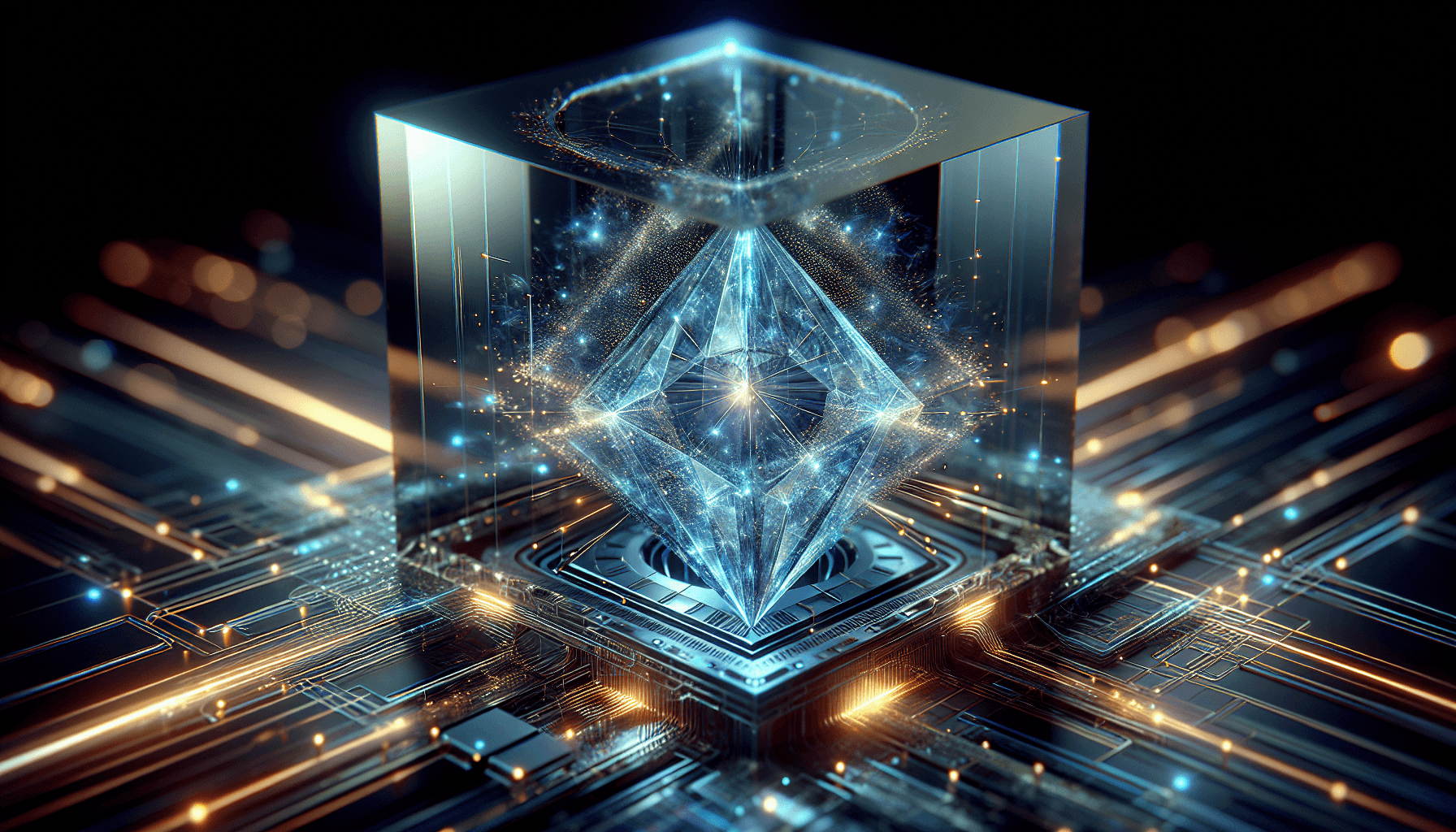
Unlocking the Universe's Rhythms: The Dawn of Time Crystal Technology
Imagine a crystal that doesn't just repeat in space, but also in time, perpetually oscillating without needing a constant energy input. For years, 'time crystals' were a captivating theoretical concept, an exotic state of matter defying conventional understanding. Now, in a monumental quantum breakthrough, scientists have successfully connected these elusive entities to a real-world device. This pivotal achievement marks a significant leap from abstract physics into the tangible potential of revolutionary quantum technologies.
Understanding Time Crystals: A State of Perpetual Motion
Unlike ordinary crystals with atoms arranged in a repeating pattern through space, time crystals exhibit a repeating pattern in time. They are a non-equilibrium state, spontaneously breaking time-translation symmetry to oscillate at a frequency different from any external driving force, or even without one. This unique behavior means they maintain a coherent, self-sustaining rhythm, much like a pendulum that swings indefinitely without external pushes. Their existence, first theorized in 2012, has only recently been experimentally confirmed.
The Breakthrough: Bridging Theory to Practical Application
The latest scientific advancement goes beyond mere observation. Researchers have managed to effectively integrate a time crystal into a functional device. This isn't just about creating a time crystal in a laboratory; it's about demonstrating control over its unique properties and showing its potential for practical application. This connection signifies a crucial step in harnessing the inherent stability and coherence that time crystals offer, paving the way for their exploitation in real-world systems.
Revolutionary Implications for Quantum Technology
The successful integration of time crystals could have profound implications across several nascent technological fields:
- Enhanced Quantum Computing: Time crystals offer inherent stability, making them potential candidates for ultra-stable quantum memories or even processing units (qubits). Their self-sustaining oscillation could help protect delicate quantum states from environmental disturbances, improving coherence times in future quantum computers.
- Ultra-Precise Sensors and Clocks: The extreme stability and precision of time crystal oscillations could lead to the development of next-generation atomic clocks, gyroscopes, and other sensing devices with unprecedented accuracy.
- Fundamental Physics Research: This breakthrough provides a new platform for exploring the deepest mysteries of quantum mechanics, non-equilibrium physics, and the very nature of time itself, offering tangible systems to test theoretical models.
The Road Ahead: Challenges and Future Prospects
While immensely promising, this breakthrough is an initial step. Significant challenges remain, including scaling up these systems, operating them at warmer temperatures, and integrating them into more complex quantum architectures. The journey from laboratory demonstration to widespread practical application is often long and arduous.
Nevertheless, the connection of time crystals to a real device represents a profound milestone. It underscores the rapid progress in quantum physics and engineering, moving us closer to a future where technologies once confined to science fiction become everyday realities. This achievement not only expands our understanding of the universe but also equips us with new tools to build its future.
How this article was made
- Sources
- ScienceDaily
- Generated on:
- May 11, 2026
This content is produced by Acerbo.AI's AI editorial pipeline: source gathering, rewriting and imagery are automated. Editorial oversight stays human.
Related Articles
Unlocking Time's Mystery: Scientists Connect "Time Crystal" to Real Quantum Device
Scientists have achieved a quantum breakthrough, successfully connecting a theoretical 'time crystal' to a real quantum device. This paves the way for advanced quantum computing and ultra-precise sensing.

Quantum Sound Breakthrough: Ushering in a New Era of Communication
Scientists have unveiled a revolutionary quantum sound device set to redefine secure, high-speed communication. This breakthrough leverages quantum mechanics for unprecedented efficiency.
Quantum Leap: Scientists Unlock New Control Over Superconductivity
A groundbreaking discovery reveals how microscopic imperfections and atomic vibrations can precisely control superconductivity, paving the way for revolutionary quantum technologies.