
Silent Threat: Hidden Ocean Heat Eroding Antarctica's Ice Shelves
Unseen ocean currents are delivering warm water beneath Antarctica's critical ice shelves, accelerating melt and posing a significant, hidden threat to global sea levels and polar stability.
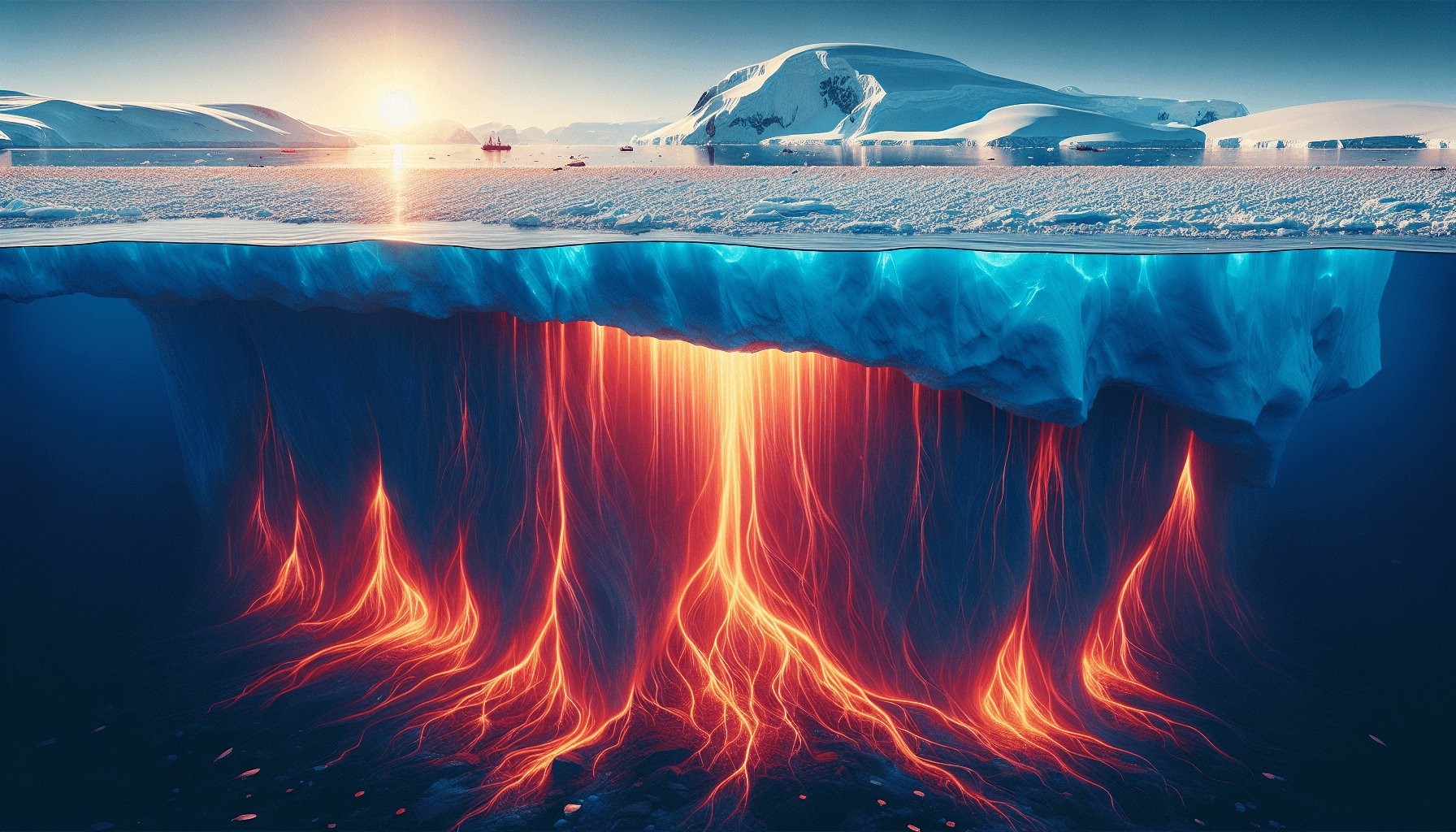
Antarctica's Silent Crisis: The Unseen Threat Beneath the Ice
Beneath the vast, pristine expanse of Antarctica, a silent and insidious threat is unfolding. Scientists are increasingly concerned about hidden ocean heat creeping towards and beneath the continent's fragile ice shelves. This warming, often occurring at significant depths, is accelerating melt rates from below, fundamentally destabilizing these crucial ice formations and raising alarm bells for global sea level rise.
The phenomenon, dubbed 'hidden ocean heat,' refers to the warming of deep ocean waters, particularly the Circumpolar Deep Water, which is being driven towards the Antarctic coastline by shifting ocean currents and wind patterns. This warmer water then infiltrates the cavities beneath the floating ice shelves, where it can melt the ice from below, out of sight and often beyond easy detection.
The Critical Role of Ice Shelves
Antarctica's ice shelves are not merely floating extensions of glaciers; they serve as vital buttresses, acting like colossal corks in a bottle. They slow the flow of vast inland ice sheets towards the ocean. When these ice shelves thin or break up, the glaciers they hold back can accelerate their movement into the sea, contributing significantly to global sea level rise.
- Stabilizing Force: Ice shelves physically impede the flow of land-based glaciers.
- Protection: They buffer the inland ice from direct contact with warmer ocean waters.
- Climate Indicator: Their stability is a key indicator of the health of the polar climate system.
A Warming Southern Ocean: The Mechanism of Melt
The Southern Ocean, which encircles Antarctica, plays a crucial role in global climate regulation. However, it is also experiencing significant warming. Changes in atmospheric circulation, partly linked to climate change, are altering ocean currents, pushing warmer, saltier waters further south and deeper towards the continental shelf.
This deep water, while still cold by human standards, is warm enough to melt ice rapidly. It flows into the sub-ice shelf cavities, creating a powerful feedback loop: increased melt creates more space for warmer water to enter, further accelerating the melting process. This process is particularly pronounced in regions like West Antarctica, where complex seafloor topography allows warm water to access the bases of vulnerable ice shelves.
Vulnerable Giants: Regions Under Threat
While the entire continent is at risk, certain areas are particularly susceptible. The ice shelves of West Antarctica, including the infamous Thwaites and Pine Island Glaciers, are major areas of concern. These glaciers flow into deep troughs, making their ice shelves more exposed to incursions of warm ocean water from below. The melting here has profound implications for the stability of the entire West Antarctic Ice Sheet.
The rate of ice loss from these regions has increased dramatically in recent decades, with warm ocean water identified as a primary driver. Understanding the precise pathways and variability of these warm water intrusions is a critical challenge for scientists.
Global Implications and Future Outlook
The accelerated melting of Antarctica's ice shelves has far-reaching consequences beyond the polar region. The most direct impact is on global sea level rise. If the major ice sheets of Antarctica were to completely melt, global sea levels could rise by many meters, inundating coastal cities and displacing millions worldwide. While this is a long-term scenario, even modest increases in sea level will exacerbate coastal erosion and storm surges.
Scientists are employing a range of advanced tools, including autonomous underwater vehicles (AUVs), satellite altimetry, and sophisticated oceanographic models, to monitor these remote and challenging environments. The insights gained are vital for refining climate models and making more accurate predictions about future sea level rise.
The creeping hidden ocean heat beneath Antarctica's ice shelves represents a critical, often unseen, front in the battle against climate change. Addressing this challenge requires urgent global action to reduce greenhouse gas emissions and a continued commitment to polar research to better understand and predict the future of our planet's largest ice reservoir.
How this article was made
- Sources
- ScienceDaily
- Generated on:
- Apr 30, 2026
This content is produced by Acerbo.AI's AI editorial pipeline: source gathering, rewriting and imagery are automated. Editorial oversight stays human.
Related Articles

Quantum Mystery Deepens: CERN Uncovers Unprecedented Gluon Behavior
CERN scientists have observed gluons, the fundamental particles binding atomic nuclei, exhibiting unexpected behavior deep within matter, challenging long-held theories of the strong nuclear force.

Venom's Own Cure: Rattlesnake Blood Holds Key to Revolutionary Antivenom
Scientists have unearthed a groundbreaking new antivenom directly from rattlesnake blood, offering a potent and potentially safer treatment for snakebite victims worldwide.

Giant Strides: Ancient Footprints Uncover a Colossal Human Ancestor from 1.4 Million Years Ago
A monumental discovery of 1.4-million-year-old footprints is rewriting the narrative of human evolution, revealing that our ancient hominin relatives were significantly larger than previously believed.