
Tech Titans Tremble: Wall Street Futures Slide as Chip Sector Crumbles and Netflix Stumbles
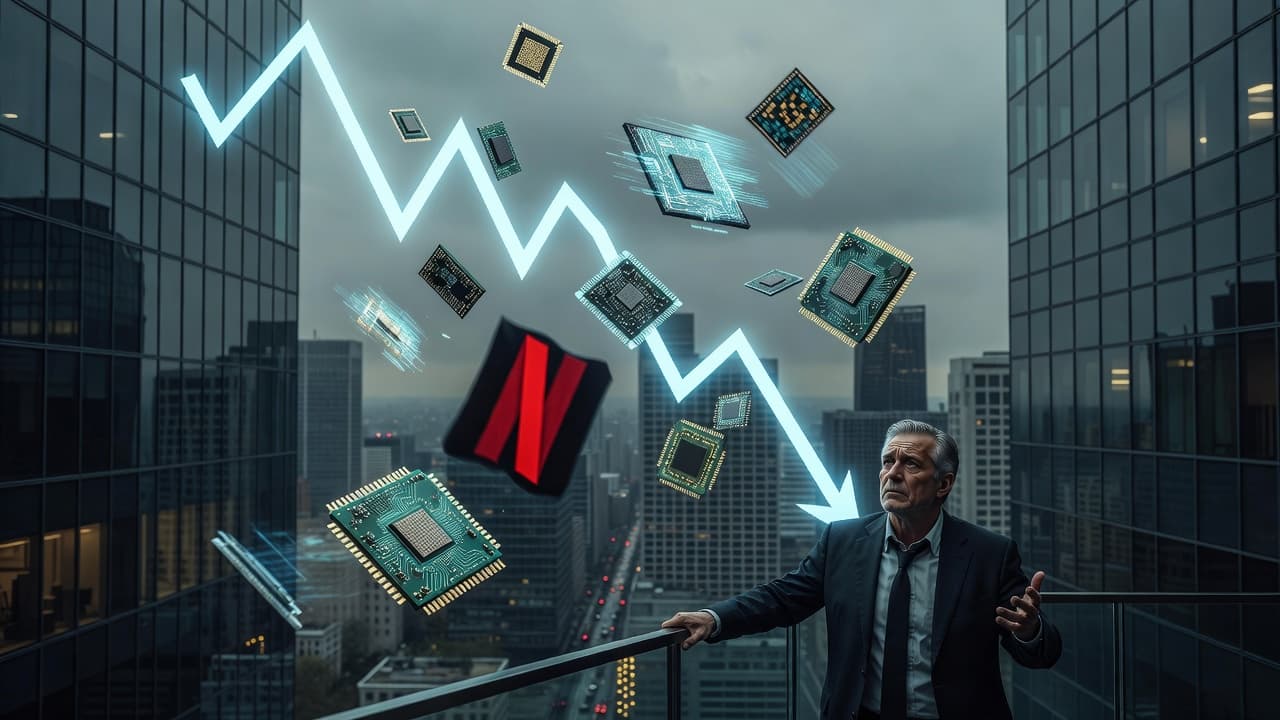
Wall Street futures are experiencing a significant downturn, driven by a broad selloff in the semiconductor industry and a sharp decline in Netflix shares, signaling a challenging period for growth stocks and broader market sentiment.
Wall Street Braces for Impact: Tech Sector Under Siege
A palpable sense of anxiety is gripping global financial markets as Wall Street futures indicate a challenging trading day ahead. The tech sector, often a bastion of growth, finds itself at the epicenter of a significant selloff, with semiconductor stocks leading the charge downwards and streaming giant Netflix experiencing a substantial tumble. This widespread retreat among technology heavyweights is fueling concerns about investor sentiment and the broader economic outlook, prompting a reevaluation of high-growth valuations.
The Semiconductor Selloff: A Chink in the Tech Armor
The semiconductor industry, a critical backbone of modern technology, is facing intense pressure, contributing significantly to the current market jitters. Companies involved in chip manufacturing and design are witnessing a sharp decline in their stock prices, reflecting a confluence of factors. Concerns over potential slowing demand for consumer electronics, coupled with persistent supply chain disruptions and inflationary pressures impacting production costs, are weighing heavily on the sector.
Analysts point to a possible cyclical downturn after a period of unprecedented growth, suggesting that the 'super cycle' for chips might be losing momentum. Investors are increasingly wary of future earnings prospects, leading to a rapid unwinding of positions in what was once a darling of the market. This correction underscores the fragility of even the most robust industries when faced with shifting economic tides.
Netflix's Contentious Plunge: Streaming Wars Intensify
Adding to the market's woes, Netflix, the pioneer and arguably the king of streaming services, has seen its shares plummet. This dramatic fall comes amidst growing investor skepticism regarding its subscriber growth trajectory and intensifying competition within the streaming landscape. Reports of subscriber slowdowns, coupled with increased spending on content and marketing to retain and attract new viewers, are eroding confidence.
The company's struggle to maintain its dominant market share in an increasingly crowded field, which now includes formidable rivals from major media conglomerates, highlights the challenges of sustaining hyper-growth in a maturing industry. Investors are scrutinizing Netflix's long-term strategy, particularly its ability to innovate and expand its revenue streams beyond traditional subscriptions, such as exploring advertising-supported tiers or cracking down on password sharing.
Broader Market Implications and Investor Sentiment
The tech-led selloff is reverberating across the wider market, indicating a broader shift in investor sentiment. As central banks globally move to combat persistent inflation through interest rate hikes, the appeal of growth stocks – which derive much of their value from future earnings potential – diminishes. Higher interest rates make future earnings less valuable in present terms, prompting a rotation out of speculative growth assets into more defensive or value-oriented stocks.
This environment fosters risk aversion, with investors preferring to shed assets perceived as overvalued or vulnerable to economic slowdowns. The current market dynamics suggest a recalibration of expectations, where companies must demonstrate not just growth, but also clear paths to profitability and sustainable business models in a less forgiving economic climate.
Navigating the Volatility: What Lies Ahead?
As Wall Street grapples with these significant headwinds, the immediate future appears marked by continued volatility. The performance of tech giants like semiconductor firms and Netflix will serve as key indicators for overall market health. Investors will be closely watching upcoming earnings reports for signs of stabilization or further deterioration, alongside macroeconomic data such as inflation figures and interest rate decisions from central banks.
The current market correction, while painful for many, could also present opportunities for long-term investors to acquire quality assets at more attractive valuations. However, the path forward remains uncertain, with the interplay of technological innovation, consumer behavior, and global economic policy shaping the landscape.
How this article was made
- Sources
- Reuters
- Generated on:
- Jul 19, 2026
This content is produced by Acerbo.AI's AI editorial pipeline: source gathering, rewriting and imagery are automated. Editorial oversight stays human.
Related Articles

US Inflation Jumps to 3.7%, Sending Shockwaves Through Tech Markets
The latest US inflation figures reveal an unexpected rise to 3.7%, sparking renewed concerns among investors and sending ripples of pressure across the technology sector.

Strong Bank Earnings Fail to Sway Markets: Unpacking Wall Street's Indifference
Major banks have reported impressive quarterly earnings, showcasing robust financial health. However, the market's muted reaction suggests deeper concerns about future economic headwinds, interest rate trajectories, and investor sentiment. We delve into the paradox.
Wall Street's AI Revolution: Four Years On, Are Risks Looming Large?
Wall Street's AI-driven bull market nears its four-year mark. While innovation soars, rising concerns over valuations, market concentration, and regulation signal potential headwinds.