
The Dual Edge of Light: How Plants Thrive Yet Are Held Back by Illumination
Light is vital for plant life, driving photosynthesis and shaping development. Yet, this essential element can also hinder optimal growth, creating a fascinating paradox in plant biology.
The Dual Edge of Light: How Plants Thrive Yet Are Held Back by Illumination
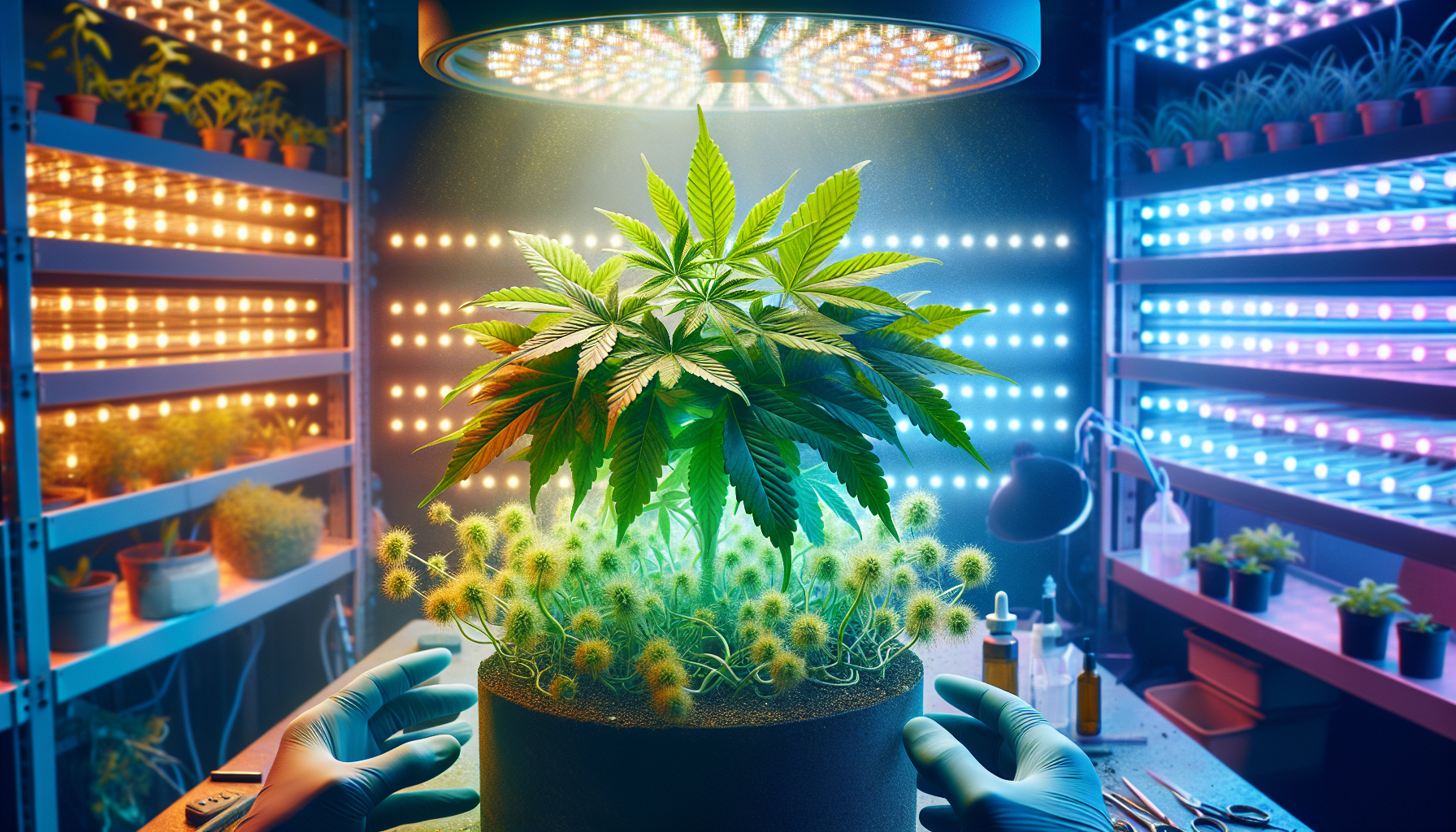
Light is the fundamental energy source for nearly all life on Earth, and for plants, it's the very essence of existence. Through the miraculous process of photosynthesis, sunlight fuels growth, development, and the production of oxygen. However, recent scientific insights reveal a fascinating paradox: while light empowers plants to flourish, it can also, under certain conditions, hold them back from reaching their full, robust potential.
Understanding this complex relationship is crucial not only for fundamental plant biology but also for optimizing agricultural practices and ensuring global food security. It’s a delicate balancing act where the right amount and quality of light can lead to thriving ecosystems, but too much or the wrong kind can trigger stress and suboptimal growth strategies.
The Life-Giving Power of Light: Fueling Photosynthesis
At its core, light provides the energy for photosynthesis, the process by which plants convert carbon dioxide and water into glucose and oxygen. This biochemical marvel, primarily occurring in chloroplasts, is the bedrock of plant strength and biomass accumulation. Without adequate light, plants cannot produce enough energy to grow, flower, or fruit effectively, leading to stunted development and reduced yields.
Different wavelengths of light play specific roles. Blue light is crucial for regulating stomatal opening and chlorophyll production, while red light is highly efficient for photosynthesis itself. This spectral interplay ensures that plants can harness solar energy across a broad range, maximizing their energy capture and driving vigorous growth.
Light's Guiding Hand: More Than Just Fuel
Beyond simply providing energy, light acts as a sophisticated signaling mechanism, profoundly influencing a plant's morphology and development – a process known as photomorphogenesis. Specialized photoreceptors, such as phytochromes and cryptochromes, detect various light qualities (red, far-red, blue) and intensities, prompting plants to adapt their growth patterns.
For instance, these photoreceptors dictate when seeds germinate, when plants flower, and how they orient their leaves towards the sun. Light cues can trigger stem elongation in crowded conditions, promote branching in open spaces, or even induce the production of protective pigments. This intricate sensing system allows plants to fine-tune their architecture and life cycle to best suit their environment.
The Paradox: When Light Becomes a Limiter
Despite its life-giving properties, light can also be a source of stress and a limiting factor for optimal growth. One key mechanism is photoinhibition, where excessive light energy overwhelms the photosynthetic machinery, leading to damage and reduced efficiency. Instead of channeling all energy into growth, plants must divert resources to repair these systems or produce protective compounds, effectively slowing down their overall development.
Furthermore, specific light signals can trigger adaptive responses that, while beneficial for survival in the wild, may hinder productivity in agricultural settings. A classic example is the shade avoidance syndrome. When plants detect a high proportion of far-red light (a signal indicating competition from neighboring plants), they often respond by elongating their stems rapidly and reducing branching. While this strategy helps them outcompete rivals for light, it often results in weaker, spindly plants with lower biomass and reduced yields.
This diversion of resources – from robust growth to stress response or competitive strategies – illustrates how light, even when abundant, can ironically curb a plant's potential. The plant is 'held back' from investing fully in resource accumulation because it's reacting to perceived threats or suboptimal conditions signaled by light.
Harnessing the Spectrum: Implications for the Future
Understanding this dual nature of light is paramount for advancing agricultural science. By carefully controlling light intensity, duration, and spectral composition in controlled environments like greenhouses and vertical farms, scientists and growers can mitigate the negative impacts of photoinhibition and undesirable photomorphogenic responses. Tailoring light recipes can promote desired traits, such as increased branching, higher yield, or enhanced nutritional content, while minimizing stress.
This nuanced approach allows for the optimization of photosynthetic efficiency and overall plant health, moving beyond simply providing 'enough' light to providing the 'right' light. It offers exciting prospects for more sustainable and productive food systems globally.
Conclusion
The relationship between plants and light is far more intricate than simple energy capture. Light is both the ultimate enabler of plant life and, paradoxically, a subtle saboteur of their full potential under certain circumstances. By unraveling these complexities – from the biochemical marvel of photosynthesis to the intricate dance of photomorphogenesis and stress responses – we gain profound insights into plant resilience and unlock new avenues for enhancing agricultural productivity in an ever-changing world.
How this article was made
- Sources
- ScienceDaily
- Generated on:
- Apr 13, 2026
This content is produced by Acerbo.AI's AI editorial pipeline: source gathering, rewriting and imagery are automated. Editorial oversight stays human.
Related Articles

Cosmic Cannibals: Astronomers Uncover Two Actively Feeding Supermassive Black Holes in the Early Universe
A groundbreaking discovery reveals two actively feeding supermassive black holes in the universe's nascent stages, challenging theories of cosmic evolution and galaxy formation.

Cosmic Detective Work: Second-Generation Planet Cracks Hubble's Long-Standing Mystery
Astronomers have unveiled a groundbreaking discovery: a 'second-generation' exoplanet whose unique formation mechanism provides the missing link to solve a perplexing cosmic enigma observed by the Hubble Space Telescope for years.

Cosmic Revelation: Have Scientists Finally Glanced at Dark Matter?
A recent scientific development suggests researchers may have detected dark matter, the universe's most enigmatic substance. This potential breakthrough could redefine cosmology and particle physics.