The Future Unveiled: Top Tech Trends Dominating February 2026
A glimpse into the technological landscape of February 2026, highlighting major breakthroughs in AI, immersive experiences, and sustainable innovation shaping our world.
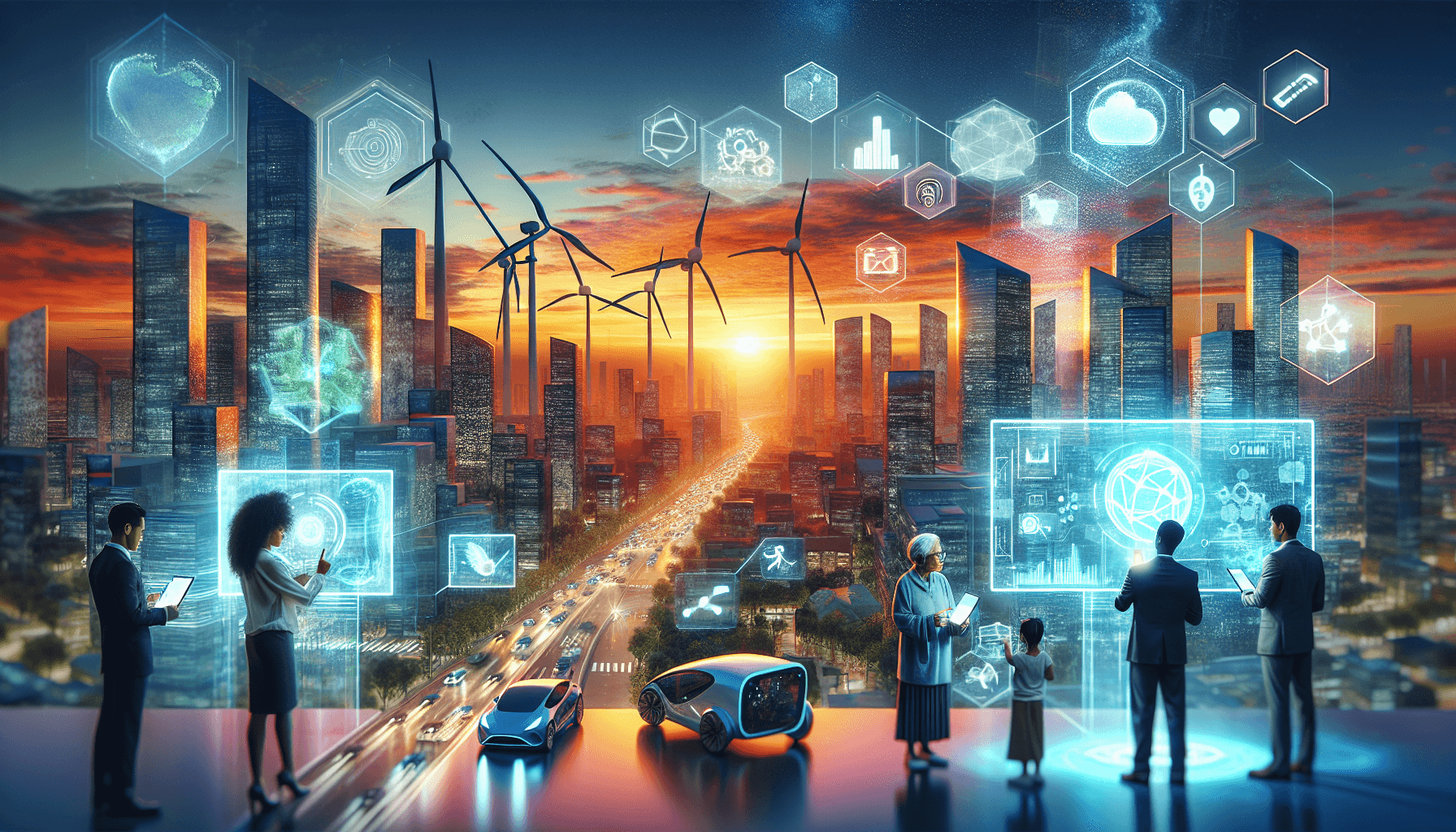
AI's Intelligent Ascent: Beyond Automation
Personalized AI Experiences Take Center Stage
As February 2026 unfolds, Artificial Intelligence (AI) continues its relentless march, evolving beyond mere automation to deliver deeply personalized experiences across countless facets of daily life. From adaptive learning platforms that tailor educational content to individual student needs, to hyper-curated entertainment streams anticipating our next favorite show, AI is becoming an invisible, yet indispensable, personal assistant. Smart home systems are now predictive rather than reactive, managing energy consumption and environmental settings with unprecedented efficiency, learning user habits to optimize comfort and sustainability. This era marks a significant shift towards AI that understands context and nuance, making interactions smoother and more intuitive than ever before.
The Rise of Responsible AI Frameworks
With AI's pervasive integration, the focus in February 2026 has sharpened on ethical AI development and robust regulatory frameworks. Governments and industry consortiums are actively collaborating on standards for transparency, accountability, and fairness in AI algorithms. New tools and methodologies are emerging to detect and mitigate bias, ensuring that AI systems serve all demographics equitably. This commitment to responsible AI is crucial for sustainable technological growth.
- Transparency: Clearer understanding of AI decision-making processes.
- Accountability: Defined responsibilities for AI system outcomes.
- Fairness: Mitigating bias to ensure equitable treatment across user groups.
- Data Privacy: Robust protection of personal and sensitive information.
Companies are increasingly prioritizing 'explainable AI' (XAI), providing clearer insights into how decisions are made, fostering greater trust and adoption among users and businesses alike.
Immersive Realities: Bridging Digital and Physical
Enterprise XR: Revolutionizing Work and Collaboration
February 2026 sees Extended Reality (XR) – encompassing Augmented Reality (AR), Virtual Reality (VR), and Mixed Reality (MR) – making profound inroads into the enterprise sector. Beyond early gaming applications, XR is now a cornerstone for industrial design, surgical training, and remote collaboration. Engineers are using AR overlays to visualize complex machinery repairs, while VR environments allow global teams to conduct virtual product reviews with astonishing realism. The efficiency gains in training, prototyping, and remote assistance are undeniable, signaling a permanent shift in how industries operate and innovate. This isn't just about novelty; it's about measurable productivity and a safer, more connected workforce.
Consumer Adoption: A Steady, Strategic Climb
While enterprise XR flourishes, consumer adoption of immersive technologies continues its steady, strategic ascent. New generations of lightweight, more affordable AR glasses are gaining traction, blending digital information seamlessly into our real-world views without isolating users. VR headsets are becoming more comfortable and offering richer, more diverse content ecosystems, moving beyond niche gaming to include virtual travel, fitness, and social experiences. The challenge remains widespread mainstream acceptance, but with improved hardware, compelling content, and a growing understanding of XR's practical benefits, February 2026 indicates a positive trajectory towards a truly blended digital and physical consumer experience.
Powering a Greener Tomorrow: Sustainable Innovation
Breakthroughs in Energy Storage and Grid Management
The imperative for sustainable solutions has never been stronger, and February 2026 highlights significant advancements in green technology. Breakthroughs in solid-state battery technology and next-generation flow batteries are making renewable energy storage more efficient, cost-effective, and scalable. This is crucial for stabilizing smart grids that increasingly rely on intermittent sources like solar and wind power. Enhanced AI-driven grid management systems are optimizing energy distribution, minimizing waste, and responding dynamically to demand fluctuations. These innovations are pivotal in accelerating the global transition away from fossil fuels and mitigating climate change.
Biotech's Leap: AI-Driven Precision Medicine
February 2026 also showcases the transformative power of biotechnology, particularly in conjunction with AI. Precision medicine is no longer a distant dream but a rapidly expanding reality. AI algorithms are analyzing vast genomic and clinical datasets to identify highly personalized treatment pathways for diseases ranging from cancer to rare genetic disorders. Drug discovery processes are being dramatically accelerated through AI-powered simulations, reducing development times and costs. This synergy between AI and biotech promises a future where healthcare is proactive, highly individualized, and significantly more effective, offering new hope for millions worldwide.
As we look beyond February 2026, these advancements in AI, immersive technologies, and sustainable innovation are not isolated phenomena. They are interconnected threads weaving a complex tapestry of technological progress that promises to redefine how we live, work, and interact with the world. The pace of change remains exhilarating, and the potential for positive impact, truly boundless.