Unearthing Ancient Secrets: 'Elephant Skin' Rocks Reveal Primeval Life in the Abyss
Deep beneath the waves, scientists have uncovered 'elephant skin' rocks, bizarre geological formations now revealing fossilized remnants of ancient microbial life thriving in Earth's dark, abyssal plains.
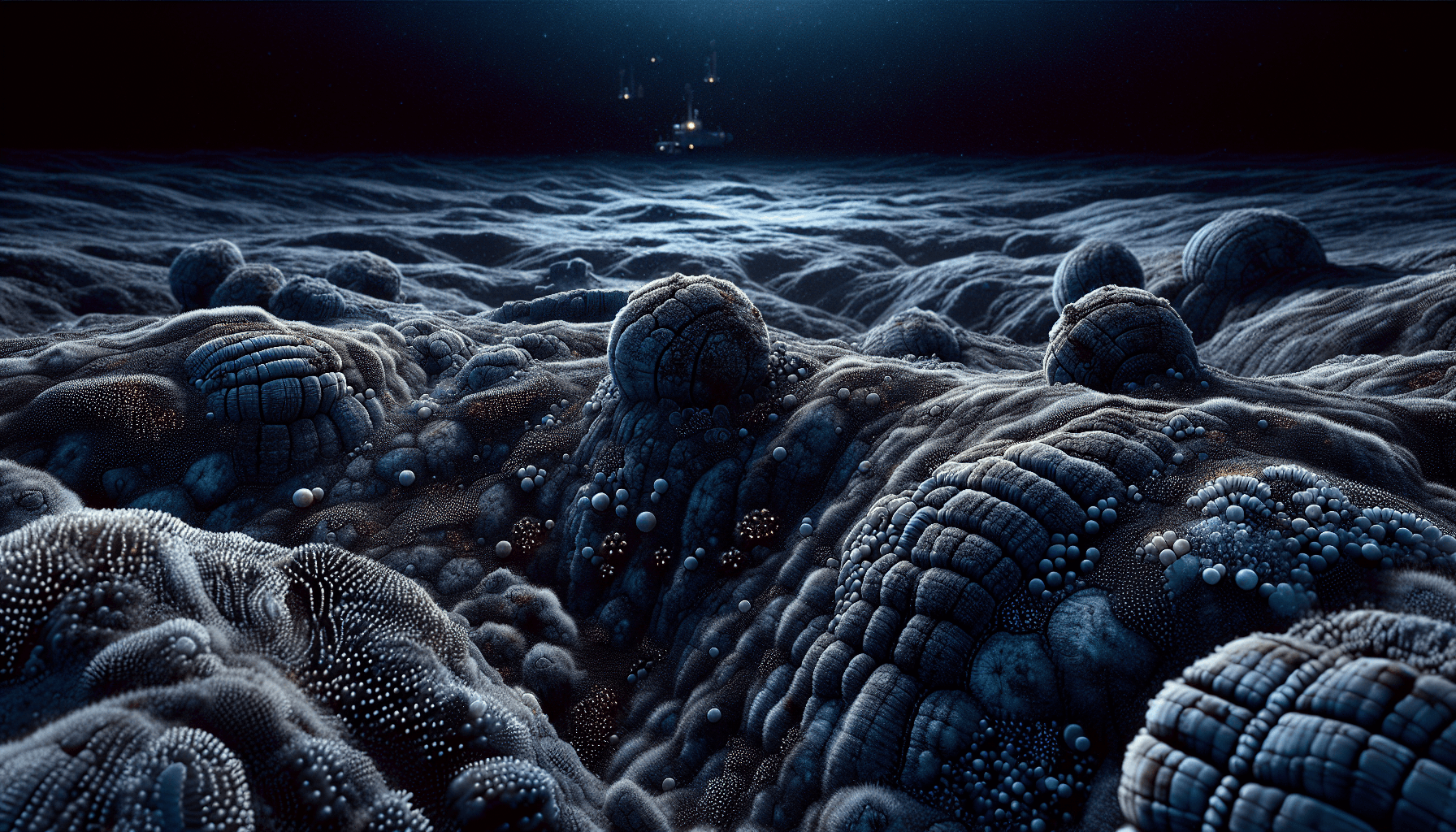
Unveiling Life's Deepest Mysteries: The 'Elephant Skin' Rocks
The dark, crushing depths of our planet's oceans remain one of Earth's last great frontiers, a realm where life persists against all odds. Now, a groundbreaking discovery has brought to light an extraordinary window into our planet's primeval past. Scientists have identified unique geological formations, aptly dubbed “elephant skin” rocks due to their distinctively wrinkled and textured appearance, which harbor astonishing evidence of ancient microbial life thriving in the abyssal plains.
These peculiar rocks, found thousands of meters beneath the ocean surface, are not merely geological curiosities. They are, in fact, incredibly preserved time capsules, offering an unprecedented glimpse into the resilient life forms that once dominated Earth's early, oxygen-deprived oceans. This finding challenges conventional wisdom about the habitability of extreme environments and significantly expands our understanding of life's origins.
What Are These Mysterious 'Elephant Skin' Formations?
The term "elephant skin" refers to the rocks' characteristic surface morphology: intricate networks of ridges, troughs, and folds that resemble the hide of an elephant. Geochemically, these formations are primarily composed of iron and manganese oxides, precipitating slowly over millennia in the cold, dark waters. Researchers speculate that these unique textures are not merely random geological patterns but could be a direct result of intricate interactions between minerals and ancient microbial communities.
Found primarily in areas far from hydrothermal vents, these rocks suggest that life wasn't exclusively tied to energetic hotspots but could also flourish in more quiescent, yet equally challenging, deep-sea environments. The sheer scale and widespread distribution of these formations indicate a potentially vast ancient ecosystem.
Fossilized Footprints of Earth's Earliest Inhabitants
Through meticulous analysis using advanced imaging techniques and isotopic studies, scientists have uncovered microscopic fossilized structures embedded within the 'elephant skin' rocks. These structures bear striking resemblance to known microbial mats and biofilms, suggesting that communities of microorganisms played a crucial role in the formation and growth of these geological features. The presence of specific organic biomarkers further corroborates the biological origin of these formations.
These ancient microbes were likely chemoautotrophs, organisms that derive energy from chemical reactions rather than sunlight, perfectly adapted to the perpetual darkness and unique chemical gradients of the deep ocean. Their fossilized remains provide direct evidence of complex microbial ecosystems existing in extreme conditions billions of years ago, long before the rise of complex multicellular life.
Rewriting the Narrative of Early Life and Planetary Habitability
The discovery within the 'elephant skin' rocks holds profound implications for several scientific fields. Firstly, it offers critical insights into the origin and evolution of life on Earth, suggesting that early life was incredibly diverse and resilient, capable of colonizing even the most forbidding niches. These findings push back the timeline for the development of complex microbial communities in deep-sea environments.
Secondly, this research significantly impacts the field of astrobiology. The deep oceans of Earth are often considered analogues for potential subsurface oceans on extraterrestrial bodies like Europa or Enceladus. If life could thrive in Earth's dark, chemically driven abyssal plains, it dramatically increases the probability of finding similar life forms in the vast, hidden oceans of other celestial bodies, making future space missions to these icy moons even more compelling.
The Quest Continues: Peering Deeper into the Abyssal Past
This remarkable discovery is just the beginning. Future research will focus on identifying the specific metabolic pathways of these ancient microbes, understanding their exact role in the formation of the 'elephant skin' rocks, and exploring other deep-sea locations for similar paleontological treasures. The 'elephant skin' rocks serve as a powerful reminder that our own planet still holds countless secrets, especially in its least explored realms, continually reshaping our understanding of life's incredible tenacity and adaptability.