
Unearthing the Impossible: A Crushed Fossil Rewrites Dinosaur History
A severely crushed fossil unearthed in a remote Patagonian region has revealed a dinosaur species whose existence challenges long-held theories about prehistoric life and evolution.
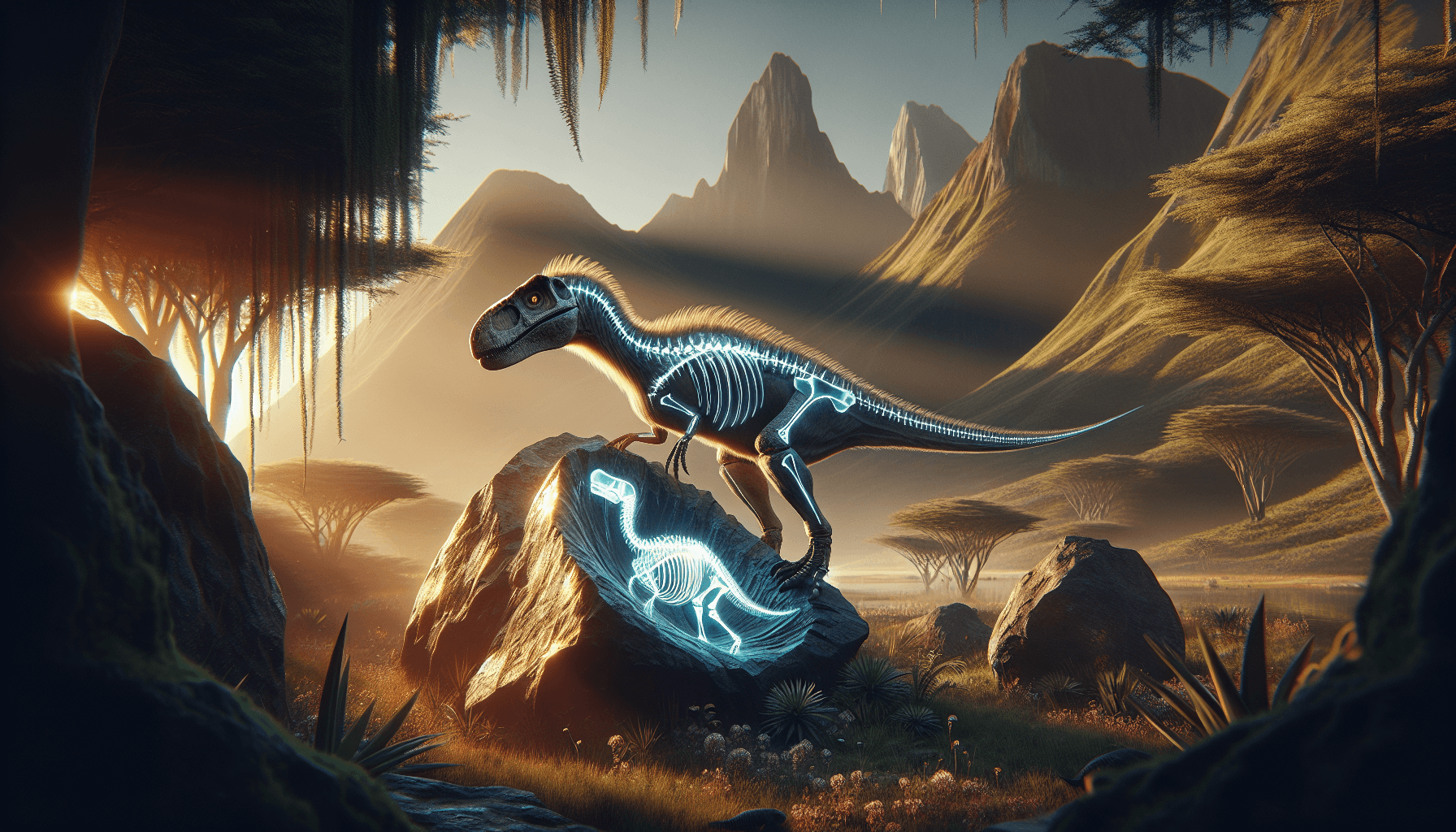
A Prehistoric Puzzle: The Dinosaur That Defied Eras
In the annals of paleontology, few discoveries ignite as much debate and excitement as one that fundamentally challenges our understanding of prehistoric life. Such is the case with a remarkable, albeit severely crushed, fossil recently unearthed, which has unveiled a dinosaur species so anomalous, its very existence seems to defy established evolutionary timelines and geographical distributions. This 'dinosaur that shouldn't have existed' is forcing scientists to rethink critical chapters in Earth's ancient history.
The Challenging Discovery of Aethelsaurus paradoxus
The journey to this groundbreaking revelation began not with a pristine skeleton, but with a fragmented, heavily compressed specimen found deep within a remote geological formation in what is now the Patagonian region of South America. Led by Dr. Elena Petrova from the University of Buenos Aires, an international team of paleontologists faced immense challenges. The fossil, initially dismissed as an unidentifiable jumble of bone, required years of painstaking digital reconstruction using advanced CT scanning and 3D modeling techniques.
“It was like piecing together a shattered vase blindfolded,” describes Dr. Petrova. “Every fragment held a clue, but the distortion made initial classification nearly impossible. We knew we had something unique, but its true nature was hidden within the stone’s embrace.”
An Anomaly Unveiled: Features That Break the Mold
After meticulous work, the digital reconstruction revealed a small, bipedal theropod dinosaur, approximately 1.5 meters in length. What truly astonished researchers were its unique anatomical features. While possessing a general theropod body plan, Aethelsaurus paradoxus exhibited a peculiar blend of characteristics:
- Primitive Pelvic Girdle: Its hip structure bore striking resemblance to very early theropods from the Late Triassic, a period tens of millions of years before the Late Cretaceous strata where it was discovered.
- Advanced Cranial Features: Conversely, its skull and dental morphology displayed sophisticated traits typically associated with much later, more derived theropod groups.
- Unusual Forelimb Structure: The forelimbs showcased an adaptation that suggested a unique predatory or foraging strategy, unlike any known contemporary theropod.
This mosaic of features created a paleontological paradox. How could a creature possess such a primitive foundation alongside advanced specializations, and exist millions of years out of its supposed evolutionary slot?
Rewriting Gondwanan Biogeography
The implications of Aethelsaurus paradoxus are profound. Its discovery in Late Cretaceous South America, with features reminiscent of Triassic African or North American ancestors, challenges prevailing theories on dinosaur dispersal across the ancient supercontinent of Gondwana. It suggests either:
- A much longer period of evolutionary stasis or "ghost lineages" than previously imagined, where primitive forms persisted in isolated refugia.
- An independent, convergent evolution of advanced features on a primitive framework, implying a powerful selective pressure we don't yet understand.
- Undiscovered migratory routes or land bridges that facilitated unexpected faunal exchanges between continents.
“This isn't just a new species; it’s a new chapter in our understanding of dinosaur evolution and biogeography,” states Dr. Marco Rossi, a co-author on the study published in the journal Nature Paleontology. “It forces us to consider that our evolutionary trees might have branches we never anticipated, hidden away in isolated pockets of the ancient world.”
The Future of Fossil Discoveries and Evolutionary Theory
The saga of Aethelsaurus paradoxus underscores the critical role of advanced imaging techniques in modern paleontology, transforming unreadable fossils into scientific goldmines. It serves as a potent reminder that the story of life on Earth is far from complete, with countless mysteries still buried beneath our feet.
As researchers continue to analyze this remarkable specimen and search for more clues, the 'dinosaur that shouldn't have existed' stands as a testament to the dynamic, often surprising, nature of evolution, pushing the boundaries of scientific inquiry and inviting us to imagine an even richer, more complex prehistoric world.
How this article was made
- Sources
- ScienceDaily
- Generated on:
- Apr 16, 2026
This content is produced by Acerbo.AI's AI editorial pipeline: source gathering, rewriting and imagery are automated. Editorial oversight stays human.
Related Articles

Giant Strides: Ancient Footprints Uncover a Colossal Human Ancestor from 1.4 Million Years Ago
A monumental discovery of 1.4-million-year-old footprints is rewriting the narrative of human evolution, revealing that our ancient hominin relatives were significantly larger than previously believed.

Einstein's 'Biggest Blunder' Redeemed: How a Cosmic Constant Reshaped Our Universe
Explore the fascinating journey of Einstein's cosmological constant, initially deemed his 'biggest blunder,' now a cornerstone in understanding dark energy and the accelerating expansion of our universe.

Unlocking a 30-Year Rye Pollen Enigma: A Potential Game-Changer for Cancer Research
Scientists have finally cracked a three-decade-old mystery surrounding rye pollen, revealing a biological mechanism with profound implications for future cancer therapies.