Unlocking Life's Blueprint: New Chemical Discovery Rewrites Origins Story
Scientists have made a groundbreaking chemical discovery, revealing a more plausible pathway for life's genesis on early Earth. This breakthrough sheds significant light on how fundamental biomolecules could have formed.
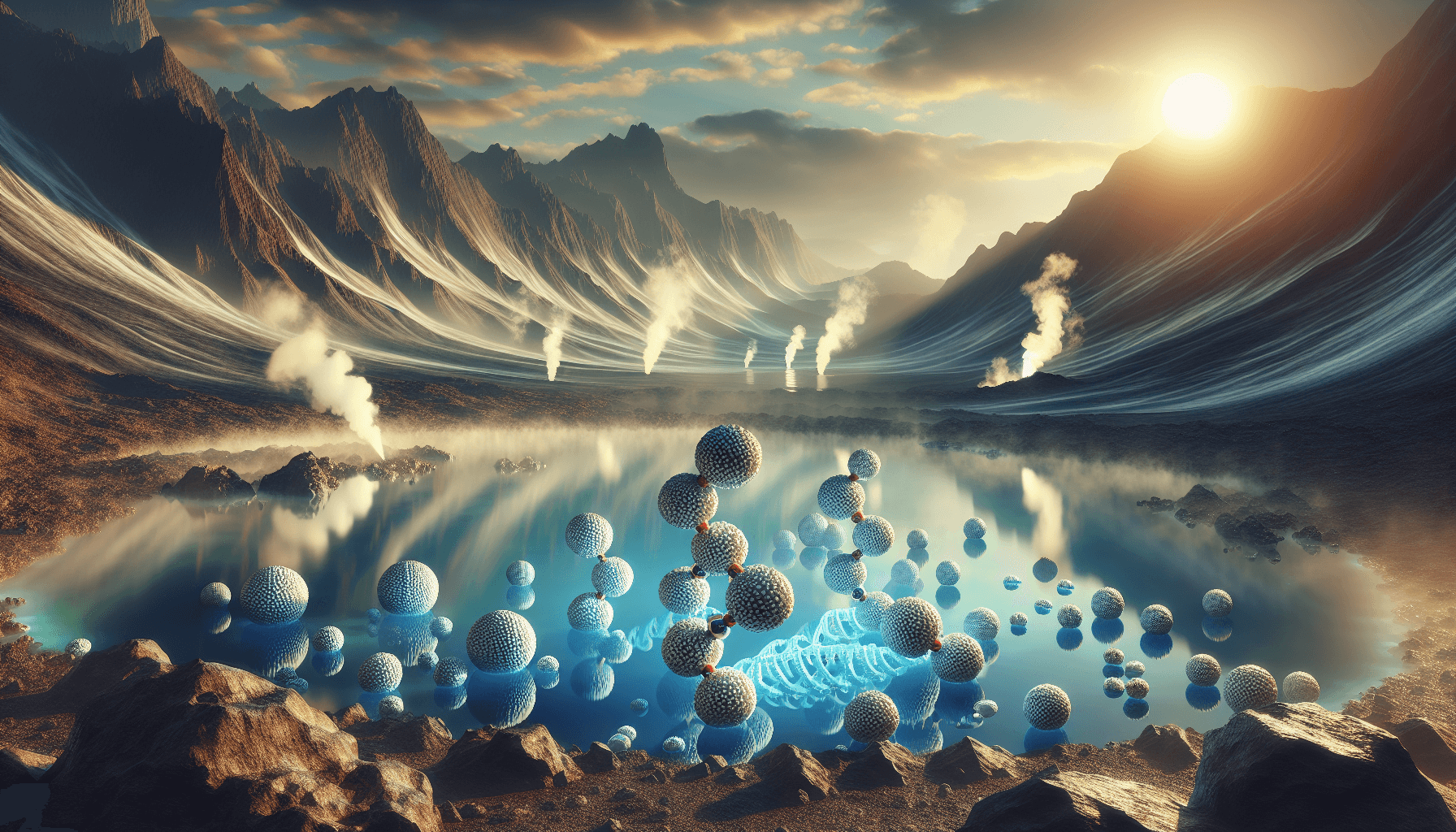
Unlocking Life's Blueprint: New Chemical Discovery Rewrites Origins Story
The question of how life first emerged from a lifeless planet has captivated humanity for millennia. Now, a recent chemical breakthrough by an international team of scientists is offering a compelling new chapter to this ancient mystery, providing a more plausible pathway for the spontaneous formation of life's fundamental building blocks on early Earth. This discovery doesn't just add a piece to the puzzle; it reconfigures our understanding of the very dawn of existence.
The Primordial Puzzle: How Did Life Begin?
For decades, researchers have grappled with the concept of abiogenesis – the process by which life arises from non-living matter. The prevailing 'primordial soup' theory suggests that simple inorganic molecules reacted to form organic compounds, which then assembled into complex structures like proteins and nucleic acids. However, many steps in this theoretical pathway have proven challenging to replicate in laboratories under conditions thought to exist billions of years ago. The sheer improbability of these complex molecules forming spontaneously and in sufficient quantities has been a significant hurdle.
A Chemical Leap Forward in Nucleotide Formation
The new research, spearheaded by scientists at leading global institutions, addresses one of these critical challenges head-on. The team has discovered a novel chemical pathway that allows for the efficient, non-enzymatic synthesis of RNA nucleotides – the vital building blocks of RNA, a molecule many scientists believe predated DNA as life's primary genetic material. Traditionally, forming these nucleotides requires specific conditions and a series of reactions that are difficult to achieve simultaneously in a chaotic early Earth environment. This breakthrough demonstrates a simpler, more robust method.
- Single-pot synthesis: The new method allows for the creation of multiple nucleotide components in a single reaction vessel.
- Plausible early Earth conditions: The reactions occur under temperatures, pH levels, and mineral compositions consistent with volcanic vents or shallow ponds.
- Increased yield: The process significantly boosts the yield of crucial precursors, making their accumulation more probable.
Recreating Ancient Environments in the Lab
What makes this discovery particularly compelling is its reliance on conditions that realistically mimic the geological and atmospheric environment of early Earth. By utilizing common minerals like borate and phosphate, and fluctuating wet-dry cycles – conditions prevalent around volcanic regions or evaporating ponds – the scientists demonstrated how complex organic molecules could spontaneously assemble. This moves the needle from highly improbable chance to a more chemically inevitable process under the right environmental stresses.
"This isn't just about creating a molecule; it's about showing a plausible, robust mechanism for how it could have happened naturally," explains Dr. Anya Sharma, lead author of the study. "It significantly reduces the 'luck' factor previously associated with the emergence of these foundational biomolecules."
Implications for Astrobiology and Beyond
The ramifications of this discovery extend far beyond understanding Earth's past. By simplifying the chemical requirements for forming life's building blocks, this research offers tantalizing new perspectives for astrobiology. If life's genesis is less chemically demanding than previously thought, the chances of finding similar chemical processes – and potentially life itself – on other planets or moons in our solar system and beyond could be significantly higher.
This work reinforces the idea that the universe might be teeming with the necessary ingredients for life, and perhaps even the inherent chemical drive for these ingredients to self-organize. It prompts us to reconsider the uniqueness of Earth's biological story.
The Road Ahead: Building Blocks to Life Itself
While this breakthrough is monumental, it's a stepping stone, not the final answer. The next frontiers for this research involve demonstrating how these newly formed nucleotides could then link up to form longer RNA strands, and eventually, self-replicating molecules capable of evolution. Scientists will also explore how these chemical pathways might integrate with the formation of other essential biomolecules, such as amino acids and lipids, which are crucial for protein and cell membrane formation.
This chemical breakthrough serves as a powerful reminder of science's relentless pursuit of fundamental truths. By peeling back the layers of our planet's distant past, researchers are not only illuminating the origins of life on Earth but also providing a framework for understanding the potential for life across the cosmos. The journey to fully unraveling life's ultimate mystery continues, now with a clearer, more exciting path forward.