
Unlocking Life's Blueprints: How Bacteria Mastermind Their Own Cellular Architecture
A groundbreaking discovery reveals bacteria possess an unprecedented ability to 'rewire' their genetic machinery, actively dictating their own cell shape. This finding challenges fundamental biological understanding and opens doors for revolutionary applications in medicine and biotechnology.
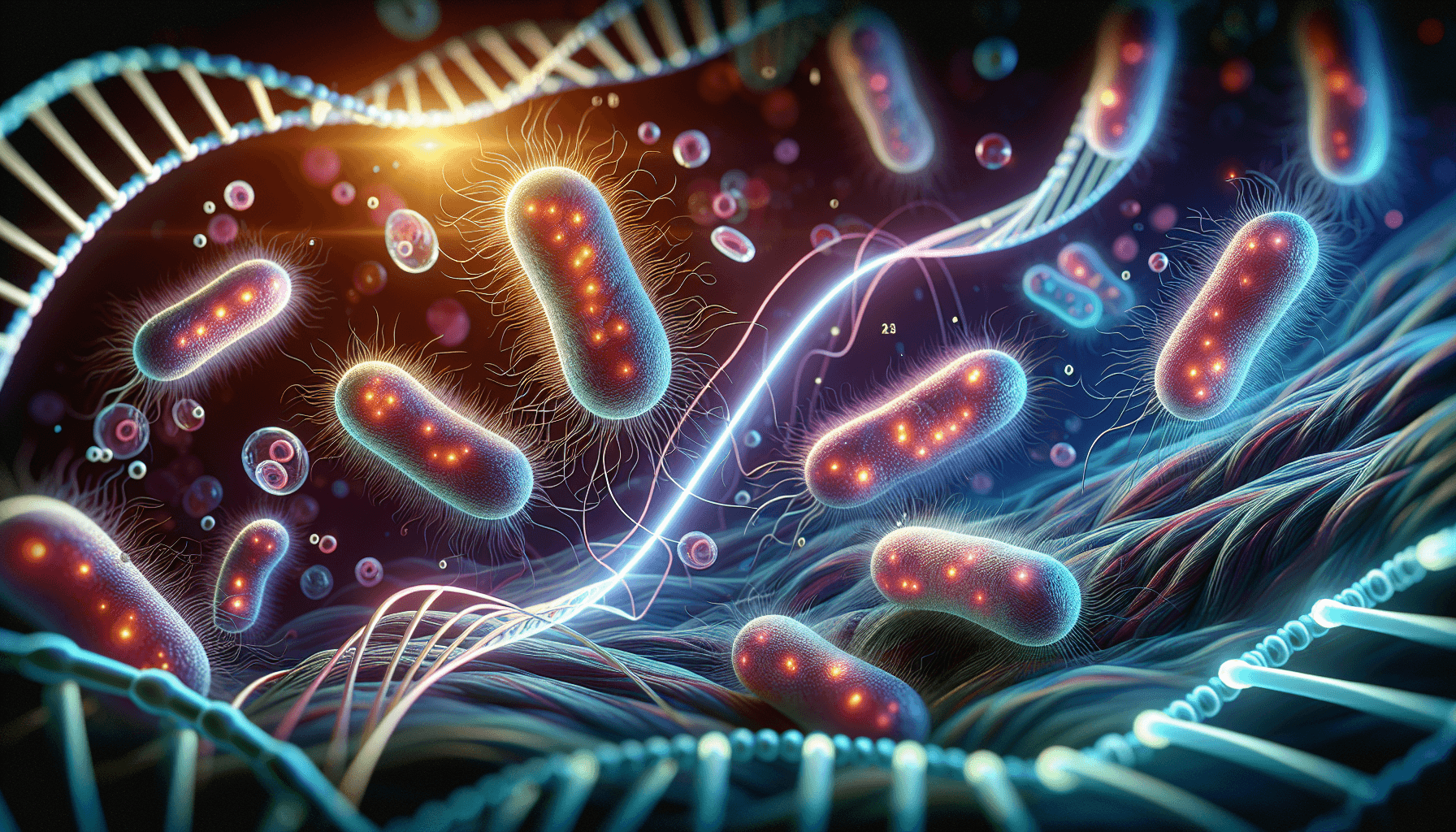
A Paradigm Shift in Microbiology: Bacteria's Genetic Architectures
The microbial world, often unseen, constantly offers profound insights into life's fundamental processes. A recent scientific breakthrough has left researchers stunned, uncovering an unprecedented ability in bacteria: they can actively 'rewire' their own DNA machinery to precisely control and alter their cellular shape. This discovery doesn't just add a new chapter to microbiology; it redefines our understanding of bacterial intelligence and adaptability, challenging long-held assumptions about genetic regulation.
For decades, cell shape was largely understood as an outcome of genetic programming and environmental cues, with bacteria largely reacting to their surroundings. This new research, however, reveals a far more sophisticated, proactive mechanism. It suggests that bacteria are not merely passengers in their genetic destiny but active architects, capable of manipulating their internal blueprints in real-time to gain strategic advantages.
The Ingenious Mechanism: Repurposing Genetic Pathways
At the heart of this discovery lies an intricate mechanism where bacteria effectively repurpose existing genetic pathways. Instead of relying solely on fixed genetic instructions, these microorganisms have evolved ways to modify or redirect the activity of genes responsible for synthesizing key structural components like cell walls, membranes, and cytoskeleton-like proteins. This 'rewiring' isn't a random mutation; it's a controlled, adaptive process.
Scientists observed that specific environmental signals trigger a cascade of events, leading to the activation of novel regulatory elements – perhaps unique transcription factors or small RNA molecules. These elements then precisely modulate the expression of genes involved in cell morphology, allowing the bacteria to transition between different shapes. This level of dynamic genetic control over form was previously thought to be far more complex and largely restricted to multicellular organisms.
Why Cell Shape is a Survival Masterstroke
The ability to dynamically alter cell shape is far from a mere biological curiosity; it's a critical survival strategy. Different shapes confer distinct advantages in various environments:
- Enhanced Motility: Some shapes facilitate movement through viscous liquids or across surfaces, aiding in colonization.
- Nutrient Acquisition: Increased surface area in certain morphologies can improve nutrient uptake efficiency.
- Immune Evasion: Changing shape can help bacteria evade detection or engulfment by host immune cells.
- Biofilm Formation: Specific cell shapes are crucial for forming robust biofilms, offering protection against antibiotics and harsh conditions.
This newly identified genetic 'rewiring' mechanism provides bacteria with an unparalleled degree of control over these survival tactics, enabling rapid adaptation to fluctuating conditions and host defenses.
Future Frontiers: Impact on Medicine and Biotechnology
The implications of this groundbreaking research stretch across numerous scientific disciplines, promising to revolutionize our approach to disease and biological engineering.
Paving the Way for Novel Therapeutic Strategies
Understanding how bacteria manipulate their own cell shape could unlock new avenues for antibiotic development. If scientists can interfere with the bacterial 'rewiring' process, they might be able to prevent pathogens from adopting shapes crucial for infection, immune evasion, or resistance. Imagine drugs that specifically target these shape-shifting mechanisms, rendering bacteria vulnerable.
Advancing Synthetic Biology and Biomanufacturing
Beyond medicine, this discovery offers powerful tools for synthetic biology. Researchers could potentially harness these bacterial 'rewiring' capabilities to design microorganisms with bespoke shapes for specific industrial or therapeutic applications. This could include:
- Engineering bacteria for targeted drug delivery, where their shape allows them to navigate complex biological systems.
- Developing microbial cell factories with optimized geometries for enhanced production of biofuels, enzymes, or pharmaceuticals.
- Creating novel biosensors that change shape in response to specific environmental contaminants.
A Deeper Dive into Life's Fundamental Controls
Ultimately, this research compels us to reconsider the sophistication of microbial life. It highlights the incredible evolutionary pressures that drive organisms to develop ingenious solutions for survival. The ability of bacteria to actively 'rewire' their DNA machinery to shape cells is a testament to the dynamic and adaptive nature of genetic control, offering a fertile ground for future exploration into the very essence of life's blueprints.
How this article was made
- Sources
- ScienceDaily
- Generated on:
- Apr 20, 2026
This content is produced by Acerbo.AI's AI editorial pipeline: source gathering, rewriting and imagery are automated. Editorial oversight stays human.
Related Articles
Unveiling Nature's Architects: How Bacteria Actively Reshape Their Own Cells
Scientists are astounded by a groundbreaking discovery: certain bacteria possess the ability to actively rewrite their genetic instructions, manipulating their cellular machinery to precisely control and alter their own physical shape. This challenges fundamental biological paradigms.
Bacterial Masterminds: Scientists Uncover How Microbes Reprogram Host DNA to Reshape Cells
A groundbreaking discovery reveals bacteria actively rewire host DNA machinery, fundamentally altering cell shape and function. This changes our understanding of microbial interaction and disease.
Beyond the Brink: Scientists Discover Surprising New Mechanism in Cell Death
Groundbreaking research has unveiled an unexpected twist in the intricate process of cell death, challenging long-held biological assumptions and opening new avenues for understanding disease.