Unlocking Vision: Scientists Discover New Class of Neurons for Complex Texture Perception
Groundbreaking research has unveiled a novel class of neurons in the visual cortex, uniquely specialized in processing complex textures, profoundly advancing our understanding of how we perceive the visual world.
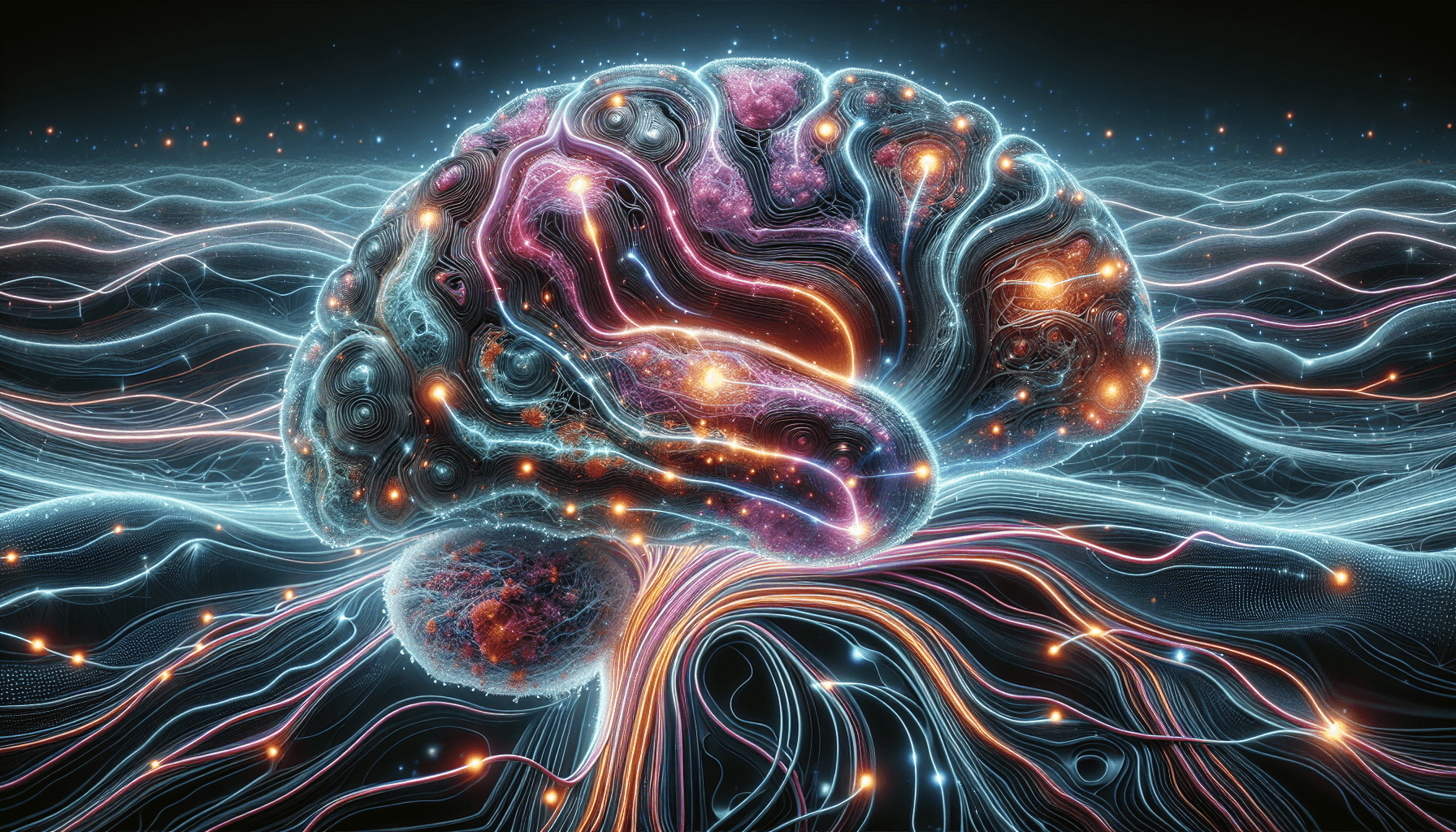
The Brain's Visual Symphony: A New Discovery
Imagine effortlessly distinguishing between the rough bark of a tree and the smooth surface of polished marble. While this act of visual discrimination feels instantaneous, the intricate neural mechanisms underpinning such complex perception have long been a frontier in neuroscience. Now, a groundbreaking study has announced the discovery of a previously unknown class of neurons residing within the visual cortex, specifically tuned to recognize and process complex textures. This revelation offers a profound new piece to the puzzle of how our brains construct the rich tapestry of our visual reality.
Unveiling the Visual Cortex's Latest Secret
The visual cortex, located at the back of the brain, is the primary hub for processing visual information received from our eyes. For decades, scientists have meticulously mapped its functions, identifying neurons specialized in detecting edges, lines, motion, and color. However, the mechanism by which the brain processes more intricate visual information – such as the nuanced patterns and irregularities that define textures – has remained less clear.
This new class of neurons challenges existing models, suggesting a dedicated neural pathway for texture analysis. Unlike their well-studied counterparts, these newly identified cells exhibit a remarkable sensitivity to the spatial arrangements and statistical properties of complex visual textures, rather than just simple geometric features.
What is "Complex Texture Tuning"?
Texture tuning refers to the ability of neurons to respond selectively to specific visual textures. While some neurons might respond to simple patterns like horizontal or vertical lines, the "complex texture tuning" observed in these new cells indicates a far more sophisticated level of processing. They are not merely detecting individual elements but rather the overall statistical characteristics and patterns that define a texture – be it the weave of a fabric, the grain of wood, or the intricate details of a fractal.
- Beyond Simple Features: These neurons go beyond detecting basic edges or orientations.
- Holistic Pattern Recognition: They integrate information across a larger visual field to identify the 'feel' or 'look' of a surface.
- Implications for Perception: This specialized processing is crucial for tasks like object recognition, depth perception, and navigating complex environments.
Rewriting the Manual for Visual Perception
The discovery of these texture-tuned neurons significantly advances our understanding of visual processing. It suggests that our visual system employs dedicated, specialized circuits to break down and interpret the textural information that is ubiquitous in our environment. This could explain how we rapidly distinguish between different materials or surfaces, even in low light or when other visual cues are limited.
Understanding these mechanisms could also shed light on neurological conditions affecting visual perception, such as certain forms of agnosia where individuals struggle to recognize objects or textures. Pinpointing the neural underpinnings of texture processing opens new avenues for diagnostic tools and potential therapeutic interventions.
Bridging Biology and Artificial Intelligence
Beyond fundamental neuroscience, this discovery holds immense promise for the field of Artificial Intelligence, particularly in computer vision. Current AI models for image recognition often struggle with the subtle nuances of texture, sometimes relying on superficial features rather than deep textural understanding.
Biologically inspired AI architectures, which mimic the brain's neural networks, could leverage these findings to develop more robust and human-like visual recognition systems. Imagine AI that can not only identify objects but also accurately describe their material properties, leading to advancements in robotics, autonomous vehicles, and medical imaging analysis.
The Road Ahead: Future Research and Applications
This pioneering research marks just the beginning. Future studies will undoubtedly delve deeper into the precise circuitry and connectivity of these texture-tuned neurons, exploring how they interact with other visual processing areas of the brain. Investigating their development and potential plasticity could also reveal insights into learning and visual adaptation.
Ultimately, this discovery not only enriches our fundamental understanding of the brain's visual prowess but also paves the way for exciting innovations across diverse scientific and technological domains. It reminds us that even in the most studied regions of the brain, there are still profound secrets waiting to be uncovered, continually reshaping our perception of perception itself.