Unveiling the Cell's Inner Currents: Scientists Link Hidden 'Winds' to Cancer Metastasis
A groundbreaking study reveals previously unseen 'intracellular winds' within human cells, actively guiding components and potentially explaining how cancer spreads.
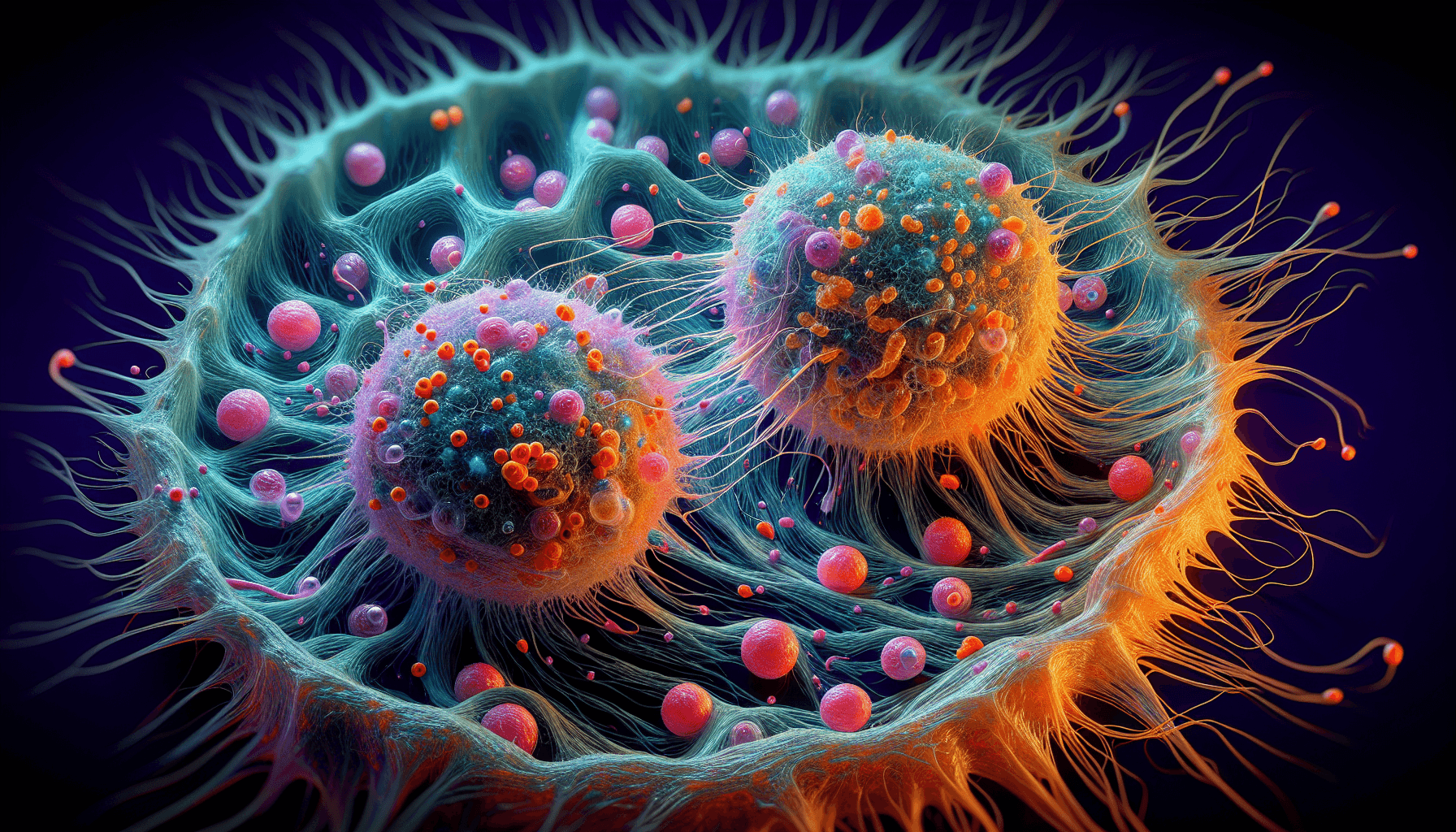
In a groundbreaking discovery that could reshape our understanding of cellular mechanics and disease progression, scientists have unveiled previously unseen "winds" or internal currents within human cells. These intricate, directed flows, far from being random, appear to play a critical role in cellular function and, crucially, in the aggressive spread of cancer throughout the body.
Decoding the Cell's Inner Weather System
For decades, researchers have meticulously studied the complex machinery within cells, from the intricate dance of organelles to the dynamic scaffolding of the cytoskeleton. However, a new study published in a leading scientific journal reveals a hidden layer of cellular activity: organized, directional flows of cytoplasm and molecular components. These newly identified currents, dubbed "intracellular winds" by the research team, act like microscopic jet streams, guiding vital processes and influencing cell behavior.
Led by Dr. Anya Sharma at the Global Institute for Biomedical Research, the team utilized advanced super-resolution microscopy and computational modeling to visualize these subtle but powerful forces. "Imagine a bustling city," explains Dr. Sharma. "We always knew there were roads and vehicles, but we've just discovered an entire network of underground rivers carrying essential goods and influencing traffic patterns in ways we never fully appreciated."
The Mechanism Behind the Micro-Currents
These cellular "winds" are not simply passive diffusion. Instead, they are actively generated by a sophisticated interplay of molecular motors, such as myosin and kinesin, acting upon the cell's internal scaffolding, the cytoskeleton. These motors create localized pressure gradients and directed movement, effectively stirring and guiding the cellular contents. This dynamic system ensures that nutrients, signaling molecules, and organelles are delivered precisely where and when they are needed, maintaining cellular homeostasis.
- Cytoskeletal Dynamics: Microtubules and actin filaments provide the tracks and anchors.
- Molecular Motors: ATP-powered proteins like kinesin and myosin generate force and direction.
- Cytoplasmic Flow: The bulk movement of fluid and suspended particles within the cytoplasm.
- Organelle Positioning: Essential for proper cell division, metabolism, and signaling.
A Game-Changer for Cancer Research
The most profound implication of this discovery lies in its potential connection to cancer metastasis. Cancer cells are notorious for their ability to detach from a primary tumor, navigate through complex tissues, enter the bloodstream, and establish secondary tumors in distant organs. This process, known as metastasis, is responsible for the vast majority of cancer-related deaths.
The research suggests that cancerous cells might hijack or dysregulate these internal "winds" to facilitate their aggressive spread. In healthy cells, these currents are tightly regulated, ensuring controlled movement and growth. However, preliminary findings indicate that in malignant cells, these internal flows become erratic or hyperactive, potentially providing an internal propulsion system that aids in cell migration and invasion.
Targeting the Internal Compass of Cancer
Understanding how these intracellular currents are altered in cancer cells opens up entirely new avenues for therapeutic intervention. If scientists can identify the specific molecular pathways that control these "winds," they could potentially develop drugs to dampen or redirect these flows, thereby inhibiting the metastatic cascade. This could lead to novel strategies for preventing cancer from spreading, a major hurdle in effective cancer treatment.
Furthermore, the ability to visualize and quantify these internal flows could serve as a powerful diagnostic tool. Detecting abnormal "wind" patterns within early-stage tumors might offer a biomarker for aggressive forms of cancer, allowing for earlier and more targeted treatment.
Looking Ahead: New Horizons in Cell Biology
This pioneering research underscores the incredible complexity and dynamism within our cells, revealing that even fundamental processes like internal transport can hold profound secrets. While the current findings are just the beginning, they pave the way for a deeper understanding of cellular function in both health and disease. Future studies will focus on identifying the precise regulatory mechanisms of these "winds" and exploring their role in other cellular processes, from immune response to neurodegenerative disorders.
The discovery of these "intracellular winds" is a testament to the power of advanced imaging and interdisciplinary research. It offers a fresh perspective on cellular life, promising to unlock new therapeutic strategies and diagnostic tools in the ongoing fight against cancer and beyond.