
Breaking the 'Forever' Bond: Scientists Harness UV Light to Destroy Stubborn PFAS Chemicals
A groundbreaking study unveils a novel method using intense UV light and hydrogen radicals to finally break down PFAS 'forever chemicals,' offering a beacon of hope in the fight against widespread environmental contamination.
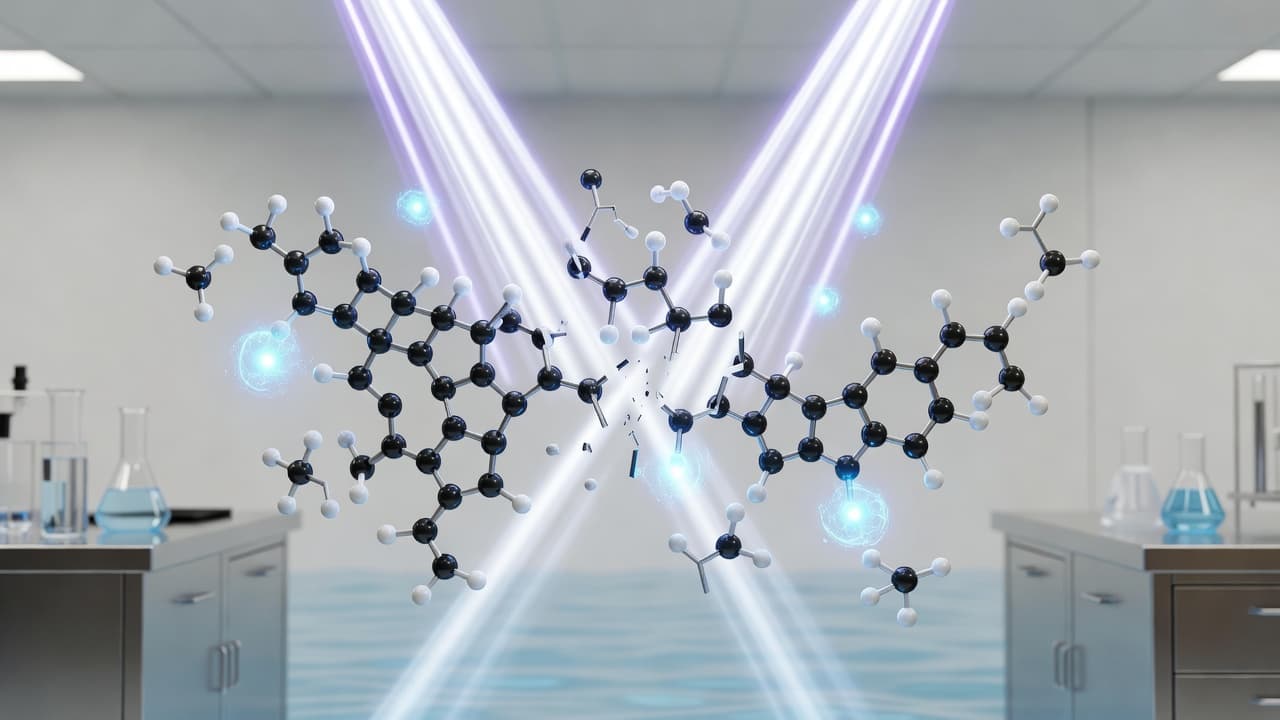
The End of 'Forever'? A Breakthrough in PFAS Destruction
For decades, per- and polyfluoroalkyl substances (PFAS), notoriously dubbed 'forever chemicals,' have posed an intractable environmental challenge, contaminating water sources, soil, and even human bodies worldwide. Their incredible persistence stems from exceptionally strong chemical bonds that resist almost all conventional degradation methods. However, a recent scientific breakthrough offers a glimmer of hope, as researchers have discovered a revolutionary way to dismantle these stubborn compounds using intense ultraviolet (UV) light and highly reactive hydrogen radicals.
Understanding the Threat of PFAS
PFAS are a vast group of synthetic chemicals used in countless consumer and industrial products, from non-stick cookware and water-repellent fabrics to firefighting foams and food packaging. Their widespread application is due to their unique properties, including resistance to heat, oil, stains, and water. Unfortunately, these same properties make them incredibly durable in the environment, leading to their accumulation in ecosystems and living organisms. Exposure to certain PFAS has been linked to a range of health concerns, including developmental issues, immune system disruption, and increased cancer risk.
A Radical Solution: UV Light and Hydrogen Radicals
The core of this groundbreaking discovery lies in a sophisticated advanced oxidation process (AOP). Researchers found that by subjecting PFAS-laden water to intense UV light, they could generate potent hydrogen radicals. These radicals are incredibly reactive chemical species with an unpaired electron, making them highly unstable and eager to react with other molecules to achieve stability. It's this reactivity that proves crucial in dismantling the robust carbon-fluorine bonds that give PFAS their 'forever' reputation.
How the Mechanism Works
The process initiates when UV light interacts with water molecules, splitting them to form these powerful hydrogen radicals (•H). When these radicals encounter PFAS molecules, they act like molecular scissors, attacking and breaking the strong carbon-fluorine (C-F) bonds. This initiates a chain reaction that ultimately fragments the complex PFAS molecules into simpler, less harmful compounds, such as carbon dioxide, fluoride ions, and water. The key innovation here is the efficiency and effectiveness with which these radicals target and destroy the C-F bonds, rather than merely transforming them into other persistent forms.
Significance and Future Implications
The significance of this discovery cannot be overstated. Unlike other methods that often just transfer PFAS from one medium to another (e.g., filtering them out, only to dispose of the contaminated filter), this technique aims for complete destruction. This offers a truly sustainable solution to PFAS contamination. Key advantages include:
- Direct Degradation: Breaks down the chemicals, rather than just sequestering them.
- High Efficiency: Demonstrates remarkable effectiveness in breaking the C-F bonds.
- Potential for Scalability: While currently a lab-based success, the underlying principles could be scaled for industrial and municipal water treatment.
- Reduced Byproducts: Aims to produce less harmful end products compared to some other experimental methods.
Paving the Way for a Cleaner Future
While the initial results are highly promising, the path from laboratory success to widespread environmental application involves further research and development. Challenges include optimizing the energy efficiency of the UV light systems, understanding the process with various PFAS mixtures, and scaling up the technology for real-world scenarios like municipal water treatment plants or industrial wastewater facilities. Nevertheless, this scientific breakthrough represents a critical step forward in addressing one of the most pressing environmental issues of our time, offering a tangible pathway to finally rid our planet of these persistent 'forever chemicals' and safeguard global public health.
How this article was made
- Sources
- ScienceDaily
- Generated on:
- Jun 19, 2026
This content is produced by Acerbo.AI's AI editorial pipeline: source gathering, rewriting and imagery are automated. Editorial oversight stays human.
Related Articles
Unveiling the Invisible: Your $100 Gateway to Cosmic Mysteries
Scientists have developed an incredibly affordable particle detector, costing just $100, that allows anyone to observe cosmic rays raining down from space, opening new avenues for citizen science and education.

Unveiling the Amazon's Emerald Enigma: Scientists Discover a Mysterious New Frog Species
A recent expedition deep within the Amazon rainforest has led to the thrilling discovery of a previously unknown frog species, highlighting the incredible biodiversity still hidden.

Quantum Mystery Deepens: CERN Uncovers Unprecedented Gluon Behavior
CERN scientists have observed gluons, the fundamental particles binding atomic nuclei, exhibiting unexpected behavior deep within matter, challenging long-held theories of the strong nuclear force.