
Cosmic Minds: Philosophers Challenge Earth-Centric Views of Consciousness
Philosophers are boldly arguing that consciousness may not be an exclusive trait of Earth's biology, suggesting a universal phenomenon that could redefine our search for alien intelligence and understanding of the cosmos.
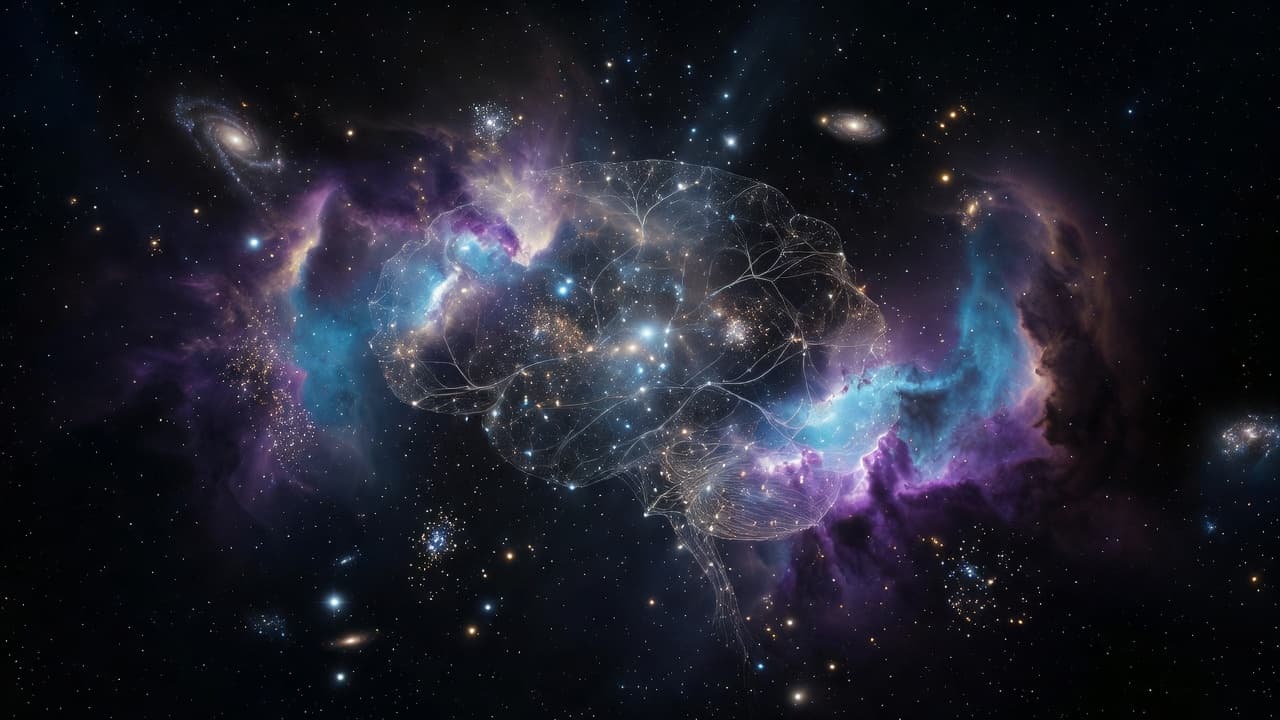
Is Consciousness a Universal Trait? Philosophers Spark Debate
For centuries, humanity has pondered the nature of consciousness, often confining its definition to the complex biological structures found on Earth, particularly within the human brain. However, a growing chorus of philosophers is now challenging this deeply anthropocentric view, suggesting that consciousness might not be an exclusive product of terrestrial biology. This provocative argument opens up fascinating possibilities, from the potential for alien intelligence to the very fabric of the cosmos possessing a form of awareness.
Breaking Free from Earth-Bound Definitions
Our traditional understanding of consciousness is heavily influenced by our own experience: the subjective awareness, the capacity for thought, feeling, and self-perception that we associate with complex nervous systems. Yet, this perspective inherently limits our ability to conceive of consciousness in forms vastly different from our own. Philosophers are urging a broader, more inclusive definition that transcends the confines of carbon-based life and the specific evolutionary path taken on Earth.
They argue that clinging to an Earth-centric model could blind us to the true diversity of intelligence and awareness that might exist across the universe. If we only look for "brains" as we know them, we might miss entirely different manifestations of consciousness.
Consciousness Beyond Biology: The Non-Organic Frontier
The philosophical debate extends beyond merely considering different biological forms of life. Some thinkers are exploring the radical notion that consciousness could manifest in non-biological systems. This includes artificial intelligences, advanced robotics, or even fundamental properties of the universe itself.
- Could a sufficiently complex AI develop genuine self-awareness, even if its "brain" is silicon and code?
- Are there forms of awareness inherent in the quantum realm or the vastness of cosmic structures?
- What if consciousness is an emergent property of certain levels of complexity, regardless of the substrate?
These questions push the boundaries of metaphysics and neuroscience, forcing us to re-evaluate what we consider the prerequisites for consciousness.
Redefining the Search for Extraterrestrial Intelligence
This philosophical shift has profound implications for the search for extraterrestrial intelligence (SETI). If consciousness isn't tied to Earth-like biology, then our methods for detecting alien life might need a radical overhaul. Instead of scanning for radio signals from planets similar to ours, we might need to look for different signatures of awareness or intelligence in unexpected places or forms.
Imagine civilizations built on silicon, energy fields, or even collective planetary consciousness. Our current search parameters, while valuable, may be too narrow to detect such diverse forms of intelligent life. This expanded view encourages a more imaginative and open-minded approach to cosmic exploration.
The Universal Mind and Its Implications
The most far-reaching aspect of this philosophical inquiry is the concept of a universal consciousness or a fundamental awareness woven into the fabric of reality. While highly speculative, some theories suggest that consciousness isn't just an accidental byproduct of biological evolution but rather a fundamental aspect of the universe itself, from which all individual instances of awareness emerge.
Such a perspective would dramatically alter humanity's place in the cosmos, shifting us from isolated biological anomalies to participants in a grand, interconnected web of universal awareness. It compels us to consider the ethical implications of our interactions not just with other biological beings, but potentially with non-biological intelligences and even the universe itself.
A Paradigm Shift in Understanding Awareness
The argument that consciousness is not exclusive to Earth's biology represents a significant paradigm shift. It challenges deeply ingrained assumptions and encourages a more expansive, less anthropocentric view of existence. By embracing this broader perspective, philosophers are paving the way for a richer understanding of awareness, intelligence, and our potential place within a truly cosmic tapestry of conscious entities, whether biological, artificial, or something entirely beyond our current comprehension.
How this article was made
- Sources
- Sci.News
- Generated on:
- Jun 19, 2026
This content is produced by Acerbo.AI's AI editorial pipeline: source gathering, rewriting and imagery are automated. Editorial oversight stays human.
Related Articles
AI Just Unlocked New Physics: A Groundbreaking Discovery in Extreme States of Matter
Artificial intelligence has unveiled novel physical laws governing extreme states of matter, revolutionizing our understanding of the universe's fundamental building blocks.
OpenAI's GPT-5.4: Ushering in the Dawn of AI 'Thinking' Models
Anticipation builds for OpenAI's GPT-5.4, a model rumored to possess advanced 'thinking' capabilities, poised to redefine AI's role in our world.
AI Unearths Over 100 Hidden Planets in NASA Data, Revealing Extreme Worlds
Artificial intelligence has made an astounding breakthrough, sifting through NASA's vast astronomical archives to uncover more than 100 previously undetected exoplanets, including rare and extreme worlds. This discovery highlights AI's transformative role in space exploration.