
NASA's Roman Telescope: Unlocking the Secret of Millions of Invisible Neutron Stars
NASA's Roman Space Telescope will unveil millions of invisible neutron stars, revolutionizing our understanding of stellar evolution and the Milky Way's hidden mass with its powerful infrared vision.
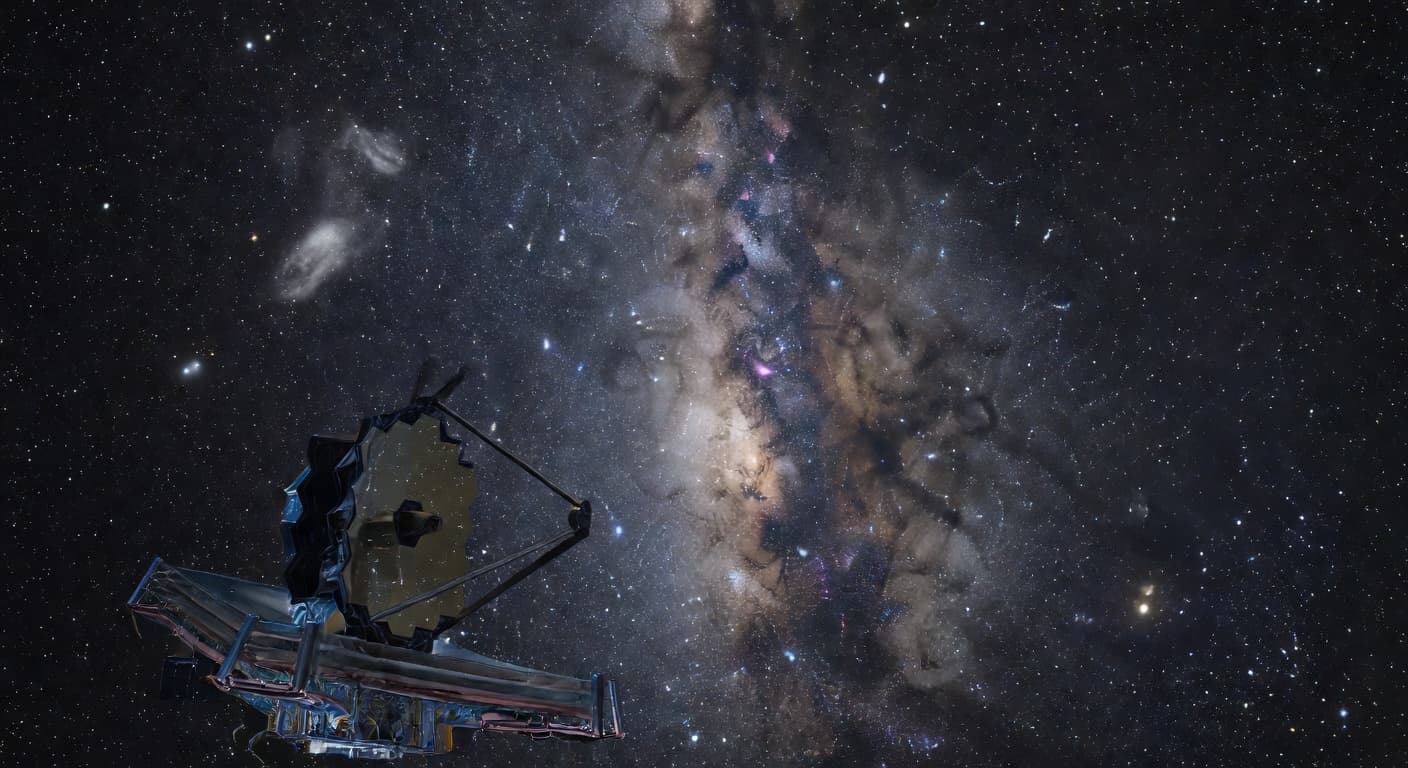
Unveiling the Universe's Hidden Giants: NASA's Roman Telescope Set to Discover Millions of Neutron Stars
Imagine a universe teeming with unseen behemoths, cosmic remnants of colossal stars that silently populate our galaxy. NASA's groundbreaking Nancy Grace Roman Space Telescope, slated for launch in the mid-2020s, is poised to pull back the veil on these elusive celestial bodies: neutron stars. This next-generation observatory promises to revolutionize our understanding of the Milky Way, potentially revealing millions of these incredibly dense, invisible objects that have long eluded detection.
What Exactly Are Neutron Stars?
Neutron stars are among the most extreme objects in the cosmos. They are born from the catastrophic collapse of massive stars during supernovae, packing more mass than our Sun into a sphere only about the size of a city, roughly 12 miles (20 kilometers) across. Their density is mind-boggling: a single teaspoon of neutron star material would weigh billions of tons. While some neutron stars manifest as pulsars, emitting beams of radio waves, many others are isolated and incredibly faint, making them exceptionally difficult to spot with conventional telescopes.
These stellar corpses are the universe's ultimate reclusive giants. Their dimness in visible light means a vast population remains undetected, hidden in the cosmic shadows, especially within the dusty, crowded regions of our galaxy's core. Scientists estimate that the Milky Way alone could harbor hundreds of millions of neutron stars, yet we've only identified a tiny fraction.
Roman's Revolutionary Infrared Vision
The Roman Space Telescope's unique capabilities are precisely what's needed to unlock this hidden census. Unlike its predecessors, Roman boasts an unprecedented wide field of view—hundreds of times larger than the Hubble Space Telescope's—combined with powerful infrared imaging. This combination is a game-changer for several reasons:
- Seeing Through Dust: Infrared light can penetrate the thick clouds of gas and dust that obscure visible light, allowing Roman to peer deep into the galactic plane and towards the Milky Way's densely packed center, where many neutron stars are expected to reside.
- Vast Sky Coverage: Its wide field of view means Roman can survey enormous swathes of the sky much faster, significantly increasing the chances of stumbling upon these faint, isolated objects.
- Gravitational Microlensing: Roman is specifically designed to conduct microlensing surveys. This technique detects objects by observing how their gravity temporarily magnifies the light from background stars. Even if a neutron star doesn't emit much light itself, its gravitational pull can reveal its presence.
Unveiling the Galaxy's Hidden Mass
The potential discovery of millions of new neutron stars holds profound implications for astrophysics. Firstly, it would dramatically refine our understanding of stellar evolution and the frequency of supernovae. We could gain a clearer picture of how massive stars end their lives and how their remnants are distributed throughout the galaxy.
Secondly, these discoveries could shed light on the distribution of "missing mass" in the Milky Way. While neutron stars are not dark matter, their collective mass contributes significantly to the galaxy's overall gravitational budget. Mapping their locations would help scientists create more accurate models of our galaxy's structure and dynamics, potentially offering indirect insights into the environment where dark matter might also reside.
Furthermore, understanding the population of isolated neutron stars is crucial for predicting the rates of gravitational wave events, which are often produced by the mergers of neutron star binaries. A more complete census of these objects will enrich our knowledge of the universe's most violent cosmic collisions.
A New Dawn for Galactic Cartography
As the Nancy Grace Roman Space Telescope prepares for its journey, the scientific community buzzes with anticipation. Its mission promises not just a few new discoveries, but a comprehensive mapping of a previously invisible population of cosmic giants. By revealing millions of neutron stars, Roman will provide an unprecedented look into the hidden architecture of our galaxy, pushing the boundaries of our knowledge and opening new frontiers in astrophysics and cosmology.
How this article was made
- Sources
- ScienceDaily
- Generated on:
- May 17, 2026
This content is produced by Acerbo.AI's AI editorial pipeline: source gathering, rewriting and imagery are automated. Editorial oversight stays human.
Related Articles
NASA's Roman Space Telescope Accelerates Launch to September 2026, Promising New Cosmic Revelations
NASA's Nancy Grace Roman Space Telescope is now set to launch earlier in September 2026, accelerating humanity's quest to unravel the mysteries of dark energy, exoplanets, and the universe's grand evolution.
Cosmic Census: Vera C. Rubin Observatory Unveils Over 11,000 New Asteroids, Including Near-Earth Objects
Astronomers using the Vera C. Rubin Observatory have cataloged over 11,000 previously unknown asteroids, featuring hundreds of trans-Neptunian objects and 33 new near-Earth asteroids, significantly expanding our solar system's inventory.
JWST Uncovers Mysterious 'Red Dots': Glimpse of Universe's First Stars on Brink of Cosmic Collapse?
The James Webb Space Telescope has unveiled enigmatic 'little red dots' in the distant cosmos, believed by scientists to be the universe's earliest stars or proto-galaxies, poised at a critical evolutionary juncture. This groundbreaking discovery offers an unprecedented look into the dawn of cosmic history.