
Decades-Old Rye Pollen Enigma Unlocked, Paving New Paths in Cancer Therapy
After 30 years, researchers have finally unraveled a complex mystery within rye pollen. This groundbreaking discovery holds immense promise, potentially reshaping our approach to cancer diagnosis and therapy.
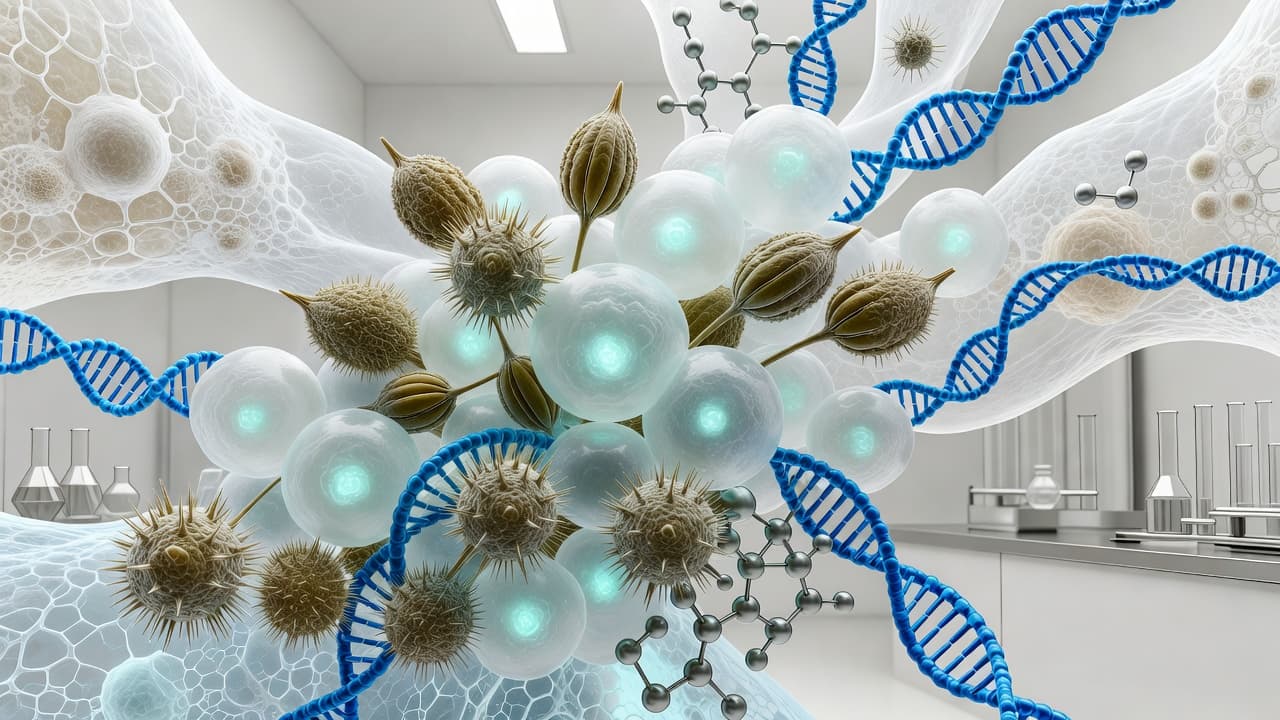
Unraveling the 30-Year Rye Pollen Enigma
For three decades, a perplexing biological enigma lay hidden within the unassuming grains of rye pollen, a puzzle that eluded even the most diligent scientific minds. Now, a team of dedicated researchers has finally cracked this long-standing mystery, unveiling a discovery so profound it could fundamentally reshape the landscape of cancer research and treatment. This isn't just about pollen; it's about unlocking a new understanding of cellular mechanisms with unprecedented implications for combating one of humanity's greatest health challenges.
The journey to this breakthrough began over thirty years ago when scientists first observed unusual interactions between specific compounds in rye pollen and mammalian cells. These interactions, while intriguing, remained largely unexplained due to the complex molecular structure and dynamic nature of the compounds involved. Researchers suspected a significant biological role, but the exact mechanism and its potential applications remained a frustrating unknown.
The 'rye pollen mystery' became a persistent challenge, a benchmark for analytical biochemistry and cellular biology. Many teams attempted to decode it, only to be met with dead ends. The sheer complexity of isolating and characterizing the active components, coupled with their often transient nature, presented formidable technical hurdles that required advancements in both instrumentation and computational biology to overcome.
The Breakthrough: A Novel Signaling Pathway
The recent success stems from a convergence of advanced genomic sequencing, high-resolution mass spectrometry, and sophisticated AI-driven molecular modeling. Scientists identified a previously unknown class of peptidoglycan-like molecules within the rye pollen. These molecules, once dismissed as mere structural components, are now understood to be potent modulators of a specific cellular signaling pathway crucial for cell proliferation and differentiation.
Specifically, the research revealed that these rye pollen compounds can selectively activate or inhibit a pathway known as the 'Cell Cycle Regulator X' (CCR-X). In healthy cells, CCR-X maintains balance. However, in many cancerous cells, CCR-X is aberrantly overactive, driving uncontrolled growth. The discovery is that specific rye pollen compounds can precisely downregulate this hyperactive CCR-X pathway.
Transformative Potential for Cancer Research
This revelation offers a tantalizing new avenue for cancer therapy. Current treatments often suffer from a lack of specificity, harming healthy cells alongside cancerous ones. The targeted nature of these rye pollen compounds, however, suggests a potential for therapies with significantly fewer side effects.
The implications are far-reaching, promising advancements in several key areas:
- Targeted Drug Development: The identified molecules provide a novel template for designing highly specific drugs that can inhibit cancer cell growth without broad systemic toxicity.
- Diagnostic Biomarkers: Understanding the interaction with CCR-X could lead to new biomarkers for early cancer detection or for monitoring treatment efficacy.
- Immunotherapy Enhancement: Preliminary studies suggest these compounds might also modulate immune responses, potentially enhancing the body's natural ability to fight cancer.
- Personalized Medicine: The precise mechanism of action could enable more personalized treatment strategies based on a patient's specific CCR-X profile.
From Lab Bench to Bedside: The Road Ahead
While the discovery is monumental, the journey from lab bench to bedside is just beginning. Researchers are now focused on synthesizing and optimizing these rye pollen-derived compounds, conducting extensive preclinical trials to confirm their safety and efficacy. The next phase will involve clinical trials, meticulously testing these potential new therapies in human patients.
This breakthrough underscores the importance of fundamental scientific inquiry, demonstrating how seemingly esoteric research into natural compounds can yield profound benefits for human health. The 30-year quest for understanding a tiny pollen grain has now opened a colossal door to potentially revolutionary cancer treatments.
The resolution of the rye pollen mystery marks a pivotal moment in biomedical science. It not only illuminates a complex biological interaction but also ignites fresh hope for millions battling cancer worldwide. As scientists delve deeper into the therapeutic potential of these newfound molecules, the prospect of more effective, less toxic cancer treatments moves closer to reality, promising a healthier future for generations to come.
How this article was made
- Sources
- ScienceDaily
- Generated on:
- Jul 8, 2026
This content is produced by Acerbo.AI's AI editorial pipeline: source gathering, rewriting and imagery are automated. Editorial oversight stays human.
Related Articles
Unlocking a 30-Year Rye Pollen Enigma: A New Horizon for Cancer Therapies
Scientists have finally cracked a three-decade mystery surrounding rye pollen, revealing insights that could profoundly impact future cancer research and drug development.
Unlocking a 30-Year Rye Pollen Enigma: A Potential Game-Changer for Cancer Research
Scientists have finally cracked a three-decade-old mystery surrounding rye pollen, revealing a biological mechanism with profound implications for future cancer therapies.
Rye Pollen's 30-Year Secret Unveiled: A Game-Changer for Cancer Research
Scientists have finally cracked a three-decade-old mystery surrounding rye pollen, revealing insights that could revolutionize future cancer treatments and open new avenues in medical science.