
Unearthing a Crestless Giant: Canada's New Duck-Billed Dinosaur Rewrites History
A groundbreaking discovery in Alberta, Canada, reveals *Acristavus gagslarsoni*, a new crestless duck-billed dinosaur species from 80 million years ago, reshaping our understanding of hadrosaur evolution.

A groundbreaking discovery in the fossil-rich badlands of southern Alberta, Canada, is set to redefine our understanding of one of the most iconic dinosaur groups: the duck-billed hadrosaurs. Paleontologists have officially identified a remarkable new species, Acristavus gagslarsoni, a creature that roamed the Earth approximately 80 million years ago during the Late Cretaceous period. What makes Acristavus particularly astonishing is its striking lack of the elaborate cranial crests that are the hallmark of many of its hadrosaur relatives, offering a crucial glimpse into the early evolution of these magnificent plant-eaters.
Unveiling Acristavus gagslarsoni: A Crestless Marvel
The newly described dinosaur, whose name Acristavus literally translates to "crestless ancestor," stands as a significant puzzle piece in the vast tapestry of prehistoric life. Unearthed from the Milk River Formation, this ancient herbivore provides compelling evidence that not all duck-billed dinosaurs sported the flamboyant headgear often associated with their kind. Instead, Acristavus gagslarsoni presents a more primitive, unadorned skull, suggesting that the complex crests seen in later hadrosaurs evolved over time rather than being a universal trait from their inception.
Researchers Dr. David Evans from the Royal Ontario Museum and Dr. Michael Ryan from the Cleveland Museum of Natural History led the study, meticulously analyzing fossil remains that were initially collected back in 1999. Their detailed examination revealed a distinct set of features that differentiate Acristavus from other known hadrosaurs, particularly its unique skull morphology. This discovery marks it as the oldest known crestless hadrosaur from North America, pushing back the timeline for the evolution of these creatures.
The Evolutionary Significance of a Missing Crest
Hadrosaurs are broadly divided into two main subfamilies: the Lambeosaurinae, known for their hollow, often elaborate crests, and the Hadrosaurinae, which typically feature solid crests or, in some cases, no crests at all. The existence of Acristavus gagslarsoni, an early crestless form, provides crucial data for understanding the evolutionary divergence within this group. It strongly supports the hypothesis that the ancestral hadrosaurs were likely crestless, and that the various crests observed in later species evolved independently or convergently, serving diverse functions from display to vocalization.
This finding challenges previous assumptions that hadrosaur crests were an early, defining characteristic. Instead, it paints a picture of a more gradual and complex evolutionary pathway, where innovative cranial structures emerged and diversified over millions of years. The fossil record from the Milk River Formation, where Acristavus was found, continues to be a treasure trove for understanding the early stages of hadrosaur evolution, frequently yielding fossils of some of the earliest representatives of these iconic dinosaurs.
Rewriting the Hadrosaur Family Tree
The formal description of Acristavus gagslarsoni is more than just the naming of a new species; it's a significant revision to the hadrosaur family tree. By establishing a clear example of an early, crestless form, paleontologists can better trace the lineage and adaptive radiation of these successful herbivores. This discovery helps to clarify the relationships between different hadrosaur groups and offers a baseline for understanding the morphological changes that occurred as they diversified across ancient continents.
The species name, "gagslarsoni," pays tribute to Gary and Sheila Larson, whose generous support has significantly contributed to paleontological research. Their contributions, alongside the tireless work of field paleontologists and museum researchers, underscore the collaborative effort required to bring these ancient stories to light. Each fossil, no matter how seemingly small, contributes immensely to our collective knowledge of Earth's deep history and the incredible life forms that once dominated its landscapes.
A Legacy of Discovery and Future Prospects
The identification of Acristavus gagslarsoni reinforces Canada's pivotal role in global paleontological research, particularly concerning Late Cretaceous dinosaurs. Discoveries like this not only fill gaps in the fossil record but also inspire new questions about dinosaur behavior, ecology, and the environmental pressures that drove their evolution. Future research will undoubtedly delve deeper into the specific ecological niche of Acristavus and its relationship to other early hadrosaurs, potentially unearthing even more surprises about these fascinating creatures.
Ultimately, Acristavus gagslarsoni serves as a powerful reminder that the story of life on Earth is far from fully told. Every new fossil discovery has the potential to rewrite chapters of that story, challenging long-held theories and deepening our appreciation for the astonishing biodiversity that has graced our planet over geological time. This crestless giant from Alberta is a testament to the ongoing thrill of scientific exploration and the enduring mysteries hidden within ancient rocks.
How this article was made
- Sources
- Sci.News
- Generated on:
- Jul 16, 2026
This content is produced by Acerbo.AI's AI editorial pipeline: source gathering, rewriting and imagery are automated. Editorial oversight stays human.
Related Articles

Unearthing the Impossible: A Crushed Fossil Rewrites Dinosaur History
A severely crushed fossil unearthed in a remote Patagonian region has revealed a dinosaur species whose existence challenges long-held theories about prehistoric life and evolution.
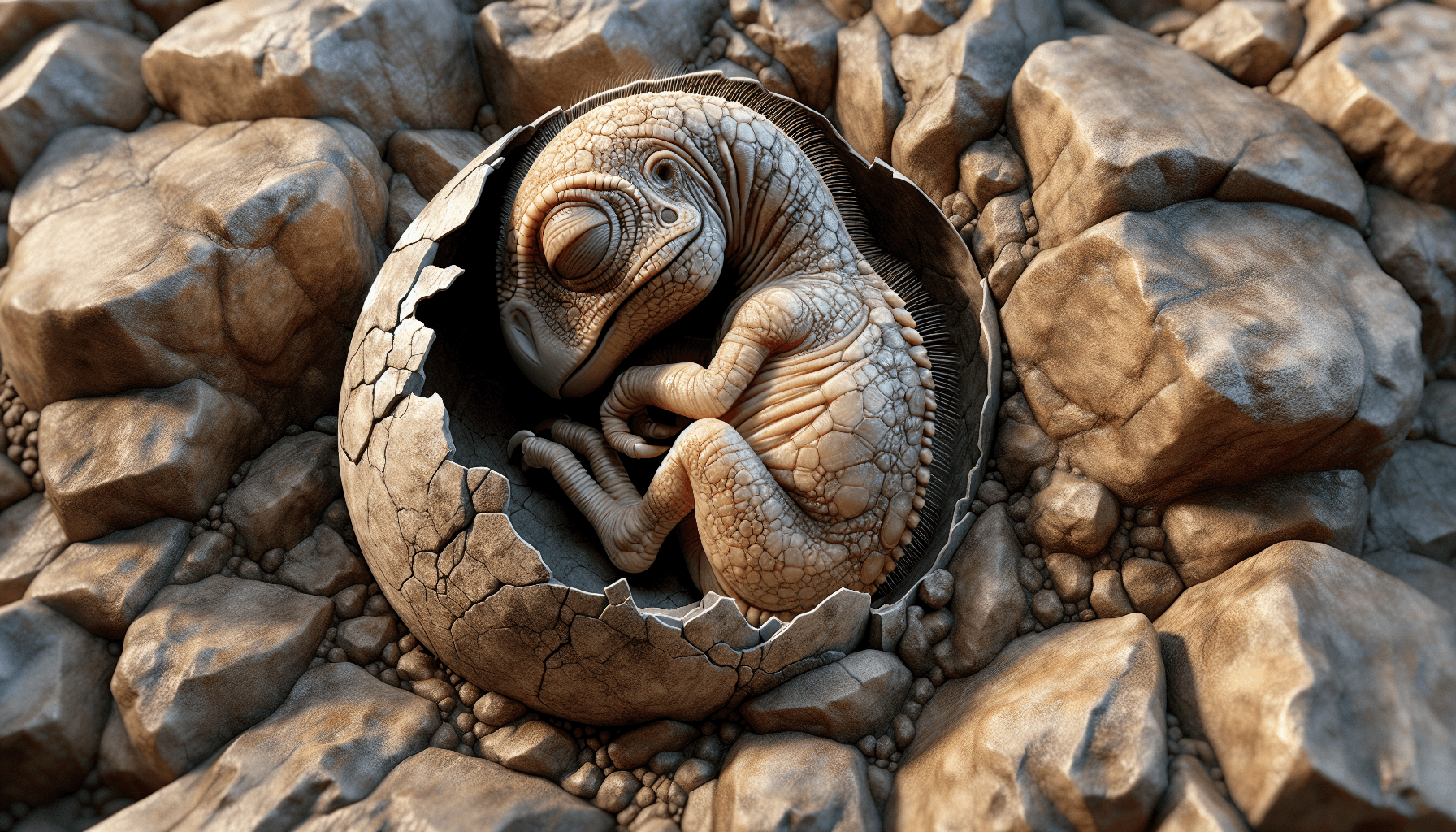
Unveiling 'Baby Yingliang': The Remarkably Cute Dinosaur Embryo Found in Rock
Paleontologists have unearthed an incredibly preserved baby dinosaur embryo, dubbed 'Baby Yingliang,' curled inside its fossilized egg. This discovery offers unprecedented insights into dinosaur development and their avian links.
Cracking the Evolutionary Code: 250-Million-Year-Old Fossil Reveals Our Egg-Laying Mammal Ancestors
A groundbreaking 250-million-year-old fossil finally provides definitive proof that early mammal ancestors laid eggs, reshaping our understanding of mammalian evolution.