
AI Just Unlocked New Physics: A Groundbreaking Discovery in Extreme States of Matter
Artificial intelligence has unveiled novel physical laws governing extreme states of matter, revolutionizing our understanding of the universe's fundamental building blocks.
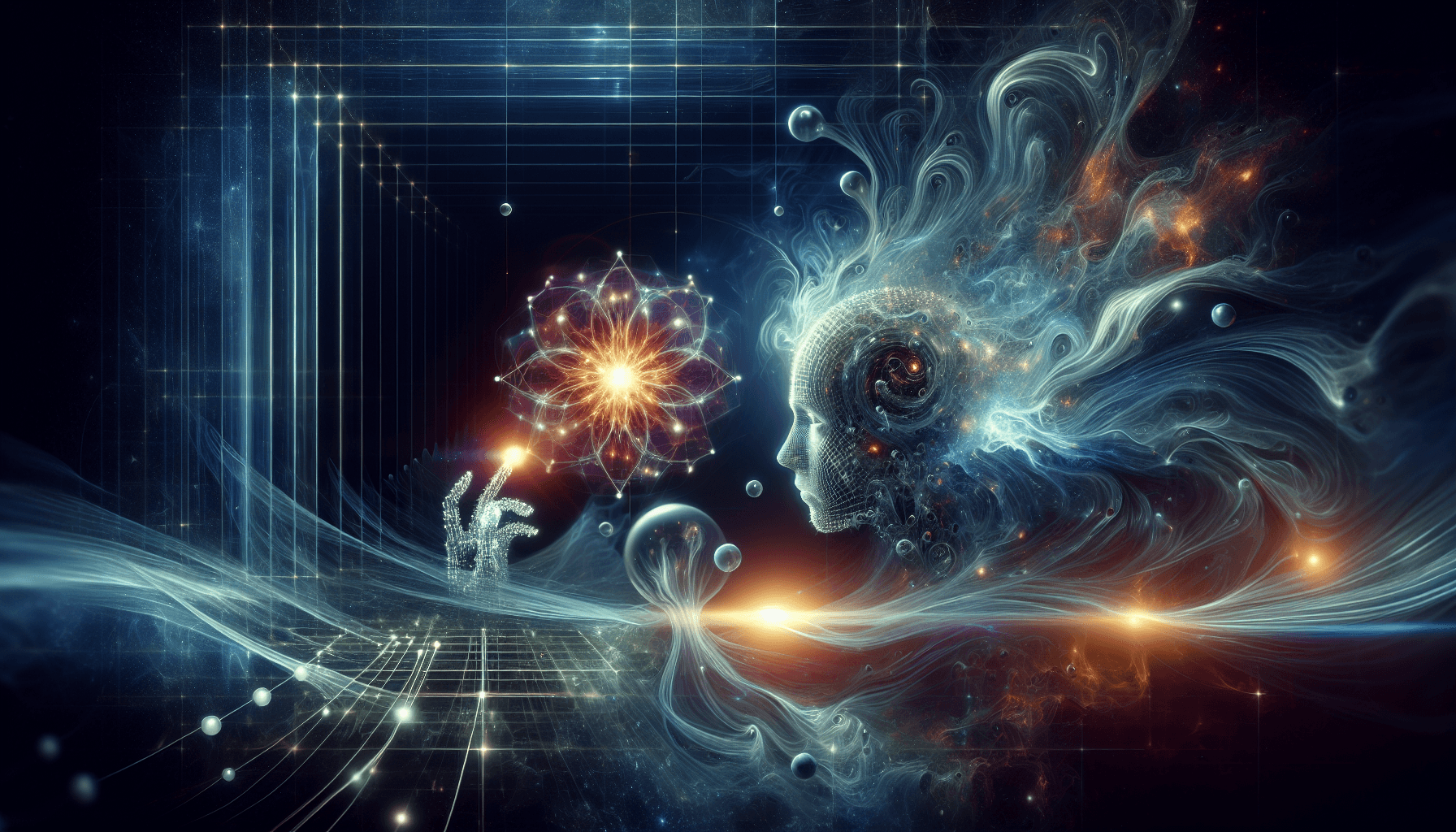
AI Propels Physics Forward: Unveiling Secrets in the Fourth State of Matter
In a monumental leap for scientific discovery, artificial intelligence has reportedly unearthed entirely new physical principles operating within what is often referred to as the 'fourth state of matter.' This groundbreaking achievement underscores the transformative potential of AI as a partner in deciphering the universe's most profound mysteries, pushing the boundaries of human comprehension.
Beyond Solid, Liquid, and Gas: Exploring Extreme States
While most of our daily experience revolves around solids, liquids, and gases, the cosmos is teeming with far more exotic states. The term "fourth state of matter" most commonly refers to plasma – an ionized gas found in stars, lightning, and fusion reactors. However, in advanced physics, this concept extends to other extreme conditions, including Bose-Einstein condensates, superfluids, and even quark-gluon plasma, each exhibiting unique and often counter-intuitive behaviors.
These states exist under conditions of extreme temperature, pressure, or energy, making them incredibly challenging to study. Understanding their properties is crucial not only for fundamental physics but also for advancing technologies like fusion energy and quantum computing.
How AI Deciphers the Unseen
The complexity of these extreme states often generates vast datasets from experiments and simulations, far beyond the capacity of traditional human analysis. This is where artificial intelligence, particularly machine learning algorithms, shines. AI systems are uniquely equipped to:
- Process Enormous Datasets: Sifting through terabytes of experimental data to identify subtle patterns and correlations that human researchers might miss.
- Identify Emergent Phenomena: Recognizing unexpected collective behaviors that arise from the interactions of countless particles.
- Formulate Hypotheses: Generating and testing theoretical models to explain observed phenomena, accelerating the scientific method.
In this particular breakthrough, the AI wasn't just crunching numbers; it was actively identifying new rules or interactions that govern the behavior of matter under these extreme conditions. This isn't just about confirming existing theories, but about discovering entirely novel physics.
The Nature of the "New Physics" Discovery
While specific details are still emerging, the "new physics" discovered by AI likely pertains to fundamental interactions or emergent properties within these complex systems. This could mean a revised understanding of:
- Particle Interactions: How particles behave and interact at incredibly high energies or densities, potentially challenging aspects of the Standard Model.
- Phase Transitions: The mechanisms by which matter transforms between different states under extreme conditions, revealing unexpected pathways.
- Energy Transfer: Novel ways energy is stored, transferred, or dissipated in exotic matter, with implications for energy generation and storage.
Such a discovery could fundamentally alter our theoretical frameworks, opening doors to previously unimaginable scientific avenues and technological applications.
Implications for Science and Beyond
The implications of AI uncovering new physics are profound. Firstly, it validates the increasing role of computational science and machine learning as indispensable tools in fundamental research. Secondly, it promises to accelerate our understanding of the universe, from the smallest quantum interactions to the largest cosmic structures. New insights into extreme states of matter could lead to breakthroughs in areas such as:
- Advanced Materials: Designing materials with unprecedented properties.
- Fusion Energy: Improving containment and efficiency in fusion reactors.
- Astrophysics: Better models for neutron stars, black holes, and the early universe.
The Future of AI-Driven Discovery
This landmark discovery marks a pivotal moment, showcasing AI not merely as an assistant, but as an active participant in the quest for knowledge. As AI capabilities continue to evolve, we can anticipate a future where human ingenuity, augmented by powerful artificial intelligence, unlocks even more of the universe's deepest secrets, forever changing our perception of reality and our place within it.
How this article was made
- Sources
- ScienceDaily
- Generated on:
- Apr 26, 2026
This content is produced by Acerbo.AI's AI editorial pipeline: source gathering, rewriting and imagery are automated. Editorial oversight stays human.
Related Articles
Cosmic Cannibals: Astronomers Uncover Two Actively Feeding Supermassive Black Holes in the Early Universe
A groundbreaking discovery reveals two actively feeding supermassive black holes in the universe's nascent stages, challenging theories of cosmic evolution and galaxy formation.
Cosmic Detective Work: Second-Generation Planet Cracks Hubble's Long-Standing Mystery
Astronomers have unveiled a groundbreaking discovery: a 'second-generation' exoplanet whose unique formation mechanism provides the missing link to solve a perplexing cosmic enigma observed by the Hubble Space Telescope for years.
Cosmic Revelation: Have Scientists Finally Glanced at Dark Matter?
A recent scientific development suggests researchers may have detected dark matter, the universe's most enigmatic substance. This potential breakthrough could redefine cosmology and particle physics.