
Beyond Earth: Google's Project Suncatcher Launches AI Chips for Future Orbital Data Centers
Google's Project Suncatcher is testing its advanced Trillium AI chips in orbit, exploring the feasibility of space-based data centers for groundbreaking cloud computing capabilities.
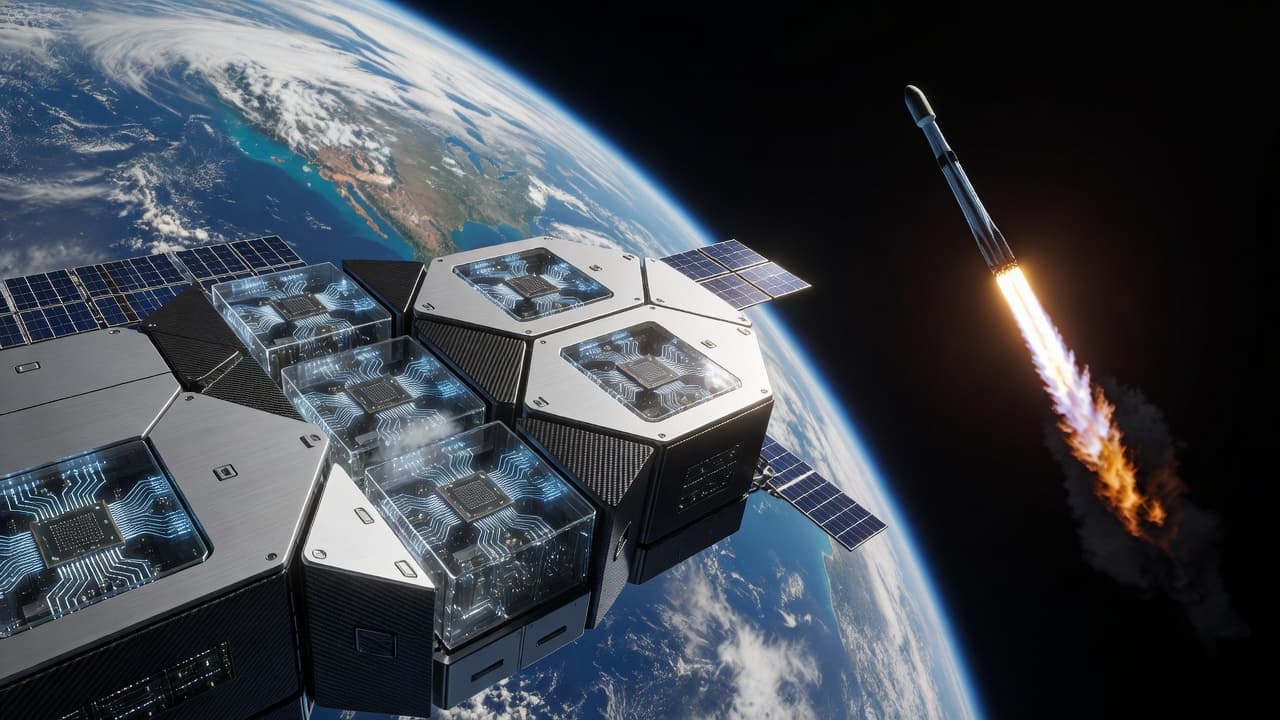
Google's Bold Leap: AI Chips Head for the Stars
In a move that could redefine the future of cloud computing and space exploration, Google has embarked on an ambitious endeavor known as Project Suncatcher. This groundbreaking initiative involves sending Google's advanced AI chips, specifically the Trillium Tensor Processing Units (TPUs), into Earth's orbit. The primary goal? To rigorously test their resilience and performance in the harsh environment of space, laying the groundwork for what could one day become orbital data centers.
Launched aboard a SpaceX Transporter-18 mission, this experiment marks a significant step towards extending humanity's computational infrastructure beyond our planet. It represents a visionary push to bring powerful artificial intelligence capabilities closer to the data sources in space, offering unprecedented opportunities for scientific research, communication, and technological innovation.
The Brains in Orbit: Google's Trillium TPUs
At the heart of Project Suncatcher are Google's custom-designed Trillium TPUs. These specialized processors are engineered for high-performance machine learning tasks, excelling at the massive parallel computations required by AI algorithms. While TPUs have revolutionized AI processing on Earth, their performance and durability in the vacuum, radiation, and extreme temperatures of space remain largely uncharted territory.
By deploying Trillium TPUs in orbit, Google aims to gather critical data on how these sophisticated chips withstand cosmic radiation, temperature fluctuations, and microgravity. This information is vital for designing robust, space-hardened hardware that can reliably power future generations of extraterrestrial computing infrastructure.
Why Space? The Vision for Orbital Data Centers
The concept of orbital data centers might sound like science fiction, but it offers compelling advantages. One key benefit is reduced latency for space-based applications. As the number of satellites and space-borne sensors grows, processing data closer to its source in orbit can dramatically cut down on transmission times and bandwidth requirements back to Earth. This is crucial for real-time analytics in applications ranging from earth observation to advanced navigation and inter-satellite communication.
Furthermore, space provides a unique environment for energy efficiency. With abundant solar power and the natural cold of space for passive cooling, orbital data centers could potentially operate with lower energy consumption than their terrestrial counterparts. This also offers enhanced physical security, as access to space-based facilities is inherently restricted, mitigating certain types of cyber and physical threats.
The SpaceX Connection: Enabling Frontier Missions
The successful deployment of Google's AI chips into orbit was made possible by a collaboration with SpaceX. Utilizing a SpaceX Transporter mission, which specializes in launching a multitude of small satellites and payloads, demonstrates the increasing accessibility of space for commercial and research endeavors. This partnership underscores how advancements in launch technology are accelerating the pace of innovation in areas like orbital computing.
SpaceX's reliable and cost-effective launch services are crucial enablers for projects like Suncatcher, allowing companies and researchers to test cutting-edge technologies in space without the prohibitive costs of dedicated launches. This synergy between AI innovation and aerospace engineering is paving the way for a new era of space-based infrastructure.
Challenges and the Future of Space Computing
While the potential benefits are immense, the road to fully operational orbital data centers is fraught with challenges. Protecting sensitive electronics from ionizing radiation, managing thermal control in extreme conditions, and ensuring long-term maintenance and upgrade capabilities in space are complex engineering hurdles. However, Project Suncatcher is precisely designed to tackle these questions head-on, providing invaluable insights into the practicalities of space-hardened computing.
Should these tests prove successful, the implications are far-reaching. We could see the emergence of a distributed computing network extending into space, supporting everything from advanced scientific instruments to autonomous space missions and even future lunar or Martian outposts. Google's Project Suncatcher is not just about testing chips; it's about pioneering the next frontier of computation, bringing the power of AI to the very edge of human exploration.
How this article was made
- Sources
- Newsbytes
- Rewriting model:
- gemini-2.5-flash
- Image generated with:
- xAI Grok
- Generated on:
- Sep 25, 2026
This content is produced by Acerbo.AI's AI editorial pipeline: source gathering, rewriting and imagery are automated. Editorial oversight stays human.
Related Articles

Nvidia Propels AI to Orbit: Unveiling Hardware for Space-Based Data Centers
Nvidia announces revolutionary hardware designed for AI data centers in Earth's orbit, marking a pivotal step towards a new era of space-based computing with enhanced performance and global access.

SpaceX Secures Nvidia GB300 AI Chips: A Leap for AI in Space Exploration
SpaceX has inked a crucial deal with Reflection AI for immediate access to Nvidia's next-gen GB300 AI chips, signaling a major boost for AI applications.

Google's Gemini AI Gets Hardware Boost: A New Era of Efficiency
Google is reportedly developing a groundbreaking server chip that embeds elements of its powerful Gemini AI model directly into hardware, promising a significant boost in AI performance and efficiency for its users globally.