
Dual Victory: Groundbreaking Discoveries Transform Neurological Disorder and Cancer Treatment Prospects
Two monumental scientific breakthroughs are poised to revolutionize the fight against neurological disorders and cancer, offering new hope and pathways for advanced therapies.
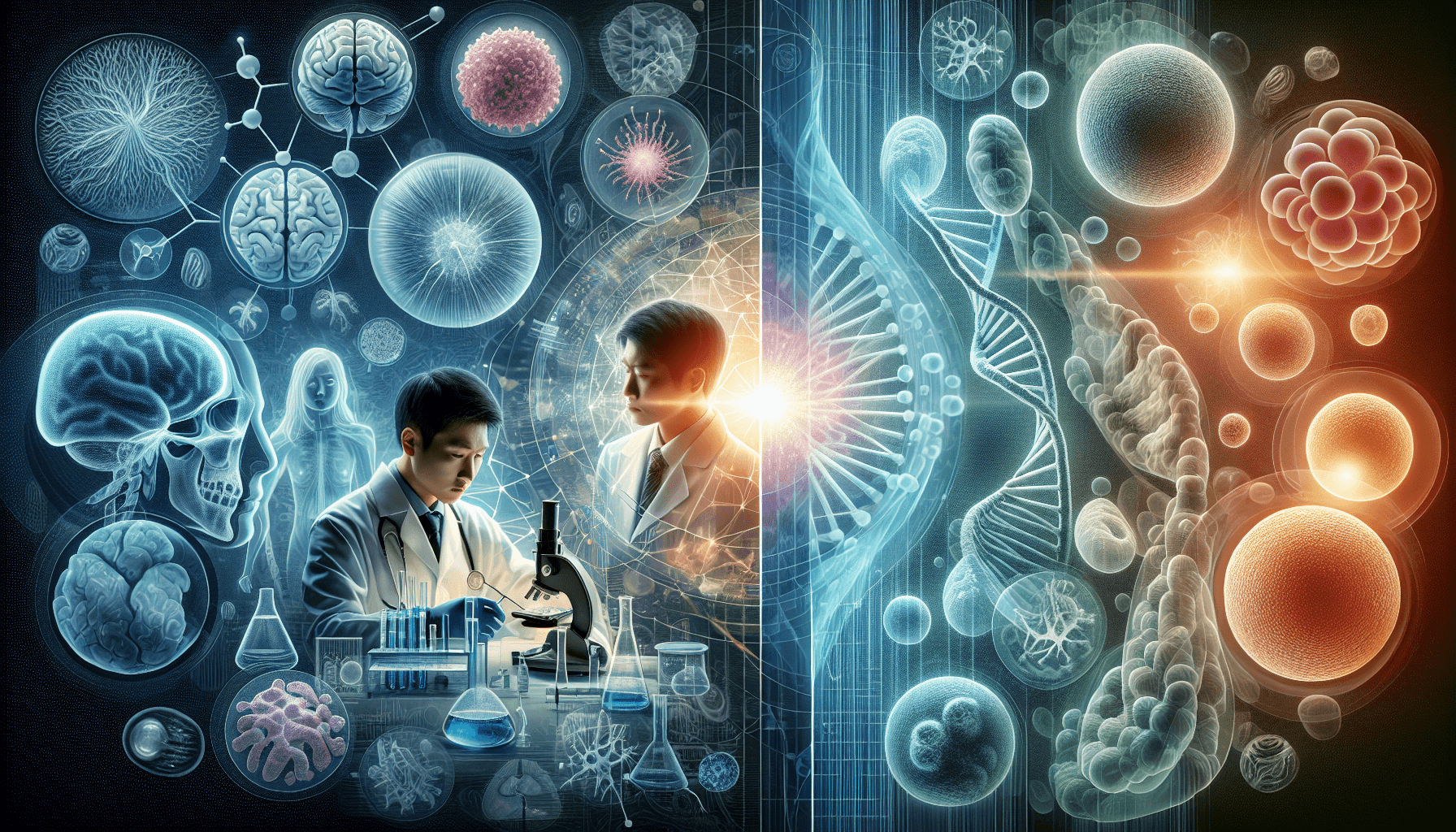
A New Dawn in Medical Science: Dual Breakthroughs Offer Unprecedented Hope
The global scientific community is abuzz with the announcement of two profound breakthroughs, each poised to redefine our understanding and treatment of some of humanity's most challenging diseases: neurological disorders and cancer. These advancements represent not just incremental progress, but significant leaps forward, promising a future where once intractable conditions may become manageable or even curable. The implications for patient care, research, and the quality of life globally are immense, signaling a new era in precision medicine and therapeutic innovation.
Unlocking the Brain's Mysteries: A Leap for Neurological Health
Neurological disorders, encompassing conditions from Alzheimer's and Parkinson's to ALS and multiple sclerosis, have long presented formidable challenges due to the brain's complexity and fragility. Historically, treatments have often focused on managing symptoms rather than addressing underlying causes. However, one of the recent breakthroughs offers a paradigm shift.
This advancement is believed to pave the way for a deeper understanding of the intricate mechanisms that drive neurodegeneration and neural dysfunction. Researchers are now closer to identifying novel biomarkers for earlier diagnosis, potentially decades before overt symptoms appear. Such early detection is crucial, as it opens a window for interventions that could slow or even halt disease progression.
- Enhanced Diagnostic Tools: Development of highly sensitive imaging techniques and blood tests for early disease markers.
- Targeted Therapeutic Avenues: Identification of specific molecular pathways for drug development, reducing side effects and increasing efficacy.
- Neuroprotection Strategies: New insights into protecting brain cells from damage and promoting repair.
Revolutionizing the Fight Against Cancer: A Path to More Effective Therapies
Cancer, a multifaceted disease affecting millions worldwide, has seen remarkable progress in recent decades, yet it remains a leading cause of mortality. The second breakthrough specifically targets cancer research, promising to transform how we approach its detection and treatment. This discovery could lead to more personalized, potent, and less toxic therapies, moving beyond traditional chemotherapy and radiation.
The innovation focuses on either a novel understanding of tumor microenvironments, advanced immunotherapy techniques, or groundbreaking drug delivery systems. By exploiting vulnerabilities unique to cancer cells, or by supercharging the body's own immune system, this breakthrough offers the potential for treatments that are both highly effective and significantly improve patient quality of life during therapy.
The Interconnected Future of Medical Research
While distinct in their immediate focus, these two breakthroughs underscore a vital trend in modern medical science: the increasing interconnectedness of various research fields. Insights gained from studying brain health can sometimes inform cancer biology, and vice-versa. The methodologies, technologies, and collaborative spirit driving these discoveries are universal, propelling the entire scientific ecosystem forward.
This synergy accelerates the pace of discovery, allowing researchers to leverage findings across disciplines. For instance, advanced imaging techniques developed for neurological studies might be adapted to detect microscopic tumors, or insights into cellular repair mechanisms could benefit both neurodegenerative conditions and post-cancer recovery.
A Glimmer of Hope for Patients Worldwide
The impact of these scientific milestones on patients cannot be overstated. For individuals and families grappling with the devastating effects of neurological disorders, and for those battling cancer, these breakthroughs offer renewed hope. They signify that the tireless work of scientists is yielding tangible results, bringing us closer to a future where these diseases are no longer insurmountable challenges but treatable conditions.
The journey from laboratory discovery to widespread clinical application is often long and complex, but these initial breakthroughs lay essential groundwork. They inspire further research, attract critical funding, and foster a collaborative environment where future innovations can flourish. The promise of a healthier tomorrow, free from the shadow of these debilitating diseases, has never felt more within reach.
How this article was made
- Sources
- UC San Francisco (UCSF)
- Generated on:
- Feb 27, 2026
This content is produced by Acerbo.AI's AI editorial pipeline: source gathering, rewriting and imagery are automated. Editorial oversight stays human.
Related Articles

Cosmic Cannibals: Astronomers Uncover Two Actively Feeding Supermassive Black Holes in the Early Universe
A groundbreaking discovery reveals two actively feeding supermassive black holes in the universe's nascent stages, challenging theories of cosmic evolution and galaxy formation.
Cosmic Detective Work: Second-Generation Planet Cracks Hubble's Long-Standing Mystery
Astronomers have unveiled a groundbreaking discovery: a 'second-generation' exoplanet whose unique formation mechanism provides the missing link to solve a perplexing cosmic enigma observed by the Hubble Space Telescope for years.
Cosmic Revelation: Have Scientists Finally Glanced at Dark Matter?
A recent scientific development suggests researchers may have detected dark matter, the universe's most enigmatic substance. This potential breakthrough could redefine cosmology and particle physics.