
Google's Bayesian Breakthrough: Ushering in an Era of Continuously Learning LLMs
Google introduces 'Bayesian Teaching,' enabling Large Language Models to dynamically update their understanding and probabilities with new evidence, marking a significant leap in AI adaptability.
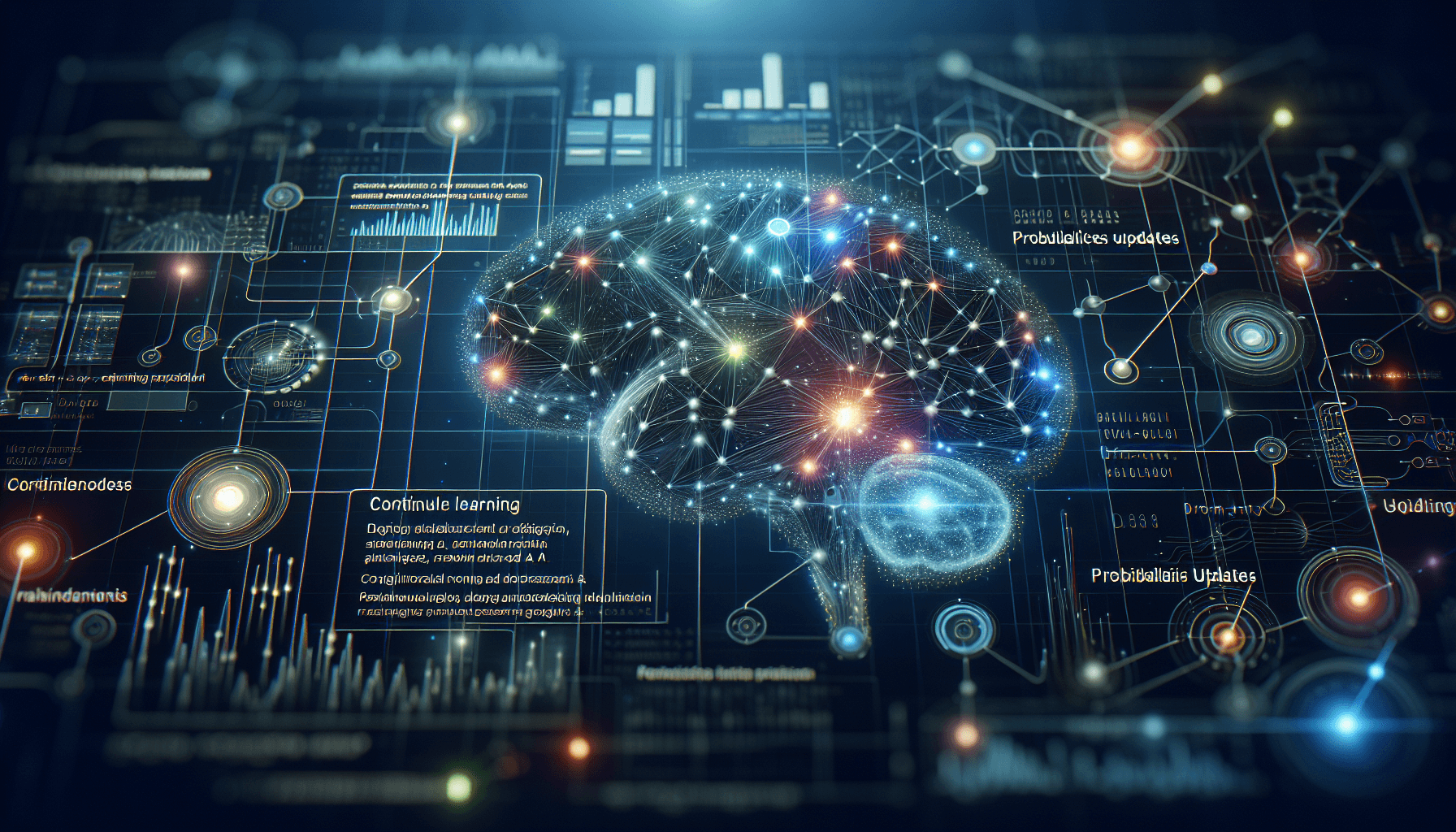
The Dawn of Adaptive AI: Google's Bayesian Teaching for LLMs
Large Language Models (LLMs) have revolutionized how we interact with information, but their core limitation often lies in their static nature. Once trained, they operate on a fixed dataset, requiring expensive and time-consuming retraining to incorporate new knowledge. That paradigm is set to change dramatically with Google's latest innovation: Bayesian Teaching. This groundbreaking approach empowers LLMs to dynamically update their internal probabilities and understanding as new evidence emerges, ushering in an era of truly adaptive and continuously learning artificial intelligence.
Imagine an AI that doesn't just recall facts, but actively refines its worldview based on the latest data. This is the promise of Bayesian Teaching, a significant stride towards more intelligent and context-aware systems.
Understanding Bayesian Teaching: A Probabilistic Shift
At its heart, Bayesian Teaching draws inspiration from Bayesian inference, a statistical method for updating the probability of a hypothesis as more evidence or information becomes available. In the context of LLMs, this means moving beyond static parameter weights to a system where the model's 'beliefs' about concepts, relationships, and information are constantly refined.
Instead of merely predicting the next token based on its initial training, a Bayesian-taught LLM can incorporate new data points – be it user feedback, fresh articles, or real-time events – to adjust its internal probabilistic models. This allows the AI to learn from its experiences and adapt its responses, becoming more accurate and relevant over time without needing a complete overhaul.
Why This Is a Game-Changer for Large Language Models
The implications of Bayesian Teaching are profound, addressing some of the most pressing challenges facing current LLMs:
- Continuous Learning: LLMs can now integrate new information incrementally, staying up-to-date with rapidly evolving knowledge domains like scientific research, current events, or market trends.
- Enhanced Accuracy and Reliability: By weighting new evidence appropriately, models can reduce 'hallucinations' and provide more precise, contextually relevant answers.
- Efficiency and Cost Reduction: The need for massive, periodic retraining cycles, which are both computationally intensive and costly, can be significantly reduced or even eliminated.
- Robustness to Uncertainty: Bayesian methods inherently handle uncertainty by providing probability distributions rather than single-point estimates, making LLMs more robust in ambiguous situations.
- Personalization: Models could potentially adapt to individual user preferences or specific domains more effectively, offering tailored experiences.
This innovation moves LLMs closer to how humans learn, continuously integrating new experiences to refine our understanding of the world. It’s a leap from rote memorization to genuine adaptive intelligence.
Paving the Way for More Dynamic AI Applications
Google's implementation of Bayesian Teaching has far-reaching consequences for various applications. Imagine an AI assistant that learns your evolving preferences in real-time, a medical diagnostic tool that updates its knowledge base with the latest research papers as they're published, or a financial model that adapts instantly to new market data. The potential for dynamic, self-improving AI systems is immense.
While the technical complexities involved in integrating Bayesian principles into the vast neural networks of LLMs are considerable, Google's announcement signals a clear direction for the future of AI development. It highlights a commitment to building models that are not only powerful but also agile, resilient, and capable of evolving alongside the ever-changing landscape of human knowledge.
The Future is Adaptive: A New Chapter for AI
Google's introduction of Bayesian Teaching represents a pivotal moment in the evolution of Large Language Models. By enabling LLMs to update their understanding with new evidence dynamically, this breakthrough promises to create more intelligent, efficient, and reliable AI systems. It marks a significant step towards a future where artificial intelligence can learn, adapt, and grow continuously, mirroring the very essence of human cognition and opening up unprecedented possibilities for innovation across every sector.
How this article was made
- Sources
- Radical Data Science
- Generated on:
- Mar 9, 2026
This content is produced by Acerbo.AI's AI editorial pipeline: source gathering, rewriting and imagery are automated. Editorial oversight stays human.
Related Articles
Microsoft Unleashes Next-Gen AI: A Deep Dive into the Phi 3.5 Model Series
Microsoft is significantly advancing its AI capabilities with the introduction of the Phi 3.5 series, featuring Mini Instruct, MoE, and Vision Instruct models, designed for enhanced performance and versatility.

OpenAI Unveils GPT-Live: The Dawn of Truly Conversational AI
OpenAI introduces GPT-Live, groundbreaking new voice models capable of real-time, simultaneous listening and speaking, promising a revolution in human-computer interaction and AI communication.

Yann LeCun's AMI Labs Secures $1.03 Billion to Pioneer 'World Models' in AI
AI luminary Yann LeCun's AMI Labs has successfully raised a staggering $1.03 billion, aiming to revolutionize artificial intelligence by developing advanced 'world models.' This massive investment signals a bold new chapter in the pursuit of truly intelligent machines capable of understanding, predicting, and interacting with their environment.