
Sunlight's Secret Unlocked: New Material Transforms Visible Light into Potent UV Energy
Scientists have engineered a groundbreaking material that defies conventional physics, passively converting everyday visible sunlight into higher-energy ultraviolet (UV) light, opening doors for revolutionary advancements in solar energy, medicine, and industrial applications.
A Quantum Leap in Light Conversion Technology
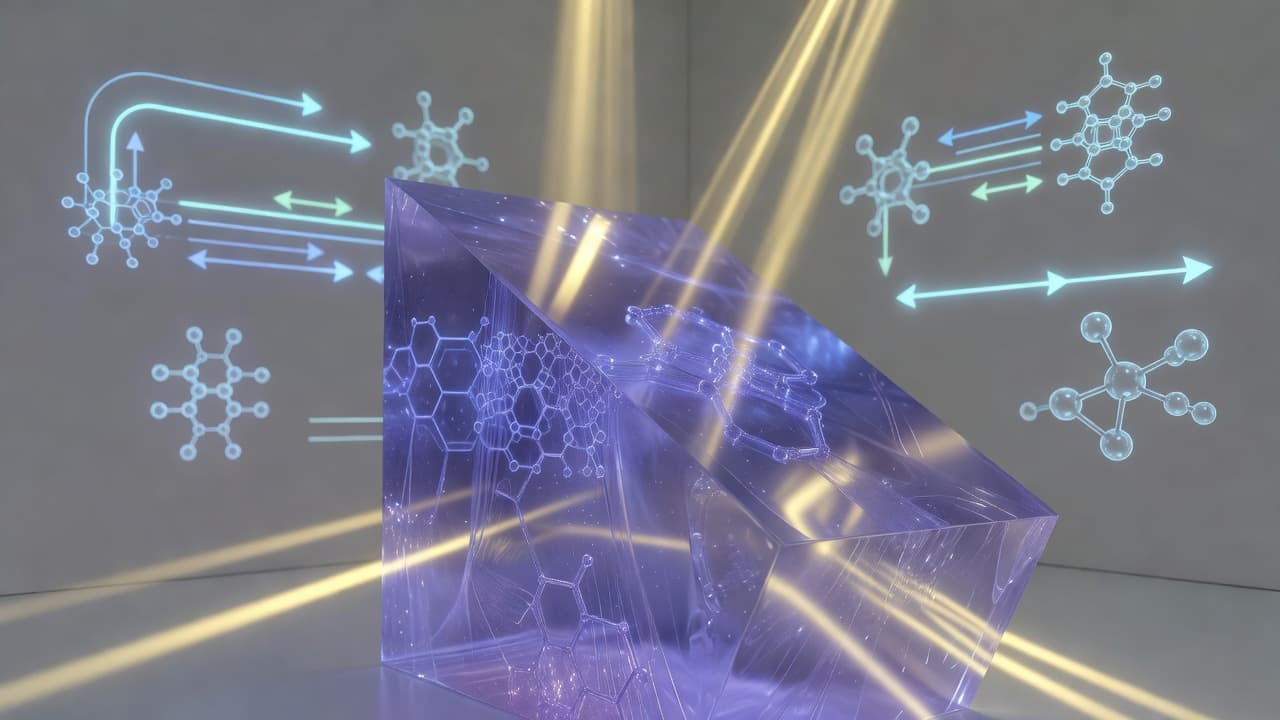
Imagine harnessing the abundant visible light from the sun and effortlessly transforming it into a more potent, higher-energy form. This once-futuristic concept is now a reality. Researchers have developed a novel material capable of passively converting visible light into ultraviolet (UV) light, marking a significant breakthrough in how we capture and utilize solar energy. This innovation challenges long-standing principles of energy conversion and promises to redefine numerous technological landscapes.
Defying the Energy Ladder: What is Light Upconversion?
Typically, when light interacts with materials, it undergoes a process called 'downconversion,' where high-energy photons (like UV) are converted into lower-energy photons (like visible or infrared). The new material achieves the opposite: 'upconversion.' It takes lower-energy visible light photons and combines their energy to emit higher-energy UV photons. This is akin to climbing an energy ladder, making it a particularly challenging feat.
The breakthrough lies in engineering a sophisticated molecular system that facilitates this energy shift efficiently and without external power input beyond the sunlight itself. This passive upconversion mechanism is what makes the discovery so impactful, offering a sustainable and accessible source of UV energy.
The Science Behind the Sunlight Transformer
At the heart of this innovation are specialized organic molecules embedded within a solid matrix. These molecules act as a sophisticated energy relay system. When visible light strikes the material, specific 'sensitizer' molecules absorb the light's energy. This energy is then efficiently transferred to 'emitter' molecules, which combine the energy from multiple excited states to release a single, higher-energy photon in the UV spectrum.
The careful selection and arrangement of these molecules are crucial for ensuring high efficiency and stability. This intricate interplay allows the material to overcome the energetic hurdles traditionally associated with light upconversion, making it a viable technology for real-world applications.
Unlocking New Horizons: Applications of UV Upconversion
The ability to generate UV light from ordinary sunlight has profound implications across various sectors:
- Enhanced Solar Energy: While traditional solar panels primarily convert visible light into electricity, some advanced solar technologies and photocatalytic processes require UV light for optimal performance. This material could act as a spectral shifter, allowing solar systems to utilize a broader range of the solar spectrum more efficiently, potentially boosting the output of specialized photovoltaic cells or solar-driven chemical reactors.
- Sustainable Sterilization: UV light is a powerful disinfectant, widely used in water purification and medical sterilization. By converting sunlight into UV, this material offers a greener, energy-independent solution for sterilization in remote areas or emergency situations, reducing reliance on power-intensive UV lamps.
- Advanced Medical Therapies: Precise UV wavelengths are employed in phototherapy for treating skin conditions and for targeted drug activation. This technology could enable portable, sunlight-powered medical devices, making such treatments more accessible and cost-effective.
- Industrial Curing and Manufacturing: Many industrial processes, from resin curing to specialized printing, rely on UV light. A passive, sunlight-driven UV source could lead to more energy-efficient and environmentally friendly manufacturing techniques.
The Path Forward: Challenges and Future Prospects
While the potential is immense, researchers are now focused on scaling up production, improving material stability, and optimizing conversion efficiency for various applications. The long-term durability and cost-effectiveness of these materials will be key determinants of their widespread adoption.
This groundbreaking material represents more than just a scientific curiosity; it's a testament to human ingenuity in bending the rules of physics to serve a more sustainable future. By turning visible sunlight into a powerful UV resource, we are stepping into an era where energy conversion is smarter, cleaner, and more versatile than ever before, paving the way for innovations that could touch every aspect of our lives.
How this article was made
- Sources
- ScienceDaily
- Generated on:
- Jun 28, 2026
This content is produced by Acerbo.AI's AI editorial pipeline: source gathering, rewriting and imagery are automated. Editorial oversight stays human.
Related Articles
Cambridge Scientists Unveil Revolutionary LED Tech: Powering Insulating Nanoparticles for Light
Cambridge researchers have developed a groundbreaking LED technology, coaxing insulating nanoparticles to emit light, promising cheaper, more flexible, and sustainable lighting solutions.
Revolutionary Liquid Battery: Scientists Unveil 'Bottled Sunshine' for Uninterrupted Solar Power
Groundbreaking research introduces a liquid battery capable of storing solar energy for extended periods, promising a future of continuous, on-demand clean power.

Breakthrough: Scientists Master Light in Ultra-Thin Nanoscale Layers
Scientists have achieved an unprecedented feat: trapping light within a layer incredibly thin, roughly 1,000 times narrower than a human hair. This innovation promises to revolutionize optical technologies.