
Unlocking a 30-Year Rye Pollen Enigma: A New Horizon for Cancer Therapies
Scientists have finally cracked a three-decade mystery surrounding rye pollen, revealing insights that could profoundly impact future cancer research and drug development.
A Decades-Long Enigma Solved: Reshaping Cancer Research
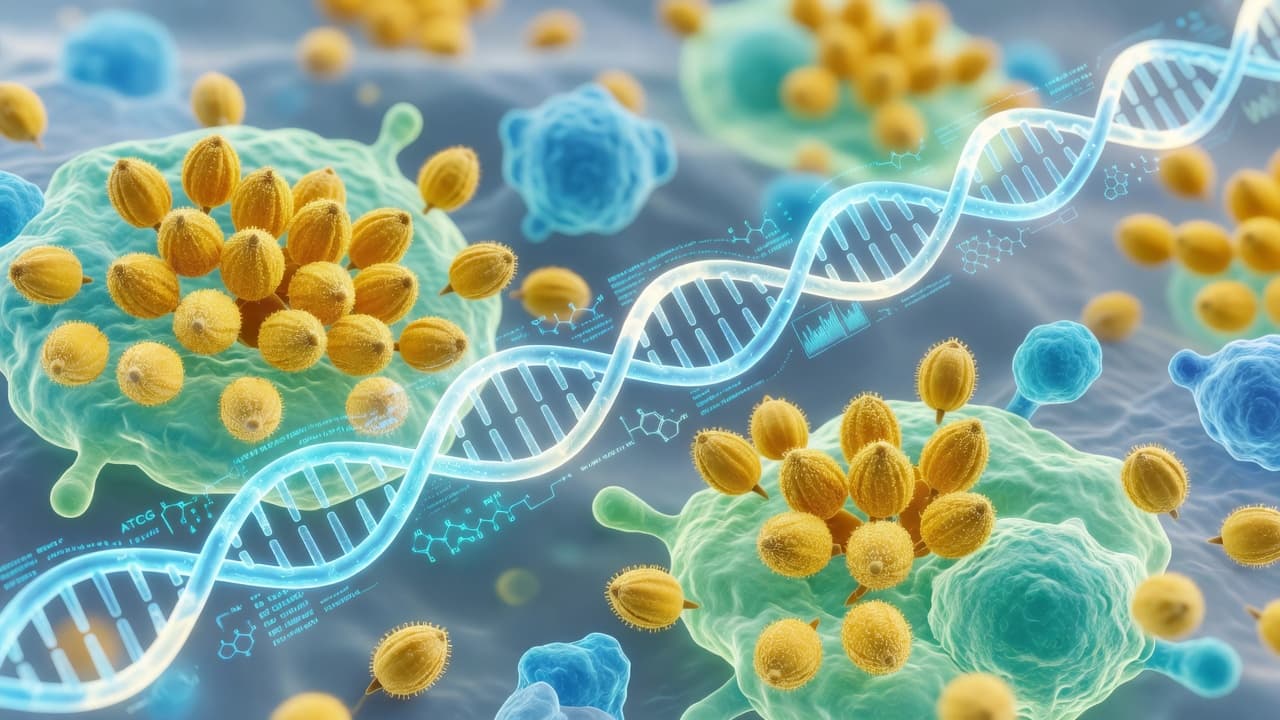
For over thirty years, a persistent scientific puzzle surrounding rye pollen has baffled researchers worldwide. What started as an obscure botanical curiosity has now culminated in a groundbreaking discovery, promising to usher in a new era for cancer research and therapeutic development. Scientists have successfully unraveled this long-standing mystery, revealing molecular insights that could fundamentally transform our approach to combating various cancers.
The Persistent Puzzle of Rye Pollen's Influence
Rye pollen, beyond its role in seasonal allergies, has long been suspected of possessing unique biological properties. Early observations hinted at its capacity to interact with mammalian cells in ways that defied conventional understanding, particularly concerning immune responses and cellular proliferation. Despite extensive efforts, the precise mechanisms and active compounds responsible for these effects remained elusive, creating a significant knowledge gap in immunology and cell biology.
This decades-long impasse meant that potential therapeutic applications, especially in complex diseases like cancer, could not be explored. The mystery represented not just an academic challenge but a barrier to unlocking novel biological pathways that might hold keys to medical advancements. Researchers knew there was something important about rye pollen, but couldn't pinpoint exactly what or how it worked.
Unraveling the Molecular Secret: A Breakthrough in Cell Signaling
The recent breakthrough, meticulously documented by an international team of scientists, centers on the identification of a novel class of compounds within rye pollen. These previously unknown molecules have been found to interact with specific receptors on human cells, triggering a cascade of intracellular signaling events. Crucially, these pathways are directly implicated in regulating cell growth, differentiation, and programmed cell death – processes often disrupted in cancer.
Using advanced proteomic and genomic techniques, the team mapped out the intricate interactions, discovering that these rye pollen compounds can either suppress uncontrolled cellular proliferation or induce apoptosis (cellular self-destruction) in certain malignant cell lines. This discovery provides a detailed molecular blueprint of how rye pollen exerts its biological effects, finally demystystifying its enigmatic properties.
- Identification of novel bioactive compounds: Pinpointing the specific molecules responsible for rye pollen's effects.
- Mapping of cell receptor interactions: Understanding how these compounds bind to and activate human cell receptors.
- Elucidation of downstream signaling pathways: Revealing the cellular mechanisms influenced by these interactions.
A Game-Changer for Cancer Therapeutics
The implications of this discovery for cancer research are profound and far-reaching. By understanding how rye pollen compounds modulate critical cellular pathways, scientists now have a powerful new tool to explore. The ability to selectively induce apoptosis or inhibit growth in cancer cells without significantly harming healthy tissue is the holy grail of oncology, and this breakthrough offers a promising new avenue.
Researchers anticipate that these rye pollen-derived compounds or their synthetic analogues could serve as blueprints for developing innovative anti-cancer drugs. They could potentially be utilized:
- As novel therapeutic agents targeting specific cancer pathways.
- To enhance the efficacy of existing chemotherapy or immunotherapy treatments.
- For precision medicine approaches, tailoring treatments based on a tumor's specific molecular profile.
Paving the Way for New Treatments and Diagnostics
This scientific triumph marks a pivotal moment, shifting rye pollen from an allergen to a potential source of life-saving therapeutics. The next steps involve rigorous preclinical testing, followed by clinical trials to assess the safety and efficacy of these compounds in human patients. Furthermore, this research opens doors to exploring other botanical sources for similar bioactive molecules, potentially uncovering a wealth of untapped medicinal resources.
The journey from a 30-year mystery to a potential cancer breakthrough underscores the value of persistent scientific inquiry and interdisciplinary collaboration. This discovery not only provides hope for millions battling cancer but also exemplifies how understanding the natural world can yield unexpected and transformative medical solutions, pushing the boundaries of what's possible in modern medicine.
How this article was made
- Sources
- ScienceDaily
- Generated on:
- Jul 8, 2026
This content is produced by Acerbo.AI's AI editorial pipeline: source gathering, rewriting and imagery are automated. Editorial oversight stays human.
Related Articles

Unveiling the Invisible: Your $100 Gateway to Cosmic Mysteries
Scientists have developed an incredibly affordable particle detector, costing just $100, that allows anyone to observe cosmic rays raining down from space, opening new avenues for citizen science and education.

Unveiling the Amazon's Emerald Enigma: Scientists Discover a Mysterious New Frog Species
A recent expedition deep within the Amazon rainforest has led to the thrilling discovery of a previously unknown frog species, highlighting the incredible biodiversity still hidden.
Quantum Mystery Deepens: CERN Uncovers Unprecedented Gluon Behavior
CERN scientists have observed gluons, the fundamental particles binding atomic nuclei, exhibiting unexpected behavior deep within matter, challenging long-held theories of the strong nuclear force.