
Unveiling the Amazon's Emerald Enigma: Scientists Discover a Mysterious New Frog Species
A recent expedition deep within the Amazon rainforest has led to the thrilling discovery of a previously unknown frog species, highlighting the incredible biodiversity still hidden.
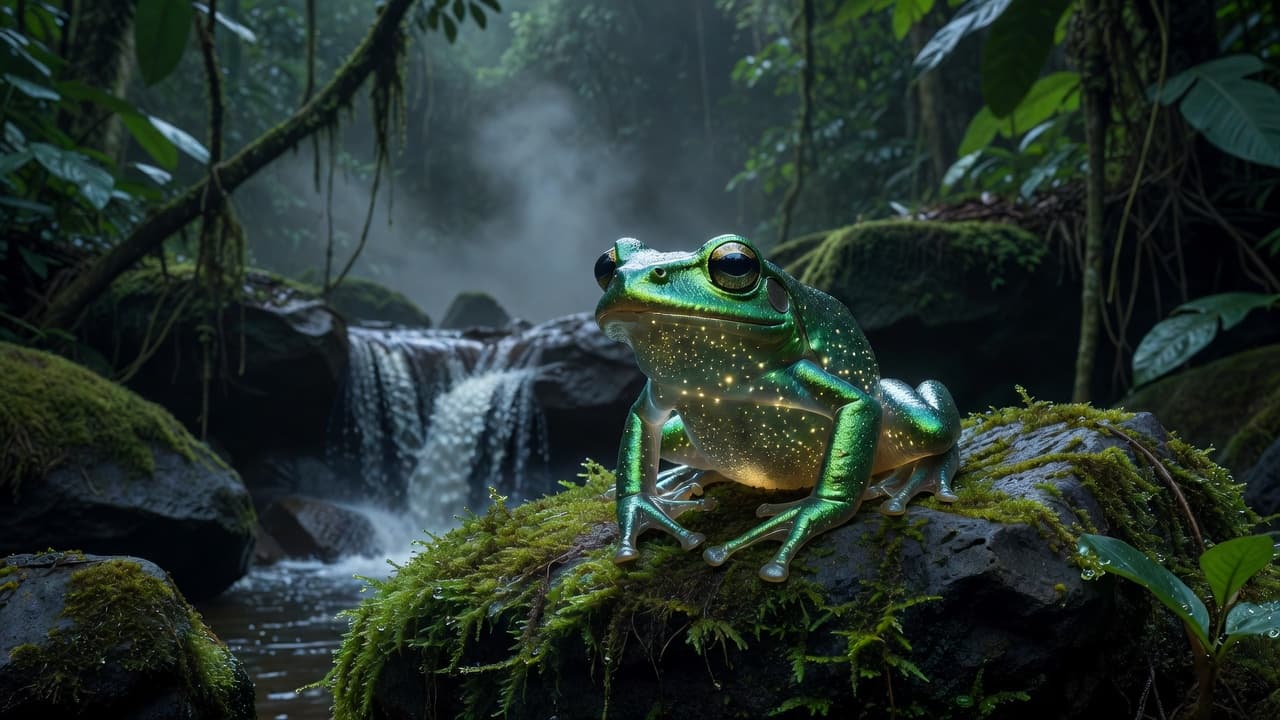
A Hidden Gem Emerges from the Amazon's Depths
The Amazon rainforest, a colossal reservoir of life, continues to guard countless secrets. In a groundbreaking revelation that underscores its unparalleled biodiversity, an international team of herpetologists has announced the discovery of a captivating new frog species. This elusive amphibian, found nestled in a remote, unexplored corner of the vast ecosystem, is already being hailed as a significant find, reigniting excitement about the wonders still awaiting discovery in our planet's most vital rainforest.
The Expedition: A Journey into the Unknown
The discovery was made during a challenging multi-week expedition led by Dr. Anya Sharma of the Global Biodiversity Institute. Venturing into an isolated tributary basin in the western Amazon, the team braved dense jungle, challenging terrain, and unpredictable weather conditions. Their dedication paid off when, during a nocturnal survey, a distinctive call echoed through the canopy – a sound unlike any previously recorded. Following the unusual vocalization, researchers eventually pinpointed the source: a tiny, vibrantly colored frog previously unknown to science.
“It was an electrifying moment,” Dr. Sharma recounted. “We knew instantly that we had stumbled upon something extraordinary. Its call, its appearance – everything pointed to a species that had remained hidden from human eyes until now.”
Introducing the 'Nocturne Jewel' Frog
Provisionally dubbed the 'Nocturne Jewel' for its stunning appearance and nocturnal habits, the new species, formally named Hyalinobatrachium mystica, exhibits remarkable characteristics. Measuring barely two centimeters, its skin boasts an iridescent emerald green, intricately patterned with luminous golden specks that seem to glow in the dim light of the undergrowth. Its most striking feature, however, is its partially translucent belly, offering a rare glimpse into its internal organs – a trait observed in only a few 'glass frog' species.
The Nocturne Jewel appears to thrive in a highly specialized microhabitat, specifically among moss-covered rocks and bromeliads near fast-flowing streams. Its elusive nature and specific habitat requirements likely contributed to its long-held secret, making its discovery all the more profound.
Why This Discovery Matters for Global Biodiversity
The unearthing of Hyalinobatrachium mystica is far more than just adding another entry to the biological ledger. It serves as a powerful reminder of the immense biodiversity that still exists, largely uncatalogued, within the Amazon. Each new species represents a unique evolutionary pathway and potentially holds vital clues about ecosystem health, adaptation, and even future medical breakthroughs.
- Biodiversity Indicator: Frogs are often considered bio-indicators; their presence and health reflect the overall health of their ecosystem.
- Conservation Urgency: This discovery underscores the critical need for robust conservation efforts to protect these unexplored regions from deforestation and climate change.
- Scientific Insight: Studying its unique adaptations, such as its translucent skin and specialized habitat, can provide new insights into amphibian biology and ecological processes.
The Future of Amazonian Exploration and Conservation
While the excitement around the Nocturne Jewel is palpable, scientists emphasize that its discovery also highlights the fragility of its habitat. The Amazon rainforest faces unprecedented threats, with deforestation rates climbing and climate change altering delicate ecosystems. Protecting areas where such unique species reside is paramount, not just for the frogs, but for the countless other organisms that share their home.
The team plans further research into Hyalinobatrachium mystica, including genetic analysis, population assessments, and behavioral studies. This new discovery is a beacon of hope and a stark reminder: the Amazon continues to offer unparalleled natural wonders, but only if we commit to safeguarding its future.
How this article was made
- Sources
- ScienceDaily
- Rewriting model:
- gemini-2.5-flash
- Image generated with:
- xAI Grok
- Generated on:
- 3d ago
This content is produced by Acerbo.AI's AI editorial pipeline: source gathering, rewriting and imagery are automated. Editorial oversight stays human.
Related Articles

Unveiling the Invisible: Your $100 Gateway to Cosmic Mysteries
Scientists have developed an incredibly affordable particle detector, costing just $100, that allows anyone to observe cosmic rays raining down from space, opening new avenues for citizen science and education.

Quantum Mystery Deepens: CERN Uncovers Unprecedented Gluon Behavior
CERN scientists have observed gluons, the fundamental particles binding atomic nuclei, exhibiting unexpected behavior deep within matter, challenging long-held theories of the strong nuclear force.
Venom's Own Cure: Rattlesnake Blood Holds Key to Revolutionary Antivenom
Scientists have unearthed a groundbreaking new antivenom directly from rattlesnake blood, offering a potent and potentially safer treatment for snakebite victims worldwide.