
Unmasked: DNA Test Reveals the Mezcal 'Worm's' Surprising True Identity
A groundbreaking DNA analysis has finally settled the long-standing mystery of the mezcal bottle's iconic 'worm,' revealing a fascinating biological truth that challenges popular belief.
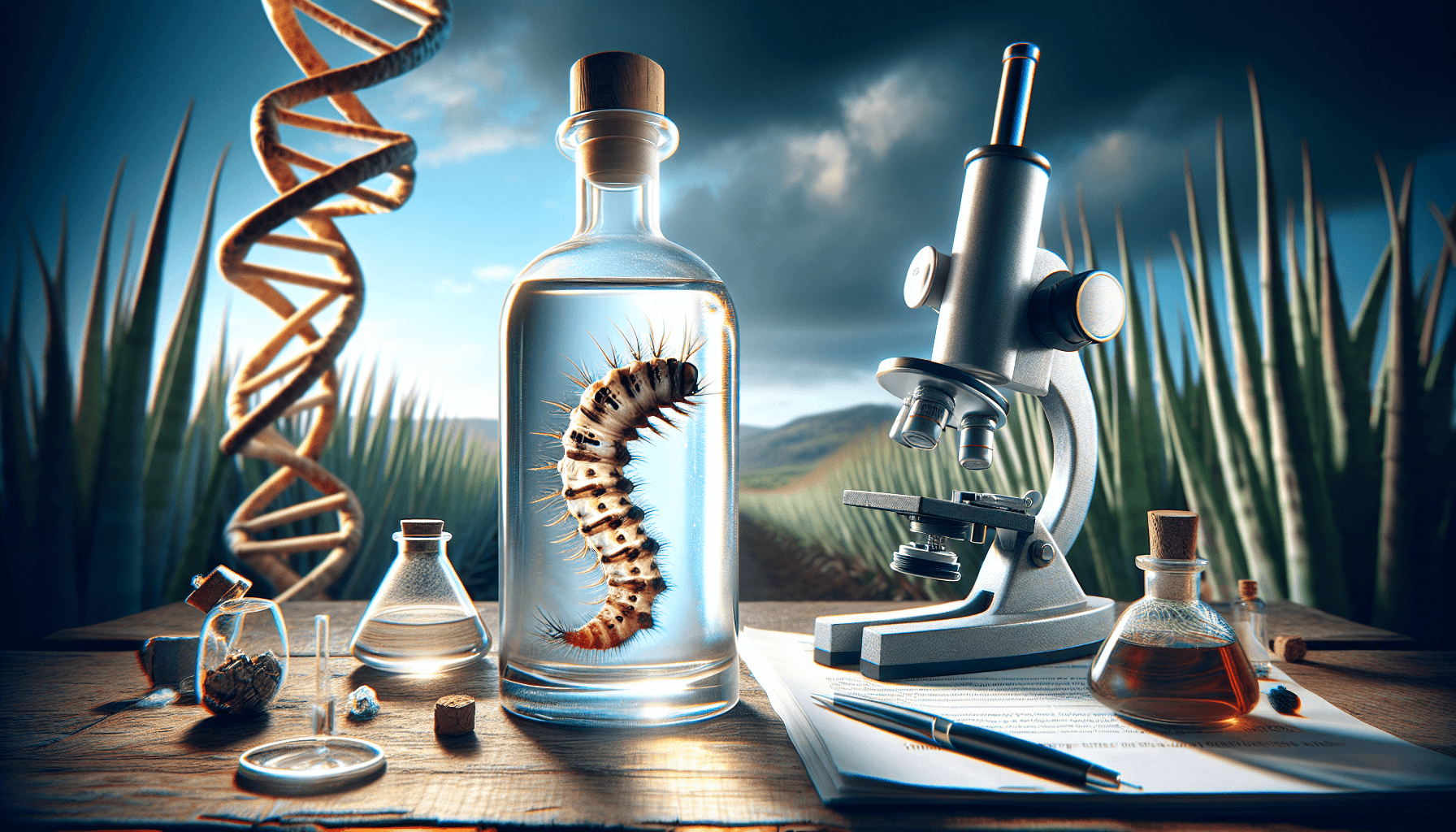
The Enigma of the Mezcal "Worm" Unraveled
For decades, the tiny creature nestled at the bottom of a mezcal bottle has been a source of fascination, mystery, and sometimes, a daring challenge. Revered by some as a symbol of authenticity and potency, and dismissed by others as a mere marketing gimmick, the "mezcal worm" has long fueled debates among enthusiasts of Mexico's smoky agave spirit. Now, modern science has delved into its genetic makeup, delivering a surprising revelation that unmasks its true identity.
This iconic inhabitant, often simply called "el gusano" (the worm), has been shrouded in folklore. Is it a unique species found only in mezcal? Does it genuinely enhance the spirit's flavor or simply indicate its quality? These questions have persisted, making the creature one of the most talked-about, yet least understood, aspects of mezcal culture. Scientists, armed with advanced DNA sequencing technology, sought to bring definitive answers to this age-old puzzle.
Peering into the Bottle: The Power of DNA Analysis
The scientific quest began with a straightforward, yet profound, objective: to identify the biological species of the mezcal bottle's resident. Researchers meticulously extracted genetic material from several specimens of the famed "worm." This delicate process was crucial for obtaining uncontaminated DNA samples suitable for analysis.
Following extraction, these samples underwent sophisticated molecular sequencing. Scientists then compared the resulting genetic blueprints against vast databases of known species, a process akin to matching a unique biological fingerprint. The anticipation was high, as the results promised to either confirm long-held beliefs or, more excitingly, unveil an unexpected truth that would redefine our understanding of this mezcal icon.
The Shocking Truth: Not a Worm, But a Larva!
The DNA test results delivered a conclusive and fascinating surprise: the "mezcal worm" is, unequivocally, not a worm at all. Instead, it is the larva of a moth, specifically identified as Hypopta agavis, commonly known as the agave red worm. Less frequently, it can also be the larva of Comadia redtenbacheri, the agave snout weevil moth. Both species are natural inhabitants and pests of the agave plant, the very source of mezcal.
This scientific revelation corrects a widespread misnomer that has endured for generations. While culturally ingrained as a "worm," biologically, it is a caterpillar – the larval stage of an insect that undergoes metamorphosis. This finding underscores the power of genetic analysis in clarifying biological classifications and separating scientific fact from popular misconception.
Tradition Meets Marketing: Why the Gusano?
So, if it's a moth larva, how did it end up in mezcal bottles? The tradition of adding the gusano is widely believed to have emerged in the 1940s or 50s, primarily as a clever marketing strategy. Some mezcal producers began including the larva to distinguish their product, claiming it imparted unique flavors, enhanced potency, or served as a visual indicator of a high-proof spirit if the larva remained perfectly preserved.
While the cultural significance remains strong, scientific studies have largely debunked claims of significant flavor enhancement from the larva itself. The complex and rich flavor profile of mezcal truly stems from the type of agave used, the roasting method, fermentation, and distillation processes. The gusano's role is more about tradition, mystique, and the consumer experience than a direct impact on taste.
The Future of Mezcal: Embracing Science and Heritage
The DNA revelation doesn't detract from the allure of the mezcal worm; rather, it enriches our understanding and appreciation of this unique tradition. It allows enthusiasts to engage with mezcal's heritage through a lens of greater biological accuracy, bridging the gap between ancient customs and modern scientific inquiry. For mezcal producers, this insight offers an opportunity to educate consumers, sharing the true story behind their iconic bottle inhabitant.
As mezcal continues its ascent on the international stage, blending deep-rooted traditions with scientific enlightenment adds another layer to its compelling narrative. The "worm" remains a captivating talking point, now backed by the undeniable clarity of DNA, a testament to how even the smallest mysteries can hold grand scientific surprises and reshape our perception of beloved cultural practices.
How this article was made
- Sources
- ScienceDaily
- Generated on:
- Apr 26, 2026
This content is produced by Acerbo.AI's AI editorial pipeline: source gathering, rewriting and imagery are automated. Editorial oversight stays human.
Related Articles

Cosmic Cannibals: Astronomers Uncover Two Actively Feeding Supermassive Black Holes in the Early Universe
A groundbreaking discovery reveals two actively feeding supermassive black holes in the universe's nascent stages, challenging theories of cosmic evolution and galaxy formation.
Cosmic Detective Work: Second-Generation Planet Cracks Hubble's Long-Standing Mystery
Astronomers have unveiled a groundbreaking discovery: a 'second-generation' exoplanet whose unique formation mechanism provides the missing link to solve a perplexing cosmic enigma observed by the Hubble Space Telescope for years.

Cosmic Revelation: Have Scientists Finally Glanced at Dark Matter?
A recent scientific development suggests researchers may have detected dark matter, the universe's most enigmatic substance. This potential breakthrough could redefine cosmology and particle physics.