
Venom's Own Cure: Rattlesnake Blood Holds Key to Revolutionary Antivenom
Scientists have unearthed a groundbreaking new antivenom directly from rattlesnake blood, offering a potent and potentially safer treatment for snakebite victims worldwide.
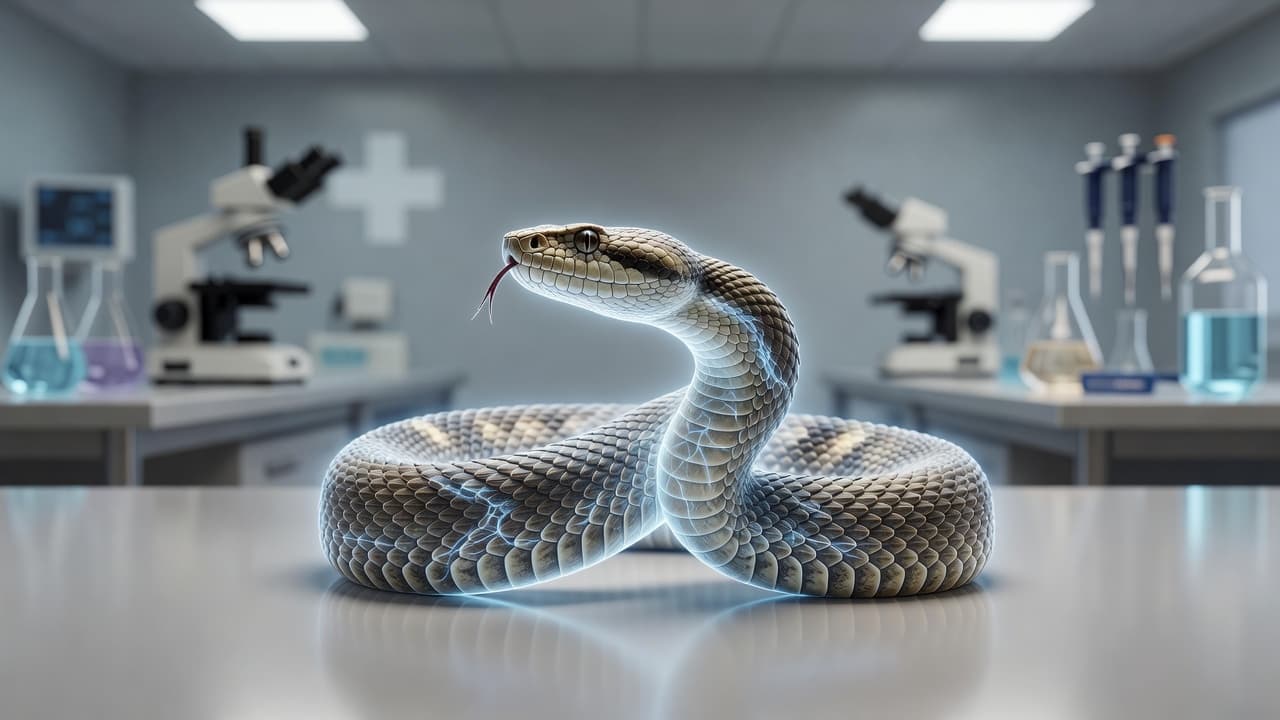
A Paradigm Shift in Snakebite Treatment Emerges
Snakebites represent a critical, often overlooked, global health crisis, claiming tens of thousands of lives annually and leaving countless others with permanent disabilities. For centuries, the quest for effective treatments has been challenging, relying primarily on antivenoms derived from immunizing horses or sheep. However, a recent scientific breakthrough promises to revolutionize this field, with researchers discovering a powerful new antivenom hidden within the very creatures that inflict the danger: rattlesnakes themselves.
The Serpent's Secret: Immunity in Its Own Veins
In a fascinating twist of nature, scientists have long observed that venomous snakes possess a remarkable natural immunity to their own venom, as well as to that of other snake species. This inherent protection is crucial for their survival, preventing self-intoxication. Harnessing this biological marvel, a team of dedicated researchers has successfully isolated potent antibodies directly from the blood of rattlesnakes. These antibodies are specifically designed by the snake's immune system to neutralize the deadly compounds in venom, offering a highly targeted and effective countermeasure.
Unlocking Nature's Defense Mechanism
The groundbreaking study focused on identifying and extracting the specific immune components responsible for this natural resistance. By analyzing rattlesnake blood plasma, scientists were able to pinpoint and replicate these unique antibodies. Unlike traditional antivenoms, which can sometimes cause severe allergic reactions in patients due to their animal-derived nature, a human-compatible version based on these snake-derived antibodies could offer a significantly safer profile. This direct approach leverages millions of years of evolutionary refinement to combat venom more effectively.
Addressing the Global Snakebite Crisis
Current antivenom production is fraught with challenges. Existing treatments are often expensive, require refrigeration, and can have limited efficacy against the diverse venoms found across different snake species and geographical regions. Furthermore, allergic reactions, ranging from mild rashes to life-threatening anaphylaxis, are a common concern, complicating treatment and increasing patient risk. The discovery of rattlesnake-derived antibodies offers a beacon of hope against these persistent issues.
The Promise of a Universal and Safer Antidote
The potential implications of this discovery are immense. A new antivenom based on these potent antibodies could be more stable, easier to produce, and crucially, more effective across a broader spectrum of snake venoms. Imagine a future where a single, affordable antivenom could treat bites from various venomous snakes, drastically reducing the logistical burden and costs associated with maintaining vast stockpiles of species-specific treatments. This innovation could be a game-changer for remote communities and developing nations, where snakebite mortality rates are highest.
Future Horizons: Beyond Rattlesnakes
While the initial focus is on rattlesnake venom, the methodology employed in this research opens exciting avenues for future studies. The principles learned from isolating these antibodies could be applied to other venomous species, potentially leading to a new generation of broad-spectrum antivenoms. This could pave the way for treatments that are not only safer and more effective but also capable of neutralizing venoms from a wider array of dangerous animals, from scorpions to spiders.
This pioneering research underscores the incredible potential hidden within the natural world. By understanding and replicating the sophisticated defense mechanisms evolved by venomous snakes, scientists are on the cusp of delivering a truly revolutionary solution to one of humanity's oldest and most devastating health challenges. The rattlesnake, once feared for its deadly bite, may soon be celebrated as a key to saving countless lives globally.
How this article was made
- Sources
- ScienceDaily
- Rewriting model:
- gemini-2.5-flash
- Image generated with:
- xAI Grok
- Generated on:
- Sep 8, 2026
This content is produced by Acerbo.AI's AI editorial pipeline: source gathering, rewriting and imagery are automated. Editorial oversight stays human.
Related Articles

Cosmic Cannibals: Astronomers Uncover Two Actively Feeding Supermassive Black Holes in the Early Universe
A groundbreaking discovery reveals two actively feeding supermassive black holes in the universe's nascent stages, challenging theories of cosmic evolution and galaxy formation.

Cosmic Detective Work: Second-Generation Planet Cracks Hubble's Long-Standing Mystery
Astronomers have unveiled a groundbreaking discovery: a 'second-generation' exoplanet whose unique formation mechanism provides the missing link to solve a perplexing cosmic enigma observed by the Hubble Space Telescope for years.

Cosmic Revelation: Have Scientists Finally Glanced at Dark Matter?
A recent scientific development suggests researchers may have detected dark matter, the universe's most enigmatic substance. This potential breakthrough could redefine cosmology and particle physics.