
AI Breakthrough Unveils Over 100 Hidden Planets in NASA Archives, Including Rare and Extreme Worlds
A powerful AI has sifted through vast NASA datasets, uncovering more than 100 previously undetected exoplanets, including a diverse array of rare and extreme worlds, marking a new era in cosmic discovery.
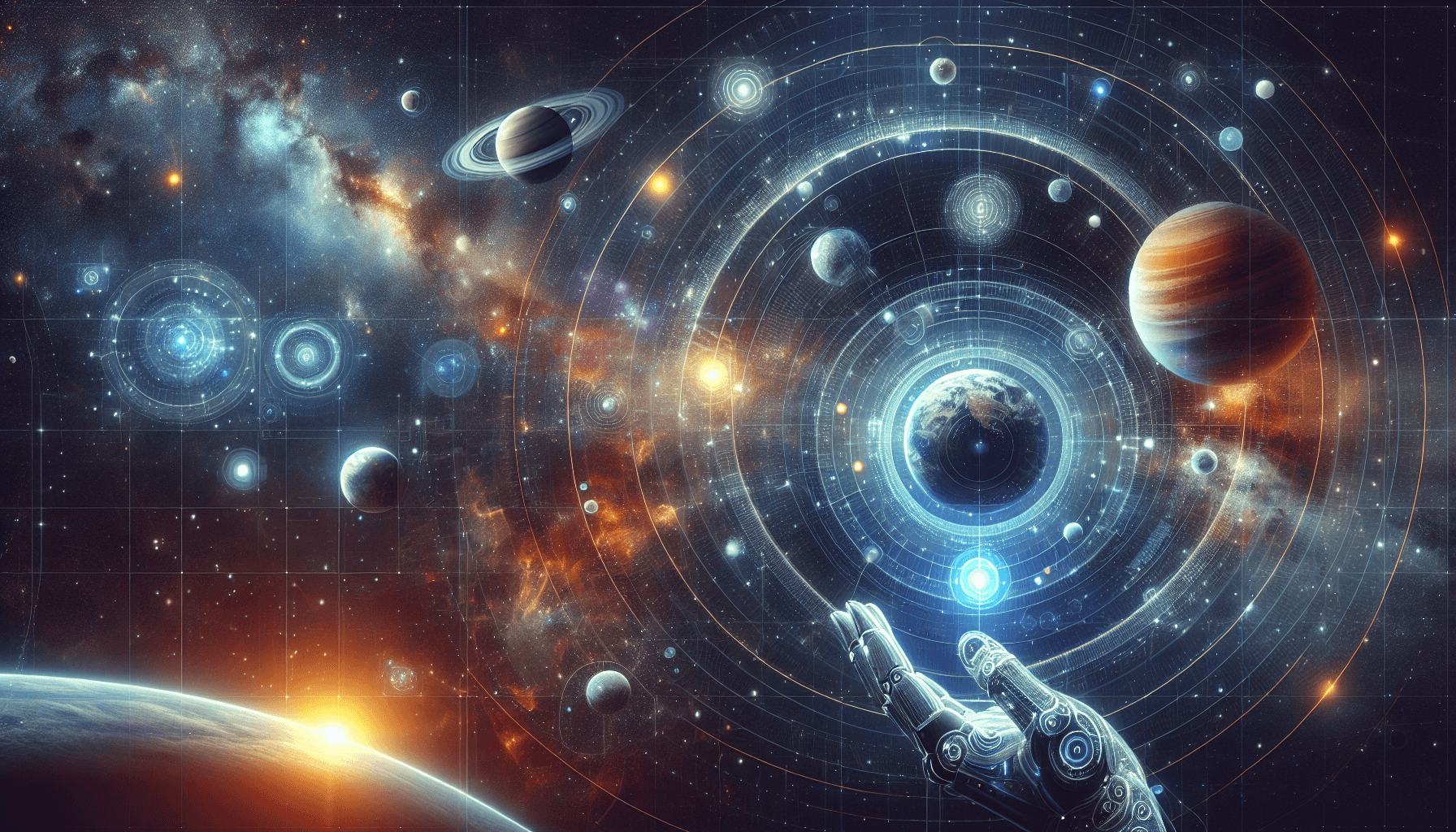
The AI Revolution in Exoplanet Discovery
The universe is an unimaginably vast place, teeming with secrets waiting to be uncovered. For decades, astronomers have meticulously scanned the cosmos, but the sheer volume of data collected by missions like NASA's Kepler and TESS telescopes can overwhelm even the most dedicated human teams. Now, a groundbreaking application of artificial intelligence (AI) has dramatically accelerated our understanding of exoplanetary systems, revealing over 100 previously hidden planets within existing NASA data.
This isn't just about finding more planets; it's about demonstrating the transformative power of machine learning in scientific research. By sifting through petabytes of light curve data – tiny dips in stellar brightness that indicate a planet passing in front of its star – AI algorithms can identify subtle patterns and faint signals that might elude human observation, or simply be too numerous to process manually. This innovative approach is fundamentally changing how we explore our cosmic neighborhood.
Unlocking Kepler's Hidden Treasures
The Kepler Space Telescope, though retired, remains a goldmine of information. Its mission was to stare at a single patch of sky, observing thousands of stars for signs of transiting exoplanets. While human-led analyses confirmed thousands of worlds, the data contained far more potential signals than could be efficiently verified. This is where the AI stepped in.
Leveraging sophisticated neural networks trained on known planetary transits, the AI model was able to re-examine years of Kepler data with unprecedented precision. It effectively acted as a hyper-efficient detective, cross-referencing millions of data points to pinpoint the characteristic signatures of orbiting planets. The result? A significant expansion of our exoplanet catalog, proving that the universe is even more densely packed with worlds than we previously thought.
Glimpses of Rare and Extreme Worlds
Among the newly identified exoplanets are a fascinating collection of rare and extreme worlds, pushing the boundaries of what we understand about planetary formation and evolution. These include:
- Planets with unusual orbital configurations: Some may exhibit highly eccentric orbits or reside in multi-planet systems with complex gravitational interactions.
- Worlds at the edge of habitability: Planets orbiting their stars in regions previously thought to be too hot or too cold for stable liquid water.
- Unique size and density profiles: Potentially revealing gas giants incredibly close to their stars, or super-Earths with unusually low or high densities, hinting at exotic compositions.
The discovery of such diverse worlds provides invaluable data for astrophysicists, helping them refine models of planet formation and understand the vast spectrum of planetary environments possible across the galaxy. Each new world offers a unique puzzle piece in the grand cosmic tapestry.
Paving the Way for Future Discoveries
This breakthrough underscores the critical role AI will play in future space exploration. As next-generation telescopes like the James Webb Space Telescope (JWST) and the upcoming Nancy Grace Roman Space Telescope gather even more complex and voluminous data, AI will be indispensable for:
- Accelerating planet verification: Rapidly confirming exoplanet candidates.
- Characterizing exoplanet atmospheres: Identifying potential biosignatures or technosignatures.
- Discovering entirely new phenomena: Uncovering cosmic events or objects that defy current classifications.
The integration of AI with human expertise represents a powerful synergy, allowing us to process vast amounts of information and extract profound insights at an unprecedented pace. It's a testament to how technology can amplify our innate curiosity and push the frontiers of human knowledge.
A New Era of Cosmic Understanding
The revelation of over 100 hidden planets by AI marks a significant milestone in exoplanet research. It not only expands our catalog of known worlds but also highlights the immense potential of machine learning to revolutionize astronomy and other data-intensive sciences. As AI tools become more sophisticated, we can expect a torrent of new discoveries, bringing us closer to answering fundamental questions about our place in the universe and the prevalence of life beyond Earth. The cosmos, it seems, is only just beginning to reveal its true wonders, thanks to a helping hand from artificial intelligence.
How this article was made
- Sources
- ScienceDaily
- Generated on:
- May 4, 2026
This content is produced by Acerbo.AI's AI editorial pipeline: source gathering, rewriting and imagery are automated. Editorial oversight stays human.
Related Articles
AI Unearths Over 100 Hidden Planets in NASA Data, Revealing Extreme Worlds
Artificial intelligence has made an astounding breakthrough, sifting through NASA's vast astronomical archives to uncover more than 100 previously undetected exoplanets, including rare and extreme worlds. This discovery highlights AI's transformative role in space exploration.
AI's Unprecedented Leap: Unveiling 15 Groundbreaking Discoveries by 2026
Explore how Artificial Intelligence is revolutionizing scientific research, from medicine to space, uncovering unprecedented discoveries and shaping our future by 2026.

AI's Quantum Leap: Unveiling the Top 15 Scientific Discoveries of 2026
Explore the groundbreaking scientific discoveries attributed to Artificial Intelligence in 2026. From medicine to materials, AI is accelerating innovation and reshaping our understanding of the world.