
Apple Unleashes Legal Storm on OpenAI Over Alleged Trade Secret Theft
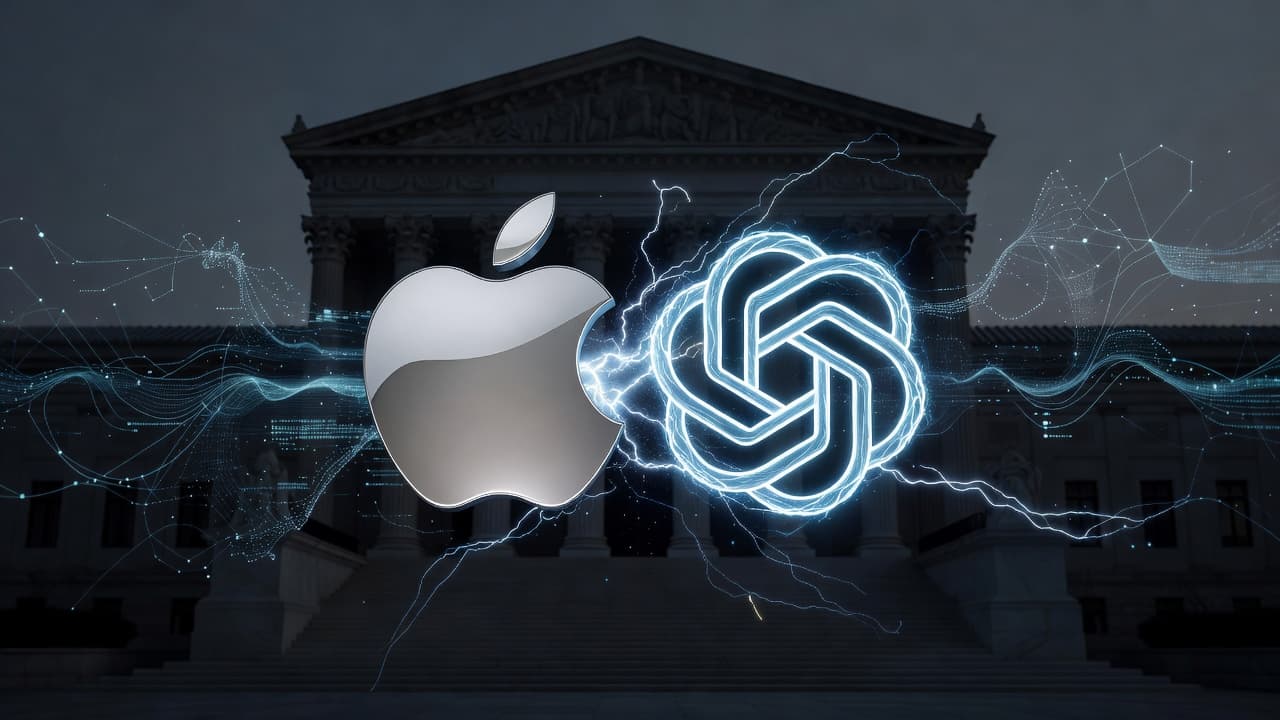
Tech giant Apple has filed a major lawsuit against AI leader OpenAI and two former employees, alleging the theft of critical trade secrets related to its advanced AI development, escalating the fierce competition in the artificial intelligence sector.

Apple Ignites Legal Battle Against OpenAI Over Trade Secrets
In a dramatic escalation of the fiercely competitive artificial intelligence landscape, tech titan Apple Inc. has launched a significant lawsuit against OpenAI, the trailblazing company behind ChatGPT, along with two of Apple's former employees. Filed and made public on July 11, 2026, the lawsuit alleges a calculated scheme involving the theft and misuse of highly confidential trade secrets pertaining to Apple's cutting-edge AI technologies and future product roadmaps.
The legal action sends shockwaves through Silicon Valley, highlighting the intense pressure and high stakes involved in leading the AI revolution. Apple's complaint asserts that the former employees, whose identities are currently under wraps but are described as having held pivotal roles in Apple's advanced AI research divisions, misappropriated proprietary information before or upon their departure to OpenAI.
The Heart of the Allegations: Stolen Innovation
At the core of Apple's lawsuit are claims that the two former employees, leveraging their intimate knowledge of Apple's internal workings, allegedly accessed and transferred sensitive data related to unreleased AI models, unique neural network architectures, and proprietary methods for optimizing AI on Apple hardware. According to the filing, this information was then allegedly utilized to benefit OpenAI's competitive position, potentially accelerating their own development efforts and undermining Apple's innovative edge.
The lawsuit details how Apple invested billions in the research and development of these specific technologies, considering them vital to its next generation of products and services. The alleged theft, therefore, represents not just a breach of contract but a direct threat to the company's long-term strategic advantage in the burgeoning AI market.
A High-Stakes Game: Intellectual Property in AI
The legal clash underscores a growing trend of intellectual property disputes in the AI sector, where innovation cycles are rapid, and the line between employee mobility and corporate espionage can often blur. Companies are increasingly vigilant about protecting their algorithms, datasets, and strategic plans, viewing them as invaluable assets.
- Proprietary Algorithms: The unique mathematical formulas and computational steps that define an AI model's behavior.
- Training Data: Vast, curated datasets often represent years of collection and refinement, crucial for model performance.
- Hardware Optimization Techniques: Specific methods to make AI run efficiently on proprietary chips and devices.
- Future Product Roadmaps: Confidential plans detailing upcoming AI-powered features and devices.
Implications for the AI Industry and Employee Mobility
This lawsuit could set significant precedents for how trade secrets are protected in the AI age and the responsibilities of employees moving between rival tech giants. It raises critical questions about the ethical boundaries of competitive intelligence and the extent to which former employees can apply their general knowledge versus specific, proprietary information.
For OpenAI, the lawsuit presents a substantial challenge. While the suit primarily targets the former employees for the alleged theft, OpenAI is implicated for allegedly benefiting from and potentially enabling the use of the stolen information. The outcome could impact OpenAI's reputation and its ability to attract top talent, as well as lead to considerable financial penalties if Apple's claims are substantiated.
The Road Ahead: A Protracted Legal Battle
Legal experts anticipate a lengthy and complex battle, likely involving extensive discovery processes to uncover digital footprints and communications. The case will hinge on proving that specific, identifiable trade secrets were indeed stolen and subsequently used by OpenAI. Both companies are expected to deploy significant legal resources, making this one of the most closely watched tech lawsuits of the decade.
As the AI arms race intensifies, this legal skirmish serves as a stark reminder of the immense value placed on intellectual property and the lengths to which tech giants will go to protect their innovations. The resolution of Apple v. OpenAI will undoubtedly shape future practices regarding corporate espionage, employee non-disclosure agreements, and the very fabric of competition in the rapidly evolving world of artificial intelligence.
How this article was made
- Sources
- Reuters
- Generated on:
- Jul 11, 2026
This content is produced by Acerbo.AI's AI editorial pipeline: source gathering, rewriting and imagery are automated. Editorial oversight stays human.
Related Articles

Apple Ignites Legal Firestorm: Sues OpenAI Over Alleged AI Trade Secret Theft
Tech giant Apple has launched a major lawsuit against AI powerhouse OpenAI and two former employees, alleging the theft of critical trade secrets. This legal battle highlights the escalating stakes in the competitive artificial intelligence landscape.
Tech Titans Collide: Apple Sues OpenAI Over Alleged Trade Secret Theft
Apple has filed a landmark lawsuit against AI powerhouse OpenAI and two former employees, alleging the theft of critical trade secrets amidst the escalating artificial intelligence arms race.

Apple Ignites Legal Firestorm: Sues OpenAI Over Alleged Trade Secret Theft
Tech giants clash as Apple files a lawsuit against OpenAI, creator of ChatGPT, accusing the AI powerhouse of illegally appropriating its confidential trade secrets.