
Artificial Intelligence: Reshaping Our World, One Algorithm at a Time
Explore how Artificial Intelligence is transforming industries, daily routines, and the future of human interaction. From smart assistants to medical breakthroughs, AI's impact is undeniable.
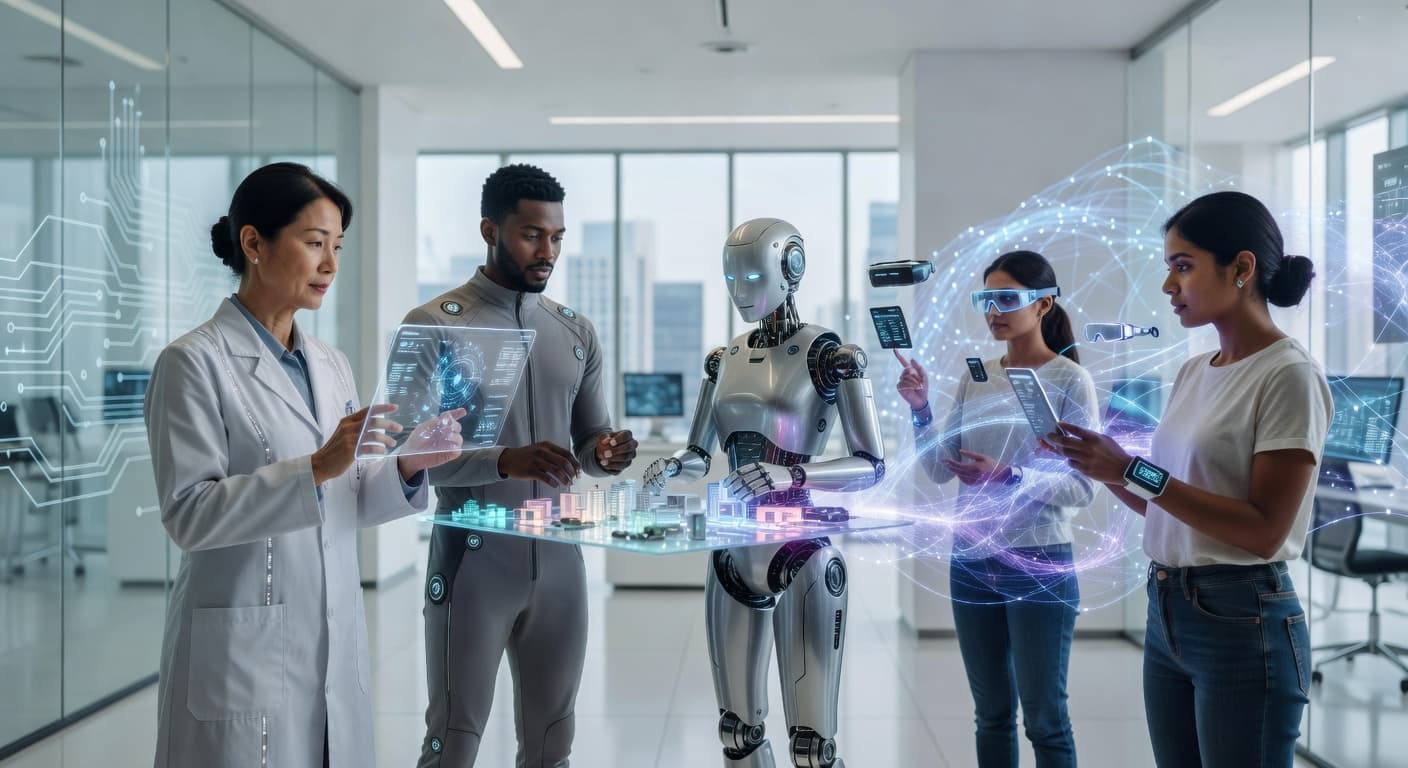
The AI Revolution: How Artificial Intelligence is Reshaping Our World
In an era defined by rapid technological advancement, few innovations command as much attention and influence as Artificial Intelligence (AI). Once confined to the realm of science fiction, AI has rapidly permeated nearly every facet of our daily lives, transforming industries, redefining human-machine interaction, and paving the way for unprecedented progress. From the algorithms powering our social media feeds to the sophisticated systems diagnosing diseases, AI is not just a tool; it's a fundamental shift in how we understand and interact with the world.
Unpacking the Essence of AI
At its core, AI refers to the simulation of human intelligence in machines that are programmed to think like humans and mimic their actions. This broad definition encompasses everything from simple rule-based systems to advanced machine learning (ML) and deep learning (DL) models capable of learning from vast datasets, recognizing patterns, and making decisions with minimal human intervention. It's about enabling machines to perceive, reason, learn, and problem-solve.
AI's Pervasive Footprint Across Industries
The reach of AI is incredibly diverse, leaving an indelible mark on numerous sectors:
- Healthcare: AI assists in early disease detection, personalized treatment plans, and accelerating drug discovery. Algorithms can analyze medical images with remarkable accuracy, aiding diagnoses.
- Automotive: Self-driving cars, powered by complex AI systems, promise safer and more efficient transportation, fundamentally changing urban mobility.
- Finance: AI algorithms detect fraudulent transactions, manage risk, and provide personalized financial advice, enhancing security and accessibility.
- Retail & E-commerce: Personalized recommendations, inventory management, and customer service chatbots leverage AI to optimize operations and improve user experience.
- Manufacturing: AI-driven robotics and predictive maintenance systems enhance efficiency, reduce downtime, and ensure higher quality in production lines.
The Personal Touch: AI in Everyday Life
Beyond industrial applications, AI seamlessly integrates into our personal routines. Smart assistants like Siri, Alexa, and Google Assistant have become ubiquitous, managing schedules, playing music, and controlling smart home devices. Our streaming services recommend movies and music based on past preferences, while navigation apps optimize routes in real-time – all powered by sophisticated AI. This level of personalization, driven by AI, enhances convenience and streamlines daily tasks, often without us even realizing the complex algorithms at play.
Navigating the Ethical Labyrinth and Future Prospects
While the benefits of AI are undeniable, its rapid proliferation also raises significant questions and challenges. Concerns around data privacy, algorithmic bias, and the potential for job displacement require careful consideration. Ensuring AI systems are developed and deployed ethically, transparently, and with accountability is paramount to harnessing their full potential responsibly. Discussions around AI governance and regulation are becoming increasingly critical on a global scale.
Looking ahead, the future of AI promises even more profound transformations. Advances in quantum computing could unlock new levels of AI capability, while the integration of AI with other emerging technologies like augmented reality (AR) and the Internet of Things (IoT) will create intelligent ecosystems far beyond what we can currently imagine. The journey of AI is just beginning, and its trajectory will undoubtedly continue to shape human civilization in unprecedented ways.
The Road Ahead: Embracing an Intelligent Future
Artificial Intelligence stands as a testament to human ingenuity, pushing the boundaries of what machines can achieve. While challenges remain, particularly in ethical implementation and societal adaptation, the transformative power of AI is clear. As we move forward, a balanced approach that prioritizes responsible development, fosters innovation, and addresses societal concerns will be crucial. The intelligent future is not merely an option; it is an evolving reality, and understanding its nuances is key to thriving within it.
How this article was made
- Sources
- [Publication Name]
- Generated on:
- May 13, 2026
This content is produced by Acerbo.AI's AI editorial pipeline: source gathering, rewriting and imagery are automated. Editorial oversight stays human.
Related Articles

Navigating the Future: Key Tech Trends Reshaping Global Industries
Explore the cutting-edge technological advancements, from AI to quantum computing, that are fundamentally transforming industries worldwide, driving innovation and digital disruption.
Unveiling Tomorrow: The Latest Breakthroughs Shaping the Tech Industry
Explore the cutting-edge innovations dominating the tech landscape, from AI's transformative power to sustainable solutions and evolving digital infrastructure, driving global progress.
AI's Unseen Hand: Top Breakthroughs Reshaping Our World by 2026
Explore how Artificial Intelligence is rapidly accelerating scientific discovery, from revolutionary medical treatments to groundbreaking materials, fundamentally transforming our understanding of the universe and shaping the future by 2026.