
Microsoft Unleashes Next-Gen Phi 3.5 AI Models, Redefining Performance Benchmarks
Microsoft expands its AI capabilities with three new Phi 3.5 models: Mini Instruct, MoE, and Vision Instruct, setting new performance standards in NLP and multimodal AI.
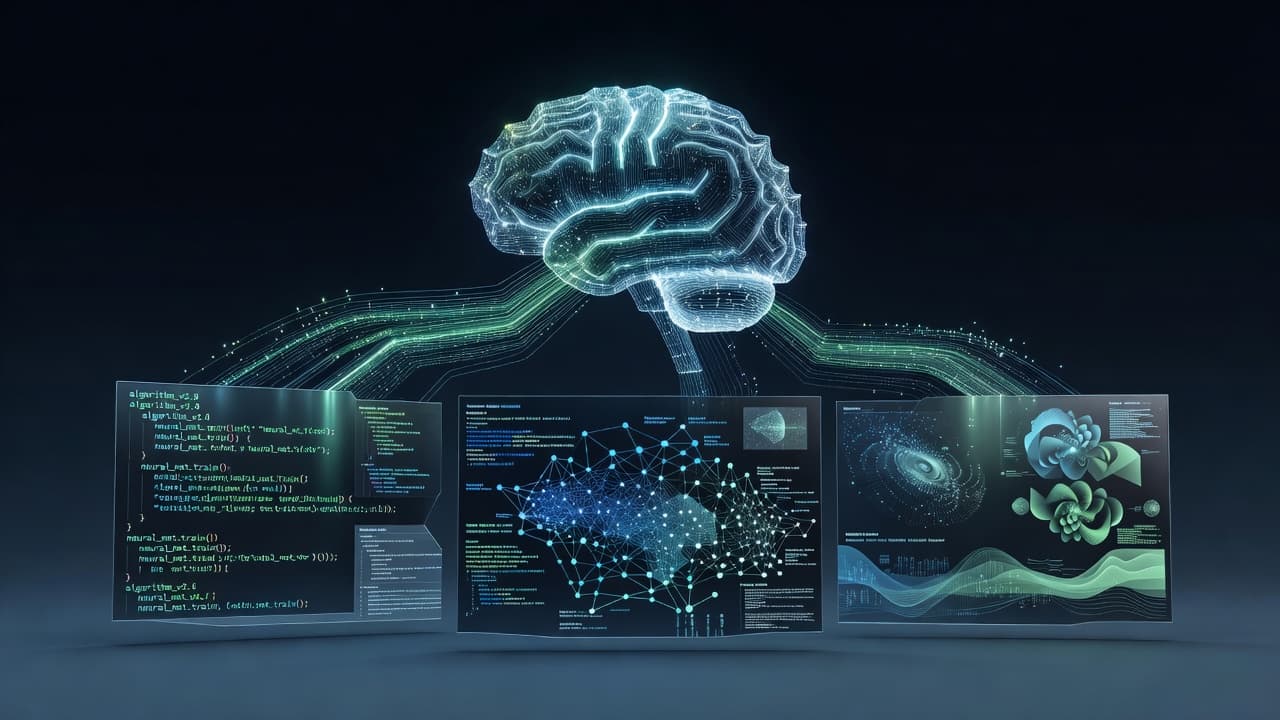
The landscape of artificial intelligence is evolving at an unprecedented pace, with tech giants constantly pushing the boundaries of what's possible. Microsoft has once again made a significant splash, unveiling a powerful trio of AI models under its Phi 3.5 series: the Phi 3.5 Mini Instruct, Phi 3.5 MoE (Mixture of Experts), and Phi 3.5 Vision Instruct. These groundbreaking releases are not just incremental updates; they represent a bold leap forward in natural language processing, multimodal understanding, and high-performance AI, poised to redefine industry benchmarks.
The Agile Brain: Phi 3.5 Mini Instruct
Microsoft's commitment to delivering powerful yet efficient AI is vividly demonstrated by the Phi 3.5 Mini Instruct. This compact powerhouse, boasting 3.8 billion parameters, is engineered for remarkable performance without the hefty computational demands often associated with larger models. Its design focuses on delivering exceptional results in natural language tasks, making it ideal for a wide array of applications where resource efficiency is paramount.
What truly sets the Phi 3.5 Mini Instruct apart is its ability to punch above its weight class. In rigorous benchmarks, it has demonstrably outperformed established models such as Llama3.1 8B and Mistral 7B. Furthermore, it holds its own, remaining highly competitive even when pitted against the more robust Mistral NeMo 12B. This showcases Microsoft's prowess in optimizing smaller models to achieve elite-tier performance, democratizing access to powerful AI capabilities.
Scaling Intelligence: Phi 3.5 MoE (Mixture of Experts)
For scenarios demanding unparalleled scale and specialized processing, Microsoft introduces the Phi 3.5 MoE. This model leverages a sophisticated "Mixture of Experts" architecture, a paradigm shift in AI design that allows different parts of the neural network to specialize in specific types of data or tasks. Only the most relevant "experts" are engaged for a given query, leading to incredible efficiency and performance gains.
The Phi 3.5 MoE is configured with 16x3.8 billion parameters, with an active set of 6.6 billion parameters across two specialized experts. This innovative structure enables it to tackle complex computational challenges with remarkable speed and accuracy. Its superior design has not gone unnoticed in benchmark comparisons, where the Phi 3.5 MoE has decisively surpassed Gemini Flash, underscoring its capabilities in high-performance computing and complex problem-solving.
Bridging Senses: Phi 3.5 Vision Instruct
Perhaps one of the most exciting advancements in this new suite is the Phi 3.5 Vision Instruct. This model represents a significant stride in multimodal AI, enabling machines to not only understand human language but also to interpret and interact with visual information seamlessly. With 4.2 billion parameters, the Phi 3.5 Vision Instruct is designed to process and reason across both text and images, opening up a world of possibilities for more intuitive and context-aware AI applications.
The performance of the Phi 3.5 Vision Instruct is nothing short of groundbreaking. In comprehensive, averaged benchmarks, it has outperformed even GPT-4o, a widely recognized leader in multimodal AI. This achievement marks a major leap in the field, indicating that Microsoft is at the forefront of developing AI that can truly "see" and "understand" the world around it. From advanced image analysis to interactive visual assistants, the potential applications are vast.
A New Horizon for AI Innovation
The introduction of the Phi 3.5 series signals a pivotal moment for the artificial intelligence industry. Microsoft's strategic focus on developing highly performant yet diverse models — from compact language processors to scalable expert systems and advanced multimodal AI — demonstrates a clear vision for the future. These models are not just about raw power; they are about intelligent design, efficiency, and versatility.
By setting new performance benchmarks across various categories, Microsoft is not only strengthening its position as an AI leader but also providing developers and researchers with more powerful tools to innovate. The advancements in natural language processing will lead to more nuanced conversations, while the multimodal capabilities will enable AI to interact with the world in a more human-like manner. The MoE architecture, meanwhile, points towards a future of more efficient and specialized AI systems.
Conclusion
In summary, Microsoft's Phi 3.5 Mini Instruct, Phi 3.5 MoE, and Phi 3.5 Vision Instruct models represent a formidable expansion of the company's AI capabilities. Each model, tailored for specific strengths, collectively pushes the boundaries of performance in language, multimodal understanding, and high-performance computing. As these sophisticated tools become more accessible, they are set to catalyze innovation across industries, ushering in an exciting new era where AI is not just smarter, but also more versatile, efficient, and deeply integrated into our digital lives.
How this article was made
- Sources
- Reddit - r/machinelearningnews
- Generated on:
- Jun 24, 2026
This content is produced by Acerbo.AI's AI editorial pipeline: source gathering, rewriting and imagery are automated. Editorial oversight stays human.
Related Articles
Microsoft Unleashes Next-Gen AI: Introducing the Powerful Phi 3.5 Models
Microsoft has unveiled its powerful Phi 3.5 AI models: Mini, MoE, and Vision Instruct. These advanced iterations set new performance benchmarks, outperforming rivals like Llama3.1, Gemini Flash, and GPT-4o, signaling a major leap in NLP and multimodal AI capabilities.
Microsoft Unleashes Next-Gen AI: A Deep Dive into the Phi 3.5 Model Series
Microsoft is significantly advancing its AI capabilities with the introduction of the Phi 3.5 series, featuring Mini Instruct, MoE, and Vision Instruct models, designed for enhanced performance and versatility.
Microsoft's AI Leap: New Hardware & Windows Redefine Computing
Microsoft's latest event unveiled a groundbreaking fusion of AI-optimized hardware and deeply integrated Windows features, signaling a transformative era for personal computing. Explore how AI is set to revolutionize your digital experience.