
NASA Eyes Lunar Depths: A Groundbreaking Mission to Probe Underground Caves
NASA is embarking on a pivotal mission to explore potential underground caves on the Moon, a move that could redefine our understanding of lunar geology and pave the way for future human settlements.
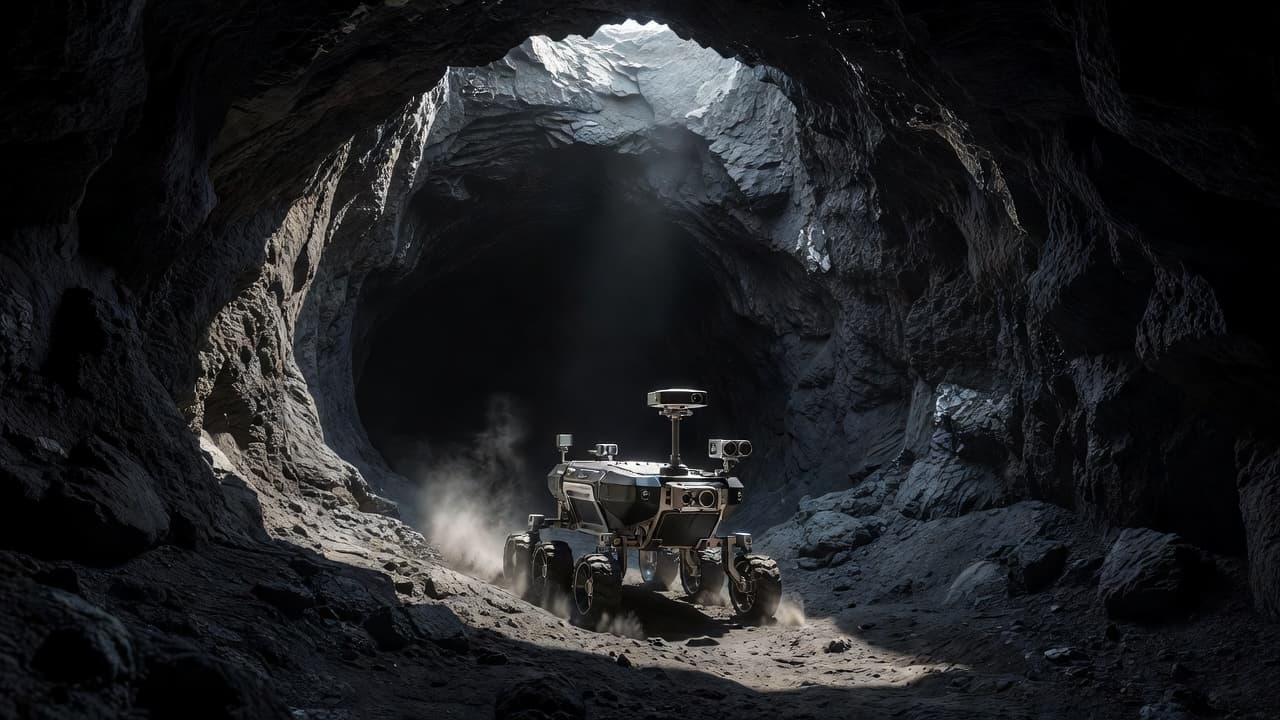
Unlocking Lunar Secrets: The Quest for Subterranean Worlds
NASA has announced a significant new initiative to investigate the mysterious depths beneath the Moon's surface, focusing on the potential existence of vast underground caves. This groundbreaking endeavor, conceptually represented by an advanced probe, marks a critical step in humanity's ongoing exploration of our celestial neighbor. The mission aims to peel back layers of lunar history, seeking answers to fundamental questions about the Moon's formation and its potential to host future human outposts.
Why Lunar Caves Are Scientific Goldmines
For decades, scientists have theorized about the presence of lava tubes and other subterranean caverns on the Moon. These natural formations, created by ancient volcanic activity, are not merely geological curiosities. They represent
Furthermore, these caves could potentially harbor
The GIMLI Initiative: Pioneering Subsurface Exploration
While specific mission details are often proprietary during early development, the conceptual framework behind NASA's selection of an advanced probe, here referred to as the
Advanced Robotics for Uncharted Territory
The GIMLI concept likely involves highly autonomous robots equipped with sophisticated instruments. These probes would need to be robust enough to withstand the lunar environment and agile enough to traverse complex terrain within dark, confined spaces. Key technologies could include:
- Lidar and high-resolution cameras: For mapping intricate cave structures in 3D.
- Spectrometers: To analyze the composition of rocks and search for water ice or other volatiles.
- Thermal sensors: To study temperature gradients and identify potential heat sources.
- Radiation detectors: To measure natural shielding offered by the cave walls.
Such a probe would represent a significant leap in our ability to conduct
Shelters for Future Astronauts: A Vision for Lunar Bases
Beyond their scientific value, lunar caves offer a compelling solution for future human exploration. The natural protection they provide from radiation and micrometeorites makes them ideal candidates for establishing long-term human habitats. Imagine a future where astronauts live and work safely within vast underground complexes, insulated from the dangers of the lunar surface.
By exploring these caves, NASA aims to identify the most suitable locations for
Challenges and the Promise of Discovery
Exploring lunar caves presents formidable technical and operational challenges. Navigating unknown subterranean environments, maintaining communication with Earth, and managing power in perpetual darkness are just a few hurdles. However, the potential rewards far outweigh these difficulties.
The GIMLI initiative, or similar future missions, promises to deliver a wealth of new scientific data, fundamentally altering our understanding of the Moon. It's a bold step forward in humanity's journey of discovery, bringing us closer to unlocking the Moon's deepest secrets and laying the groundwork for a new era of space exploration.
How this article was made
- Sources
- ScienceDaily
- Rewriting model:
- gemini-2.5-flash
- Image generated with:
- xAI Grok
- Generated on:
- 6d ago
This content is produced by Acerbo.AI's AI editorial pipeline: source gathering, rewriting and imagery are automated. Editorial oversight stays human.
Related Articles

Artemis Ascendant: NASA Unveils Ambitious New Lunar Mission & Revamped Moon Architecture
NASA is charting an even bolder course for humanity's return to the Moon, announcing a significant new mission and updating the foundational architecture of its Artemis lunar exploration program.

IBM & NASA Unleash Open-Source AI for Lunar Exploration
IBM and NASA have collaboratively launched the Lunar Foundation Model, an open-source AI designed to process vast lunar data, accelerate discovery, and aid future Moon missions.
Lunar Gateway to the Stars? Chinese Probe Unveils Massive Radiation Anomaly Between Earth and Moon
A Chinese lunar lander has made a groundbreaking discovery: a vast 'cavity' of reduced radiation in the cislunar space, potentially revolutionizing future human missions to the Moon and beyond by offering safer transit routes.