
OpenAI Unveils 'Jalapeño': A Bold Leap into Custom AI Hardware
OpenAI introduces 'Jalapeño,' its first custom AI chip, signaling a strategic move to enhance its AI infrastructure and reduce reliance on external hardware suppliers.

OpenAI Unveils 'Jalapeño': A Bold Leap into Custom AI Hardware
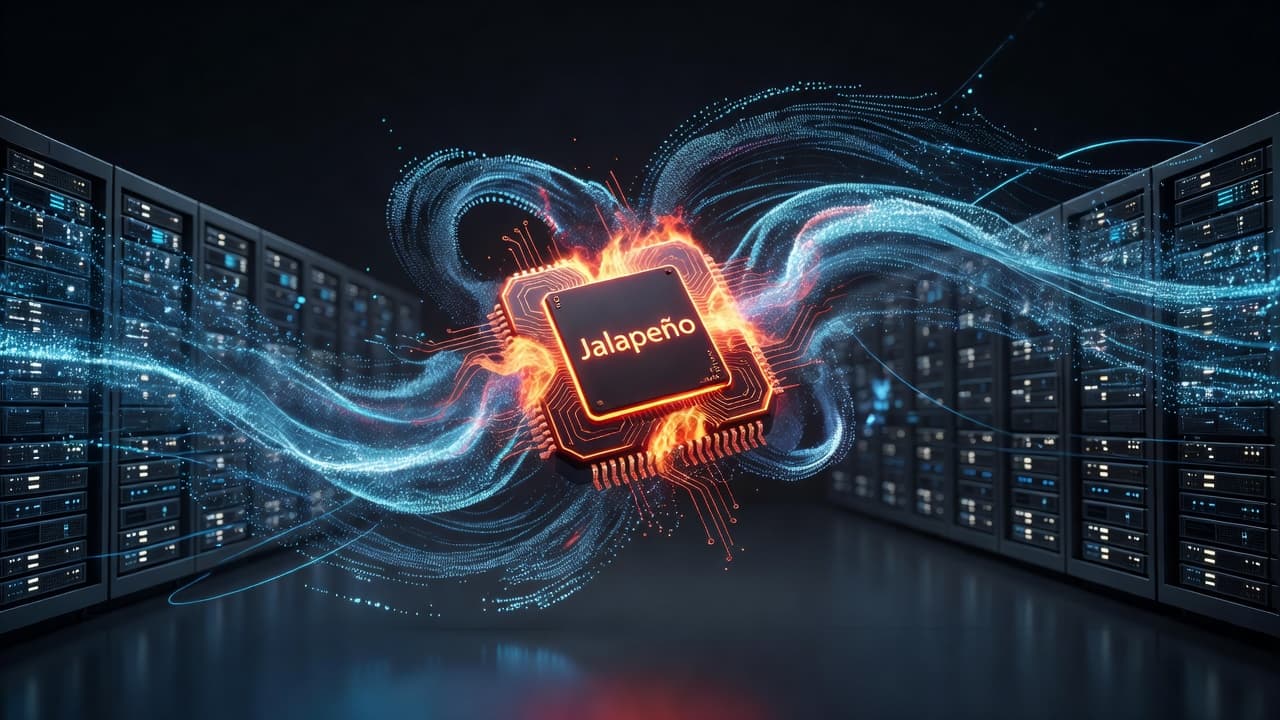
The landscape of artificial intelligence is rapidly evolving, and the battle for supremacy isn't just being fought in the realm of algorithms and models; it's extending deep into the hardware layer. OpenAI, a trailblazer in generative AI, has made a significant strategic move by officially unveiling its inaugural custom AI chip, codenamed 'Jalapeño'. This development marks a pivotal moment, underscoring OpenAI's commitment to fortifying its AI infrastructure and gaining greater autonomy over its technological stack.
The introduction of 'Jalapeño' positions OpenAI alongside other tech giants who are increasingly investing in proprietary silicon tailored for their specific AI workloads. For a company at the forefront of large language models (LLMs) like GPT-4, this initiative is crucial for optimizing performance, enhancing efficiency, and potentially mitigating the immense operational costs associated with advanced AI research and deployment.
The Strategic Imperative for Custom Silicon
In the demanding world of artificial intelligence, computing power is the ultimate resource. Training and running sophisticated AI models, particularly those operating at the scale of OpenAI's offerings, require unprecedented levels of processing capability. Historically, AI companies have largely depended on general-purpose GPUs from manufacturers such as Nvidia. While incredibly powerful, these off-the-shelf solutions are not always perfectly optimized for every nuanced AI task.
Developing custom chips like 'Jalapeño' provides OpenAI with the unique opportunity to design hardware that is precisely tuned to the architectural demands of its proprietary AI models. This bespoke approach offers a multitude of strategic advantages, fundamentally transforming how OpenAI can innovate and scale its operations:
- Optimized Performance: Chips can be engineered from the ground up to accelerate specific AI operations, leading to significantly faster processing speeds for tasks like model training and real-time inference.
- Enhanced Efficiency: Custom designs can achieve superior performance per watt, consuming less power for the same workload. This translates into reduced energy costs and a smaller environmental footprint for massive data centers.
- Long-term Cost Reduction: While the initial investment in chip design is substantial, producing custom silicon can prove more cost-effective over the long term compared to continually purchasing high-end, general-purpose chips in vast quantities.
- Supply Chain Security: Reduces reliance on external suppliers, mitigating potential bottlenecks and ensuring a more stable and predictable hardware supply, crucial for continuous innovation.
OpenAI's Vision for AI Infrastructure
OpenAI's foray into custom silicon is a direct response to the escalating computational demands of its cutting-edge AI research and product development. The sheer intensity required to train and deploy models like ChatGPT necessitates a robust, scalable, and highly efficient hardware foundation. By taking greater ownership of its chip design, OpenAI aims to accelerate its innovation cycle and maintain its competitive edge in a rapidly evolving global market.
This strategic move places OpenAI firmly in the ranks of other technology titans, such as Google with its long-standing investment in Tensor Processing Units (TPUs), and Amazon with its Inferentia and Trainium chips. The trend is clear: leading AI players recognize that controlling the hardware layer is as critical as mastering the software to unlock the next generation of AI capabilities and ensure sustained growth.
A Glimpse into the Future of AI Hardware
The unveiling of 'Jalapeño' is more than just a product announcement; it's a profound statement of intent. It signifies OpenAI's commitment to vertically integrating its technology stack, from the foundational algorithms to the very transistors that execute them. This strategic pivot could pave the way for unprecedented advancements in AI, as hardware and software are co-designed for maximum synergy and efficiency.
While specific performance metrics and widespread availability details for 'Jalapeño' are yet to be fully disclosed, its existence alone marks a significant milestone. It heralds a new era where innovation in AI will increasingly be driven by the symbiotic evolution of both sophisticated software and purpose-built hardware, promising exciting possibilities for the future of artificial intelligence across the globe.
How this article was made
- Sources
- TechCrunch
- Generated on:
- Jun 27, 2026
This content is produced by Acerbo.AI's AI editorial pipeline: source gathering, rewriting and imagery are automated. Editorial oversight stays human.
Related Articles

OpenAI Unveils 'Jalapeno': A Custom Chip Set to Turbocharge ChatGPT and Reshape AI Hardware
OpenAI introduces 'Jalapeno,' its first custom AI chip designed to accelerate ChatGPT, marking a pivotal shift towards specialized hardware for advanced AI models.

OpenAI Ignites AI Race with 'Jalapeño' Chip: A Game-Changer for ChatGPT and Beyond
OpenAI unveils 'Jalapeño,' its first custom AI chip developed with Broadcom, marking a significant strategic shift towards advanced AI infrastructure and supercharging ChatGPT's capabilities.
OpenAI's Jalapeño Chip: A Fiery Challenge to AI Infrastructure Costs and the 'Nvidia Tax'
OpenAI and Broadcom unveil the Jalapeño chip, custom silicon designed to slash multi-billion dollar AI infrastructure costs and reduce dependency on traditional GPU suppliers for AI inference.